Baengnyeongdo, once a 1,500-won trip, now costs 15,000 won ... Incheon residents also face separate fuel surcharges and terminal fees
- Input
- 2026-11-03 12:49:14
- Updated
- 2026-11-03 12:49:14
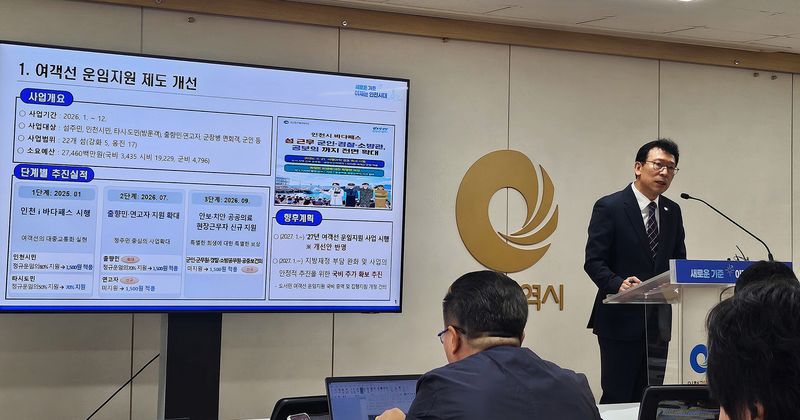
【Financial News, Incheon = Han Gab-soo】 Incheon City’s overhaul of its “Incheon i Bada Pass” passenger ferry fare support system is expected to effectively increase the cost for Incheon residents of traveling to the islands by ferry starting next year. The regular fare will remain at 1,500 won one way, equivalent to the city bus fare, as before, but the city is pursuing a plan that would require passengers to pay fuel surcharges and terminal fees separately. As a result, the actual amount paid will rise from 1,500 won to 15,000 won for Baengnyeongdo and to 4,700 won for Deokjeokdo.
Incheon City said on the 3rd that it is reviewing improvements to the support criteria, targeting implementation in 2027, to protect island residents’ mobility rights and ensure the sustainability of the passenger ferry fare support program.
The key feature of the proposed changes is to maintain the regular-fare support system for Incheon residents while requiring passengers to pay additional costs, such as fuel surcharges and terminal fees. For Baengnyeongdo, a 12,600-won fuel surcharge and a 1,500-won terminal fee will be added to the 1,500-won regular fare, bringing the one-way total to 15,000 won. The nominal 1,500-won fare will remain, but the actual cost to residents will rise substantially depending on the route.
In January 2025, Incheon City introduced the “Incheon i Bada Pass,” reducing the one-way passenger ferry fare for residents to 1,500 won and increasing the support rate for residents of other cities and provinces from 50% to 70%. The measures were intended to boost island tourism and improve access to maritime transport.
However, as the number of passengers and eligible beneficiaries grew and the fiscal burden increased, the city has been adjusting the scope of support in stages. Since July 25, it has suspended fare support for residents of other cities and provinces, and changed support for people who had moved away from their hometowns from a 70% discount off the regular fare to a flat one-way fare of 1,500 won. The same fare was also extended to people with ties to the area who had not previously been eligible for support. The city is also considering adjusting the support rate for residents of other cities and provinces to around 50% of the regular fare starting next year.
The concern is how the reduced fare support will affect island tourism and the local economy. Low passenger ferry fares have helped attract tourists and support sales at small businesses such as island lodging establishments and restaurants, so higher travel costs could also affect tourism demand.
Park Gwang-geun, head of Incheon City’s Maritime and Aviation Bureau, said, “Although passenger ferry fare support has been reduced, overall ferry ridership actually increased by 4.1%, excluding the Jangbong route.” He added, “We believe that even if residents’ costs rise somewhat, it will not create major problems for tourism.”
Measures to address the inconvenience caused to residents by rising tourist numbers and ensure that tourism revenue genuinely benefits local communities remain outstanding challenges. At the press conference that day, some called for the city to consider providing local currency or gift certificates so that residents and small businesses can share in the economic benefits generated by tourists.
Attention is focused on how the passenger ferry fare support system will reconcile its two goals of easing the fiscal burden and protecting island residents’ mobility rights, and what impact higher fares will have on island tourism and the local economy.
[email protected] Han Gab-soo Reporter