The 'Sweet Trap' of Topping Yogurt: Saturated Fat Reaches Up to 57% of the Daily Value
- Input
- 2026-11-03 12:00:00
- Updated
- 2026-11-03 12:00:00
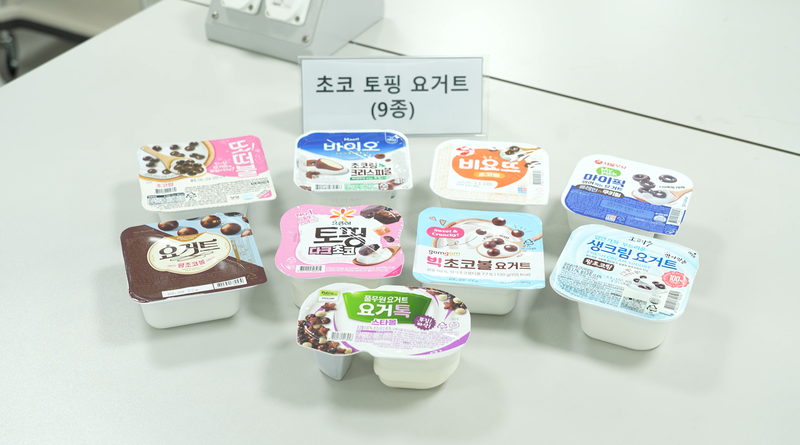
[Financial News] Some topping yogurt products eaten with chocolate balls, granola, fruit compote and other toppings were found to contain saturated fat exceeding half the daily reference value. Their sugar content was also up to about three times higher than that of regular plain yogurt, making it important to check the nutritional information for each product before consumption.
Industry sources said on the 3rd that a Korea Consumer Agency test and evaluation of 16 topping yogurt products sold on the market found wide variation in saturated fat per product, ranging from 1.5 to 8.5 g, or 10–57% of the 15-g daily reference value.
The product with the highest saturated fat content, at 8.5 g, was Yozm's “Plain Greek Yogurt with Blueberry Compote.” By contrast, “Viyott Berry Compote” by Seoul Dairy Cooperative Ltd. had the lowest amount, at 1.5 g. The Korea Consumer Agency said that topping yogurt has a relatively high saturated fat content compared with other nutrients, so consumers should manage how much they eat.
Sugar content ranged from 13 to 21 g per product, or 13–21% of the 100-g daily reference value. Per 100 g, the products contained 9–15 g of sugar. The Ministry of Food and Drug Safety's Food Nutrient Database lists regular plain yogurt as containing 4.5 g of sugar per 100 g, meaning the topping yogurt products had about two to three times as much. The agency said that adding toppings such as chocolate, granola and compote can increase sugar content.
Calories ranged from 140 to 273 kcal per product, equivalent to 7–14% of the estimated daily energy requirement of 2,000 kcal for women aged 19–29. Chocolate-topping products contained 140–212 kcal, granola products 156–160 kcal, and compote products 144–273 kcal; calorie differences by topping type were not large.
The amount of topping varied widely by product. Chocolate toppings ranged from 6 to 15 g, a difference of up to 2.5 times; granola ranged from 10 to 17 g, and compote from 30 to 38 g. By contrast, the amount of yogurt itself was relatively similar, at 105–129 g.
All products met the relevant standards for lactic acid bacteria counts. The five fermented milk products contained 500 million to 2.1 billion colony-forming units (CFU) per gram, while the 11 concentrated fermented milk products contained 1 billion to 5.7 billion CFU. All products also met the relevant standards in safety tests for microorganisms, heavy metals, mycotoxins and other substances.
Prices ranged from 978 to 4,900 won per product, with a difference of up to five times between products.
An official at the Korea Consumer Agency said, “Nutrient levels, including calories, protein, saturated fat and sugar, vary by product, so it is best to choose products by referring to test results such as nutritional information and net contents,” and urged consumers to exercise caution, adding, “Topping yogurt has a relatively high saturated fat content compared with other nutrients, and adding toppings can also increase sugar intake.”
[email protected] Kim Hyun-ji Reporter