From memories of mountain paths to calligraphic landscapes... Kyobo Art Space 'Hearts Inclined to Ink'
- Input
- 2026-11-03 11:01:46
- Updated
- 2026-11-03 11:01:46
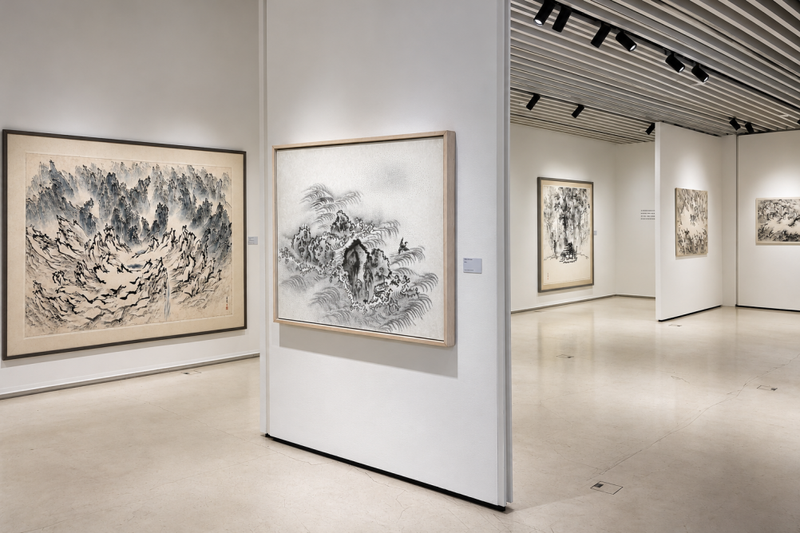
According to Kyobo Book Centre on the 3rd, the exhibition 'Hearts Inclined to Ink' will be held at Kyobo Art Space inside the Kyobo Book Centre Gwanghwamun branch in Seoul from today until December 13. Artists from different generations, including Han Jin-man (born 1948), Yoo Seung-ho (born 1974), and Jin Hee-ran (born 1990), will showcase 25 landscape paintings. Admission to the exhibition is free.■ Scenery and memories accumulated on the mountain pathHan Jin-man and Jin Hee-ran have been observing the changes in nature by personally climbing mountains. The landscapes encountered at Bukhansan, Jirisan, Seoraksan, and Mount Kumgang are transferred to the canvas through the artists' gaze and memories.
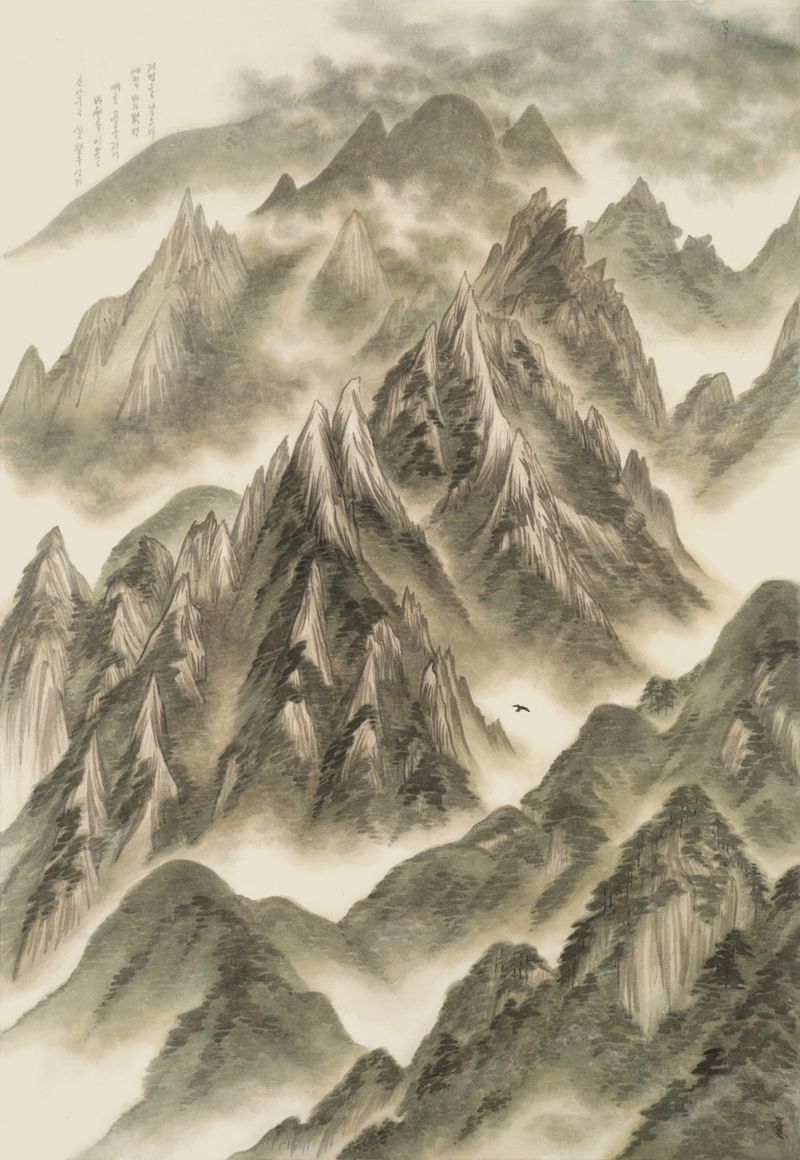
Han Jin-man, an emeritus professor of Oriental painting at Hongik University, believed that negative space, depth of space, and the way lines and ink are handled are important in expressing the inner world of a subject through ink wash painting. His work goes beyond merely reproducing visible landscapes to imbue the paintings with vitality and dynamism.
"The Song of Keum-Gang," introduced as a representative work, is a piece painted in ink on Hanji in 2007. Thick and thin ink lines define the outlines of the rocky mountains, and the empty spaces between the peaks reveal the depth of the mountain landscape.
Like painters of the Joseon Dynasty, Jin Hee-ran climbs mountains to paint while visually verifying what she has read in books. She explains that the higher she ascends, the wider her field of vision becomes, and the peaks, valleys, and mountain paths become more distinct.
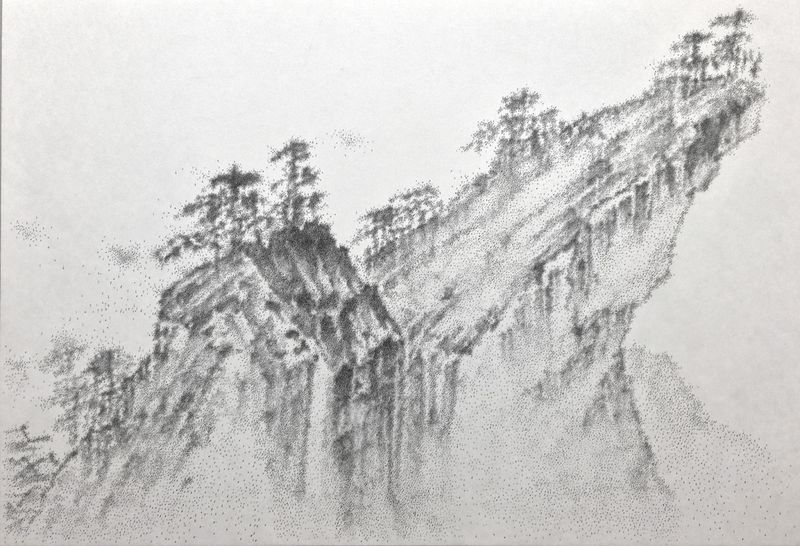
Onomatopoeia and mimetic words appear in his character landscapes. The meanings inherent in the characters and the landscapes they form are not directly connected. It is as if the gaze attempting to read the characters intersects with the gaze observing the overall landscape.
These works lead to attempts to explore the boundaries of modes of expression and tools, such as traditional East Asian painting, doodles, brushes, and pencils. 'yodeleheeyoo~', introduced here, is a work created in 2007 using ink on Hanji.
The exhibition title combines the meaning of "leaning one's heart toward Oriental painting" with the significance of "Rhythmic Vitality," which refers to the vitality and liveliness of the artwork.
Rhythmic Vitality is the first item of the "Six Principles," the six criteria for painting presented by Xie He of the Southern Qi dynasty in China's *Classic of Ancient Paintings*. It emphasizes conveying the spirit and vitality of an object to the viewer, going beyond the mere reproduction of its external form. One can appreciate and compare the methods of depicting nature and the energy contained within the canvas by different artists.
[email protected] Jang In-seo Reporter