When it's too soon for knee replacement: Arthroscopy or injections?
- Input
- 2026-11-03 09:54:10
- Updated
- 2026-11-03 09:54:10
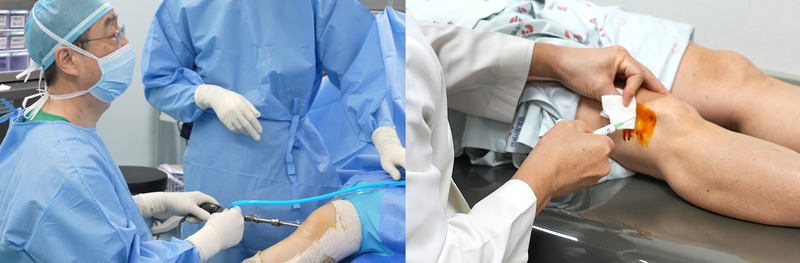
[Financial News] The cartilage has worn down and the knee hurts, but it is too soon for knee replacement surgery. For patients with moderate osteoarthritis, what is the difference between arthroscopic treatment, which removes damaged tissue using an arthroscope, and injection treatment, which delivers cells extracted from the patient's own fat into the knee? A study comparing the two treatments over one year has been published.
Researchers at Yonsei Sarang Hospital said a paper comparing the outcomes of arthroscopic treatment and injections of autologous adipose-derived stromal vascular fraction (SVF) in patients with knee osteoarthritis was published online in the international journal Medicina (impact factor: 3.0) on the 23rd of last month.
The study included patients with grade 2–3 Kellgren-Lawrence (K-L) knee osteoarthritis whose symptoms persisted despite receiving conservative treatment for at least three months. Using propensity score matching to align 13 characteristics, including age, sex, body mass index, pain before treatment and the severity of arthritis, the research team analyzed 12-month outcomes for 203 patients in each group—the arthroscopic treatment group and the SVF injection group—for a total of 406 patients.
Arthroscopic treatment is a method of reducing mechanical irritation by using an arthroscope in an operating room to remove damaged tissue and other material from inside the joint. SVF injections involve removing fat tissue from areas such as a patient's abdomen or buttocks, isolating various cells from it, and injecting them into the painful knee joint. Researchers are studying the effects of this treatment on inflammation and the biological environment within the joint.
Pain falls from around 6 to around 2 after one year ... Both treatments are effective
Pain decreased substantially from before treatment in both groups. On a 0-to-10 scale, the mean pain score in the arthroscopic treatment group fell from 6.62 before treatment to 2.42 at 12 months, while the score in the SVF injection group dropped from 6.57 to 2.17.
At six and 12 months, the SVF injection group had statistically significantly lower pain scores than the arthroscopic treatment group. The mean score at six months was 2.36 in the arthroscopic treatment group and 2.14 in the SVF injection group (p=0.018); at 12 months, the scores were 2.42 and 2.17, respectively (p=0.009). However, the differences between the groups estimated by a statistical model were only 0.22 and 0.26 points, respectively. The researchers interpreted this to mean that the differences were unlikely to be clinically meaningful enough for patients to notice.
No significant difference in arthritis progression or rate of conversion to joint replacement
There was also no statistically significant difference between the groups in the overall pattern of pain changes over the 12 months. Radiographic progression of arthritis was seen in 27.6% of the arthroscopic treatment group and 24.1% of the SVF injection group, again with no significant difference.
The rate of proceeding to joint replacement surgery was 12.3% in the arthroscopic treatment group and 6.4% in the SVF injection group, numerically lower in the latter. However, the difference was not statistically significant, so it cannot be concluded that SVF injections reduce the need for joint replacement surgery.
The significance of this study lies in its direct comparison of two different treatments in real-world clinical practice and its analysis accounting for a range of patient characteristics. However, it was a retrospective rather than randomized study, and its follow-up period was limited to 12 months.
“This study does not demonstrate that either treatment is superior or that it has a cartilage-regenerating effect,” said Ko Yong-gon, president of Yonsei Sarang Hospital. “Its significance lies in providing clinical evidence that broadens treatment options for patients with moderate-stage arthritis. Further long-term prospective studies are needed to assess functional recovery and structural changes in the joint as well.”
[email protected] Medical Correspondent Jung Myung-jin Reporter