LH to build public housing’s first ‘inclusive playground’ in Siheung Hajung
- Input
- 2026-11-03 09:45:28
- Updated
- 2026-11-03 09:45:28
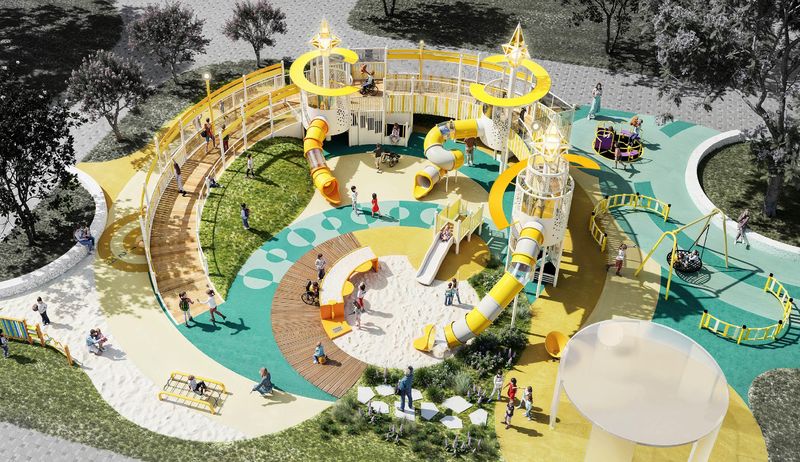
[Financial News] A playground where children in wheelchairs can run and play with their friends will be built in a public housing complex for the first time.
Korea Land and Housing Corporation (LH) said on the 3rd that the winning design brings together creative spatial design and a variety of play activities under the theme ‘Shining Milky Way.’ Bright colors and curved designs enhance the space’s distinctive character and visibility. The design was praised for features including a gentle ramp that wheelchair users can climb, play areas divided by height, and interconnected play structures.
The contest was held last June to bring inclusive playgrounds—spaces where everyone can play together without discrimination—to public housing. It was open to specialist play-equipment companies so that the designs could be directly incorporated into actual public housing projects. To raise the standard of play environments, LH established a ‘Plan for Building Play Environments in Public Housing’ in 2024 and continued its preparations last year, including developing ‘Inclusive Playground Design Guidelines’ and a standard model.
The first site, Siheung Hajung A-4BL, is a 584-unit complex combining public-sale housing under the Newlywed Hope Town program and Happy Housing. Move-ins are scheduled for July 2028. LH plans to build the first inclusive playground in public housing there, then apply the design to other complexes from 2027 onward, expanding play environments that all children can enjoy together.
Inclusive playgrounds are still rare. They are playgrounds equipped with features such as ramps and assistive devices that allow wheelchair users to transfer from their chairs, so children with and without disabilities can use them together. However, there are no clear government-wide standards yet. According to Barrier Free Solidarity, a disability advocacy group, there were 31 inclusive playgrounds nationwide as of 2023, just 0.03% of all playgrounds. If inclusive playgrounds become standard in public housing, they could also bring changes to play environments in apartment complexes.
Park Hyeon-geun, head of LH’s Public Housing Headquarters, said, “This contest is the first step toward creating a play environment where all children can interact and grow together,” adding, “We will continue to present distinctive play environments that go beyond the experience of existing housing complexes and establish new standards for public housing that is better for raising children.”
[email protected] Jeong Gyeong-su Reporter