630,000 cold medicine tablets dissolved to make meth worth 4.2 billion won ... Apartment lab set up by prison cellmates
- Input
- 2026-11-03 12:00:00
- Updated
- 2026-11-03 12:00:00
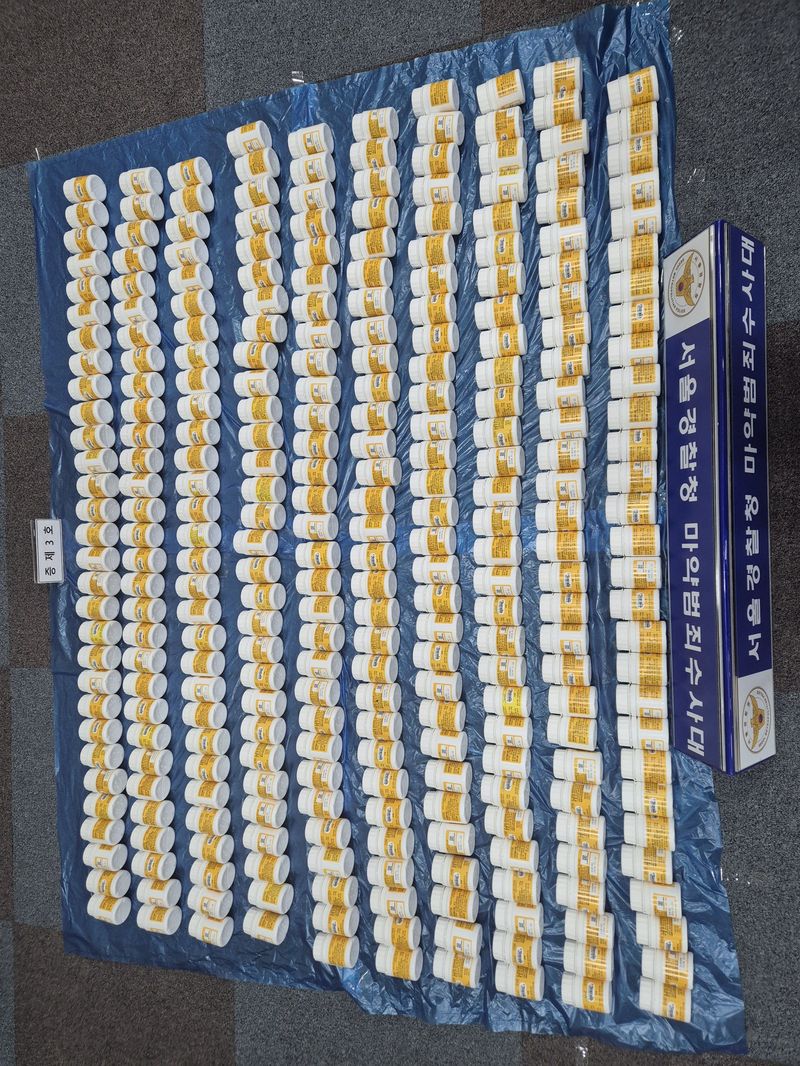
[Financial News] Police have arrested 13 people, including a group that allegedly manufactured large quantities of meth using pseudoephedrine in cold medicine and a herbal pharmacist who supplied them with the drugs. The seized meth totaled 1.36 kg, the largest amount seized in a domestic meth-manufacturing case involving cold medicine.
The Seoul Metropolitan Police Agency’s Metropolitan Investigation Unit Narcotics Crime Investigation Unit said on the 3rd that it had apprehended 13 people, including A, the alleged ringleader of the manufacturing operation, on suspicion of violating the Narcotics Control Act and other offenses. Four of them were detained. The suspects include five involved in manufacturing (three detained), three accused of aiding and abetting (one detained), three raw-material suppliers and two pharmacy owners.
A and four others are suspected of manufacturing about 1.36 kg of meth in an apartment in Pyeongtaek, Gyeonggi Province, from April last year to June this year. They allegedly extracted pseudoephedrine from cold medicine and mixed it with chemicals such as sulfuric and hydrochloric acid. The seized meth was worth about 4.2 billion won at market prices and was enough for 40,000 people to use at the same time. Police also seized 635 g of pseudoephedrine, manufacturing equipment and hazardous chemicals, and recovered 130 million won in criminal proceeds.
According to police, A recruited accomplices mainly from people he had met while serving time in prison and assigned them different roles. They chose an apartment that had been vacant for a long time because of a lien dispute as their crime scene, and used CCTV cameras and parking barriers to monitor people entering and leaving. They stored the manufacturing equipment and chemical supplies in a separate warehouse in Paju, Gyeonggi Province.
The group repeatedly conducted trial production from April to September last year. When the first technician they recruited failed to manufacture the drug, they replaced the first technician with one who had previously made meth from cold medicine. They also consulted foreign academic papers and experimental videos posted online, as well as court rulings in similar cases. Around October last year, they began full-scale production and continued their criminal activity for about eight months.
The suppliers were also caught one after another. B, a herbal pharmacist, is suspected of selling A 10,610 containers of cold medicine (636,600 tablets) on six occasions from January to June this year, despite knowing that A was manufacturing meth. B is also suspected of selling the medicine in the parking lot of the apartment where he lived rather than at a pharmacy. Police secured all 95 million won in profits from B’s cold-medicine sales through a pre-indictment asset-preservation order for forfeiture. The investigation also uncovered signs of off-the-books transactions between two pharmacies and a pharmaceutical wholesaler. Suspecting tax evasion, police asked the National Tax Service to file a complaint.
C and another person are suspected of collecting cold medicine from B on A’s instructions and delivering it to A. D, a pharmacy manager and colleague of B, is suspected of selling cold medicine to A without a pharmacist’s license. E, a chemical-supply vendor, and another person were referred to prosecutors on suspicion of selling sulfuric and hydrochloric acid to A without recording the sales in the required logbook. F, a pharmacy owner, and another person were referred to prosecutors on suspicion of neglecting their duty to supervise B and D, in violation of the Pharmaceutical Affairs Act. Two other pharmacists who repeatedly sold large quantities of cold medicine to A were not found to have aided and abetted the crime, so police referred them to the relevant administrative authorities for action.
Police launched an investigation after receiving a tip in December last year and, following stakeouts, evidence gathering and search-and-seizure operations, apprehended the manufacturing suspects in June this year. They then analyzed evidence obtained through telecommunications investigations and digital forensics of mobile phones, traced the supply routes for the raw materials and apprehended everyone involved.
The Ministry of Food and Drug Safety is implementing measures to manage over-the-counter medicines containing pseudoephedrine, including limits on sales volumes and checks on the purpose of purchase. However, police concluded that under the current system, which allows people to buy the medicine without a prescription, it is difficult to prevent its use in drug manufacturing in advance. Police formally asked the MFDS to improve the system, including by designating the cold medicine as prescription-only. They also asked the Korean Pharmaceutical Association to strengthen guidance on precautions when selling the medicine.
Police said they would continue to closely track the distribution of medicines and hazardous chemicals that could be misused to manufacture narcotics, and focus investigative resources on preventing illegal production.
[email protected] Choi Seung-han Reporter