Kim Min-seok criticizes Jung Chung-rae’s ‘January merger proposal’: ‘A tool for intraparty struggle ... making unification harder’
- Input
- 2026-11-03 10:11:07
- Updated
- 2026-11-03 10:11:07
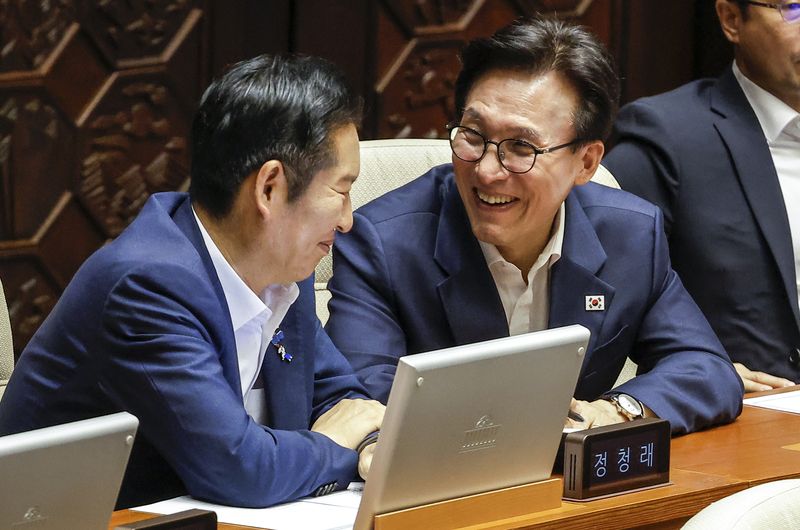
Appearing that day on the DPK’s YouTube channel MinT07, Kim addressed former leader Jung’s setting of a deadline for the merger. “Quite apart from whether a merger was the right thing to do at the time, the merger discussion during Jung Chung-rae’s tenure as party leader also fell through because the process and procedures were disregarded: it was handled as a unilateral declaration, apart from the process of checking and gathering party members’ views,” he said. He added, “If the aim really is to unite in January, wouldn’t doing it that way make it considerably more difficult?”
He stressed in particular that opinion within the party is now more negative about a merger than it was in the past. “After various developments since the last controversy over a merger proposal, the distribution of party members’ views is now in a much less favorable environment than it was then,” Kim said. “There is a much larger share of negative views.”
He criticized the proposal, saying, “We are already at a point where we are discussing through the party’s internal systems and the officials responsible how far we can cooperate with the Rebuilding Korea Party, including through policy cooperation.” He added, “Suddenly setting a deadline and talking that way is unlikely to be of any practical help.”
However, he did not rule out the possibility of cooperation with the Rebuilding Korea Party itself. “The overarching principle is to create a one-on-one contest in the next general election,” Kim said, while drawing a distinction: “Whether that leads to a merger or not is something to discuss after a range of discussions and a process of forming party members’ views.” He also said, “A party merger or dissolution is the decision most rooted in party-member sovereignty.” He noted, “It would have been better if former leader Jung Chung-rae, who has emphasized party-member sovereignty, had raised the issue while respecting party members’ views and the process and procedures for seeking those views.”
[email protected] Jiwon Song Reporter