Jeju’s Energy Transition Hits a “Tariff Barrier” ... Governor Wi Seong-gon Calls for Heat Pump and ESS Policy Reforms
- Input
- 2026-11-03 09:21:38
- Updated
- 2026-11-03 09:21:38
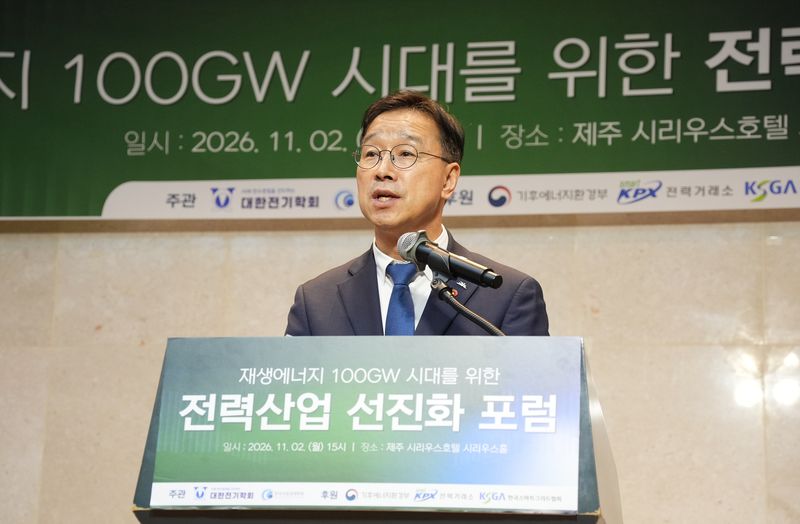
【Financial News, Jeju = Reporter Jeong Yong-bok】 Jeju Governor Wi Seong-gon called for reducing the electricity-bill burden of air-source heat pumps and improving the criteria for grid-use fees charged to distribution-grid energy storage systems (ESS).
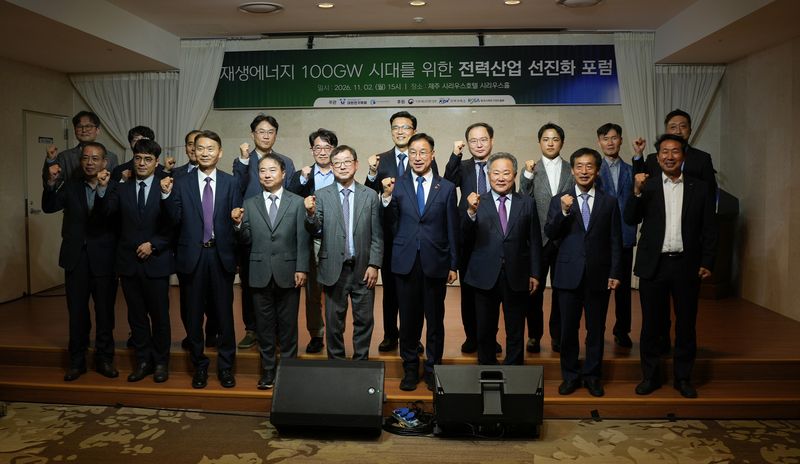
According to the Jeju Special Self-Governing Province on the 3rd, Governor Wi attended the “Power Industry Advancement Forum for the 100 GW Renewable Energy Era” at the Sirius Hotel in Jeju City on the afternoon of the 2nd, where he raised issues involving tariffs and power-grid operations that have emerged during Jeju’s energy transition.
The forum, organized by the Korean Institute of Electrical Engineers and the Korean Resource Economics Association and sponsored by the Ministry of Climate, Energy and Environment (MCEE), the Korea Power Exchange (KPX) and the Korea Smart Grid Association, discussed ways to improve power-grid operating systems and expand the power system’s capacity to accommodate the growth of renewable energy.
The first issue Governor Wi raised was the electricity tariff for residential air-source heat pumps. An air-source heat pump uses electricity to harness heat from the outdoor air for indoor heating. In Jeju, where access to piped natural gas is limited, it is considered a way to replace fossil-fuel heating and increase the use of renewable electricity.
However, under residential electricity rates, increased consumption in winter can lead to a higher progressive-rate burden. If customers choose a general-use tariff, which does not have progressive rates, they may have to pay relatively high basic charges even in seasons when they hardly use heating.
Jeju plans to install air-source heat pumps in about 2,400 households this year. Governor Wi proposed that “given the sharp seasonal variation in heating demand, basic charges should vary by season or a dedicated tariff for heat pumps should be introduced.”
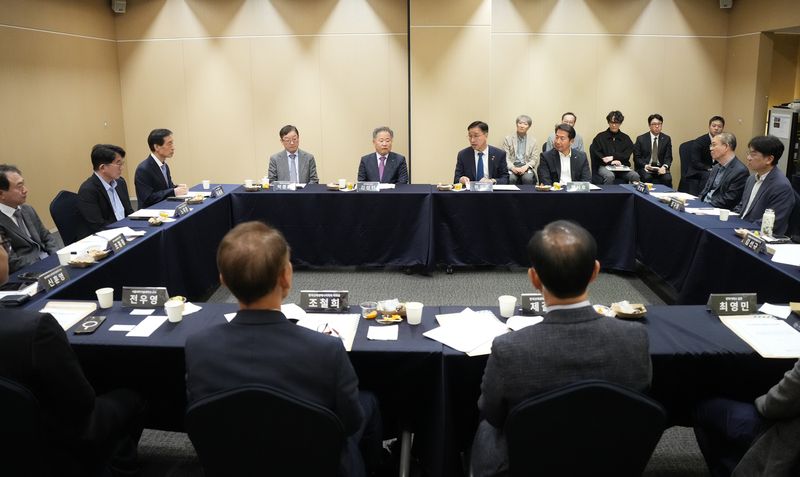
He also identified grid-use fees for distribution-grid ESS as an area for improvement. ESS facilities store surplus renewable electricity and supply it when needed. They are used to help keep the power grid stable even when solar and wind generation fluctuates.
In Jeju, four operating units run distribution-grid ESS facilities at eight sites, with a total capacity of 7.1 MW. Governor Wi pointed out that while fee-exemption criteria apply to pumped-storage hydropower and transmission-grid ESS, distribution-grid ESS is charged fees under the same criteria as ordinary electricity consumption when it draws power to charge.
Grid-use fees are charges paid for using the Korea Electric Power Corporation’s (KEPCO) transmission and distribution networks. The explanation is that while distribution-grid ESS stores electricity and helps ease grid congestion, it is treated as a power-consuming facility during charging, resulting in additional costs.
The issue is a nationwide power industry concern, not one limited to Jeju. Last May, the Ministry of Climate, Energy and Environment said it was reviewing criteria to defer grid-use fees during charging for ESS installed in areas where distribution grids are saturated and that help ease system congestion. However, a blanket exemption for all distribution-grid ESS has not been finalized.
Governor Wi stressed that “the contribution of distribution-grid ESS to power-grid stability should be reflected in the tariff system.” He said institutional criteria suited to the role of energy storage are needed to expand related investment and encourage private-sector participation.
Connecting the Chuja Offshore Wind Power Project to the national power grid was also raised as a key task. The project, planned at a capacity of 1.79 GW, completed its preliminary survey last September. Jeju believes that moving the project forward requires connection to the national grid, competitive electricity prices and more reasonable terms for sharing benefits with residents.
Governor Wi said, “We will continue discussions to ensure the Chuja Offshore Wind Power Project can be included in the 12th Basic Plan for Electricity Supply and Demand.” The plan is a national blueprint that sets the government’s long-term electricity demand outlook and direction for expanding power generation facilities. The project’s inclusion in the plan has not yet been finalized.
The discussions are also linked to the government’s policy of expanding renewable energy. The government is working to expand the power grid’s capacity and increase the use of ESS, with a target of deploying 100 GW of renewable energy capacity nationwide by 2030. A key task is to increase renewable generation facilities while also updating the electricity market and tariff system so that the power produced can be stored and used.
At the forum, Professor Jeon Woo-young of Seoul National University of Science and Technology presented on how the power industry should respond to the expansion of renewable energy, while Choi Young-min, a division head at the Korea Power Exchange, presented on upgrading power system operations. Professor Shin Hun-young of Hongik University discussed power-grid capacity and operational constraints, and KPX team leader Kim Eun-cheol explained strategies for using virtual power plants (VPPs), which aggregate distributed generation facilities and operate them as a single unit.
Governor Wi said, “National institutional reforms and financial support are essential to accelerate Jeju’s energy transition,” adding, “We will continue discussions on including the Chuja Offshore Wind Power Project in the national plan and improving power industry policies.”
The issues Jeju has raised concerning heat pump tariffs and fees for distribution-grid ESS are closely tied to who bears the costs of expanding renewable energy and how contributions to power-grid stability should be compensated. The conditions for implementing energy transition projects in Jeju can also improve once nationwide tariff reforms and criteria for power-grid investment are fleshed out.
[email protected] Jeong Yong-bok Reporter