Middle Eastern Oil Producers Prepare for Iran War to Resume Right After U.S. Midterms
- Input
- 2026-11-03 09:46:02
- Updated
- 2026-11-03 09:46:02
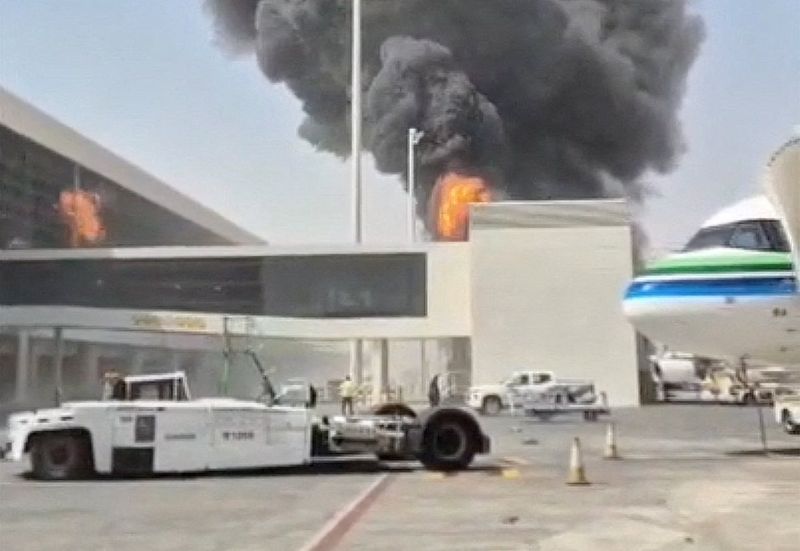
[Financial News] Oil-producing countries along the Persian Gulf, which suffered Iranian retaliatory strikes during the Iran war in the first half of this year, are preparing for renewed fighting between the United States and Iran after the U.S. midterm elections on the 3rd (local time). The U.S. side said for now that it had no plans to engage in hostilities.
The Wall Street Journal (WSJ) reported on the 2nd that countries along the Persian Gulf, including Qatar and the United Arab Emirates (UAE), were conducting emergency preparedness drills inside and outside major facilities, including international airports. Schools at all levels in Riyadh, the Saudi Arabian capital under attack by Yemen’s pro-Iran Houthi rebels, are set to hold classes online again this week. Some attendees at a large international energy conference held in Abu Dhabi, the UAE capital, reportedly shortened their stays in the UAE at the recommendation of their respective governments. On the 29th of last month, diplomatic missions of the Netherlands and Belgium in countries along the Persian Gulf also warned that the security situation in the Middle East could deteriorate sharply.
Anwar Gargash, the UAE president’s foreign policy adviser, said at a security conference last weekend that he hoped diplomatic efforts to ease military tensions between Iran and the United States would bear fruit, while adding that the UAE was “preparing for the worst.”
Egyptian Foreign Minister Badr Abdelatty, who attended the same meeting, also said that the damage would be greater if a new conflict broke out. He stressed that diplomatic efforts over the coming days or weeks would be crucial to preventing it.
The U.S. Central Command (CENTCOM), which has been attacking Iran since February, has refrained from airstrikes on mainland Iran since bombing Iranian military facilities near the Strait of Hormuz on September 1. Instead, CENTCOM is attacking Iranian oil tankers and other vessels around the strait. U.S. President Donald Trump said on social media on the 8th of last month that he was having productive discussions with Iran and declared, “We will not attack Iran before the U.S. midterm elections on November 3.”
However, Trump struck an ambiguous tone after a campaign rally in Iowa on the 1st, saying, “At some point, we may have to hammer Iran.” The Wall Street Journal reported on the 29th of last month that CENTCOM commander Brad Cooper had briefed Trump on scenarios for resuming attacks on Iran.
For now, Trump said in a phone interview with the U.S. political news outlet Axios on the 2nd that there was “no need to rush” when it came to resuming hostilities with Iran. After delivering his final midterm campaign speech in Washington, D.C., that same day, he answered “No” when asked whether he would attack Iran again after the midterms. In the Axios interview, Trump said, “One way or another, we will do something, but there is no need to rush.”
According to Iran’s Islamic Republic News Agency (IRNA) on the 2nd, Iranian President Masoud Pezeshkian stressed at a meeting that day that Iran “would not yield to U.S. military aggression.” He said, “We will strongly resist the enemy while strengthening the people’s resilience and addressing their concerns,” and stated that Iran’s supreme leader had granted him specific authority to negotiate with the United States.
[email protected] Park Jong-won Reporter