Open-field tangerine production forecast to rise 7.8%... Shipments to be adjusted as prices fall 5%
- Input
- 2026-11-03 09:13:42
- Updated
- 2026-11-03 09:13:42
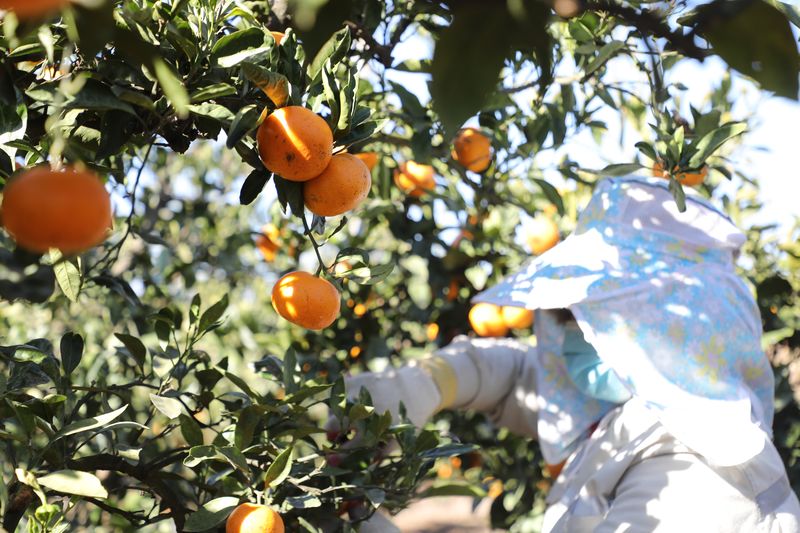
【Financial News Jeju = Jeong Yong-bok】 Jeju’s open-field tangerine production is forecast to rise 7.8% from last year, while the average price fell 5% in late October. Jeju Governor Wi Seong-gon ordered measures to stabilize prices, including blocking the distribution of tangerines that fail to meet commercial standards and expanding joint shipments through the National Agricultural Cooperative Federation (NACF).
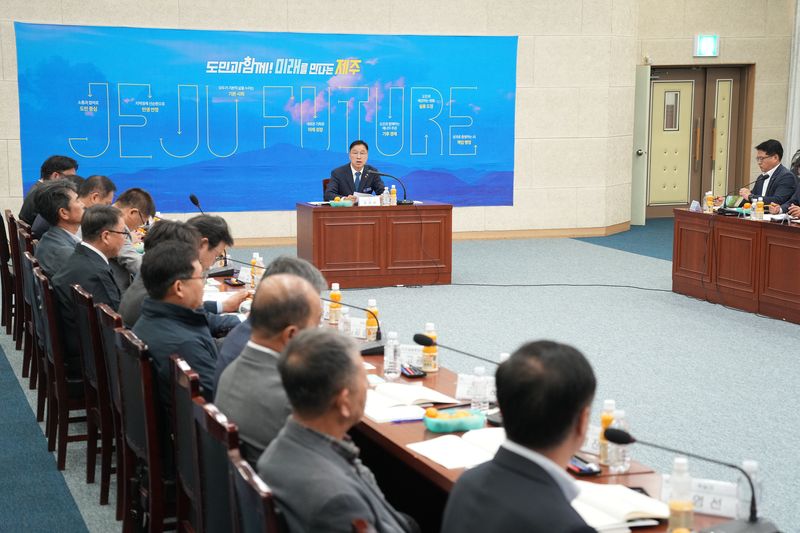
According to Jeju Special Self-Governing Province on the 3rd, Governor Wi chaired a meeting on measures to stabilize open-field tangerine prices at Tamna Hall in the provincial government building on the 2nd, attended by NACF officials and representatives of tangerine production and distribution organizations. The meeting was held to review quality control, shipment adjustments and ways to boost consumption ahead of the main shipping season.
Open-field tangerine production this year is forecast at 443,300 tonnes, up 7.8% from 410,965 tonnes last year. As of October 29, cumulative shipments totaled 27,037 tonnes, just 6.1% of projected production. Managing supply during the upcoming period of concentrated shipments has emerged as a key factor in price formation.
Prices are lower than last year. As of October 29, the average cumulative price per 5 kg was 9,778 won, down 5% from 10,297 won in the same period last year. However, it was 4% above the average price in a typical year, 9,446 won.
The Jeju Agricultural Products Supply and Demand Management Center identified the supply burden from increased production and the market entry of lower-quality tangerines as major factors behind weak prices. Prices of other fruits, including apples and pears traded at Seoul’s Garak Market, were also weak, the center said, adding that tangerine prices should be considered alongside supply and demand across the fruit market as a whole.
Variations in tangerine quality due to recent frequent rain were also raised as an issue at the meeting. Participants said sorting facilities should thoroughly remove tangerines that do not meet quality standards and adjust the shipping schedules for ultra-early-maturing and regular early-maturing tangerines, which are harvested earlier.
Governor Wi ordered the development of policy measures to block non-grade tangerines from entering the market and increase the share of shipments made through NACF channels. Such shipments involve producer organizations, including NACF, jointly sorting and selling tangerines grown by farmers. The system is intended to manage shipment volumes and quality in an organized way.
Jeju Province has also been conducting intensive inspections of the distribution of tangerines that do not meet commercial standards, from the 23rd of last month through the 20th of this month. The meeting discussed how relevant agencies could coordinate their response to quality control and shipment adjustments at production and distribution sites.
NACF is working to expand sales. The Jeju Nonghyup Joint Business Corporation will hold promotional events at major large, medium-sized and small retailers and online distribution channels nationwide in November and December. It also plans to promote consumption in connection with “Citrus Day” on December 1.
A price stabilization management scheme is also in place to supplement farm income. Jeju Province operates a program for farmers who ship through agricultural and citrus cooperatives, providing part of the difference if market prices fall below a set threshold during the peak shipping season. Starting this year, the interval for calculating the average market price used to determine eligibility for support has been changed from monthly to every 15 days. However, the current cumulative price alone is not enough to determine eligibility for the scheme. Future market prices, shipment records and the criteria applicable to each program must also be considered.
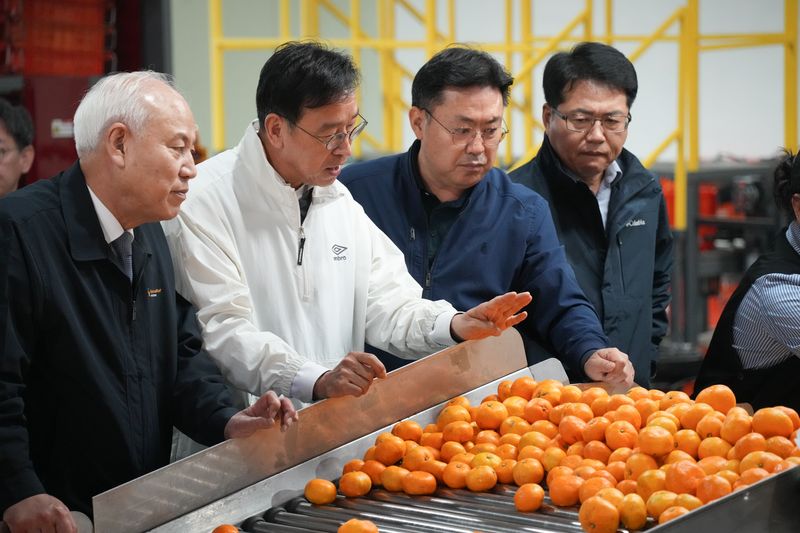
Governor Wi also called for consideration of research into tangerine varieties with good storage characteristics even in high temperatures, as well as support for NACF production and distribution advisory staff. He ordered that promotional campaigns to boost consumption using social media be launched earlier, too.
Governor Wi stressed, “It is important that the measures discussed today are properly implemented on the ground so that farmers’ sweat and hard work can lead to a fair income.”
The key to stabilizing open-field tangerine prices this year will be to reduce the concentration of shipments during the main shipping season and maintain commercial quality. Farm incomes are expected to be affected by how fully the shipment adjustments, distribution management and promotional measures discussed by Jeju Province and NACF are implemented on the ground.
[email protected] Jeong Yong-bok Reporter