Gwangju Special City seeks to boost fishers’ incomes by expanding ‘fish home’ artificial reefs
- Input
- 2026-11-03 09:24:11
- Updated
- 2026-11-03 09:24:11
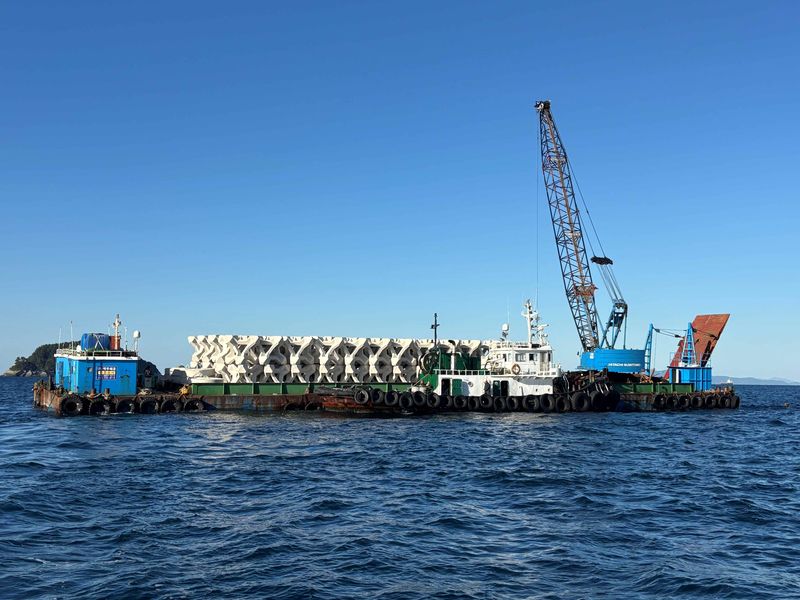
【Financial News, Jeonnam-Gwangju = Hwang Tae-jong, reporter】The Jeonnam-Gwangju Integrated Special City (Gwangju Special City) aims to restore coastal fisheries resources and boost fishers’ incomes by expanding artificial reefs, known as “fish homes.”
According to Gwangju Special City on the 3rd, artificial reefs are structures installed underwater to provide spawning and habitat areas for marine life and a habitat base for food organisms. A survey by the Korea Fisheries Resources Agency (FIRA) found that catches in areas with artificial reefs were reported to average 2.6 times those in ordinary areas.
Since 1971, approximately 310,000 artificial reefs have been installed across a total of 46,686 hectares of waters, expanding the foundation for developing fisheries resources.
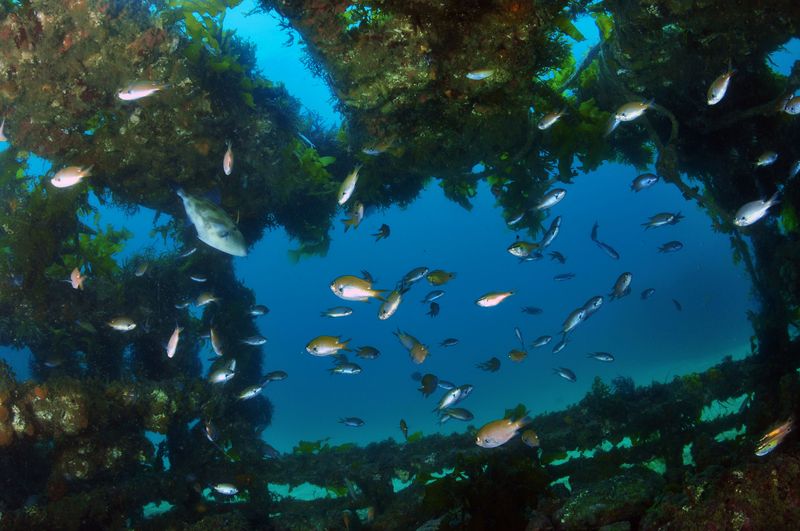
Gwangju Special City plans to install 1,115 artificial reefs by the end of this year across 88 hectares in seven complexes off Yeosu, Goheung and Sinan (72 hectares for fish and 16 hectares for shellfish and algae). By area, these include 16 hectares at Yeondo in Nam-myeon, Yeosu; 12 hectares at Gaedo Island and Sado in Hwajeong-myeon; 16 hectares at Oecho in Bongnae, Goheung; 20 hectares at Sinwon in Bigeum, Sinan; and 24 hectares at Yeri in Heuksan.
Lee Young-jin, head of Gwangju Special City’s Eco-friendly Fisheries Division, emphasized, “Expanding the installation of artificial reefs will contribute to a real increase in fishers’ incomes and the sustainable development of fisheries resources.”
Gwangju Special City will also strengthen follow-up management to continually assess the effectiveness of the facilities. It will first inspect their condition, the organisms living there and catches, and remove underwater waste such as discarded fishing nets to maintain the reefs’ function and improve the marine environment. It will also conduct hydrographic surveys in areas where reefs have been installed to check the status of the facilities, and use the findings when drawing up future project plans, including selecting sites for artificial reef installations.
Lee Young-jin, head of the Eco-friendly Fisheries Division, said, “We will monitor the function of artificial reefs through regular monitoring and follow-up management, and work to restore fisheries resources.”
[email protected] Hwang Tae-jong Reporter