CHAEVI rest-area fast charging averages up to 15.6 sessions a day... eight times the average at regular charging stations
- Input
- 2026-11-03 09:08:13
- Updated
- 2026-11-03 09:08:13
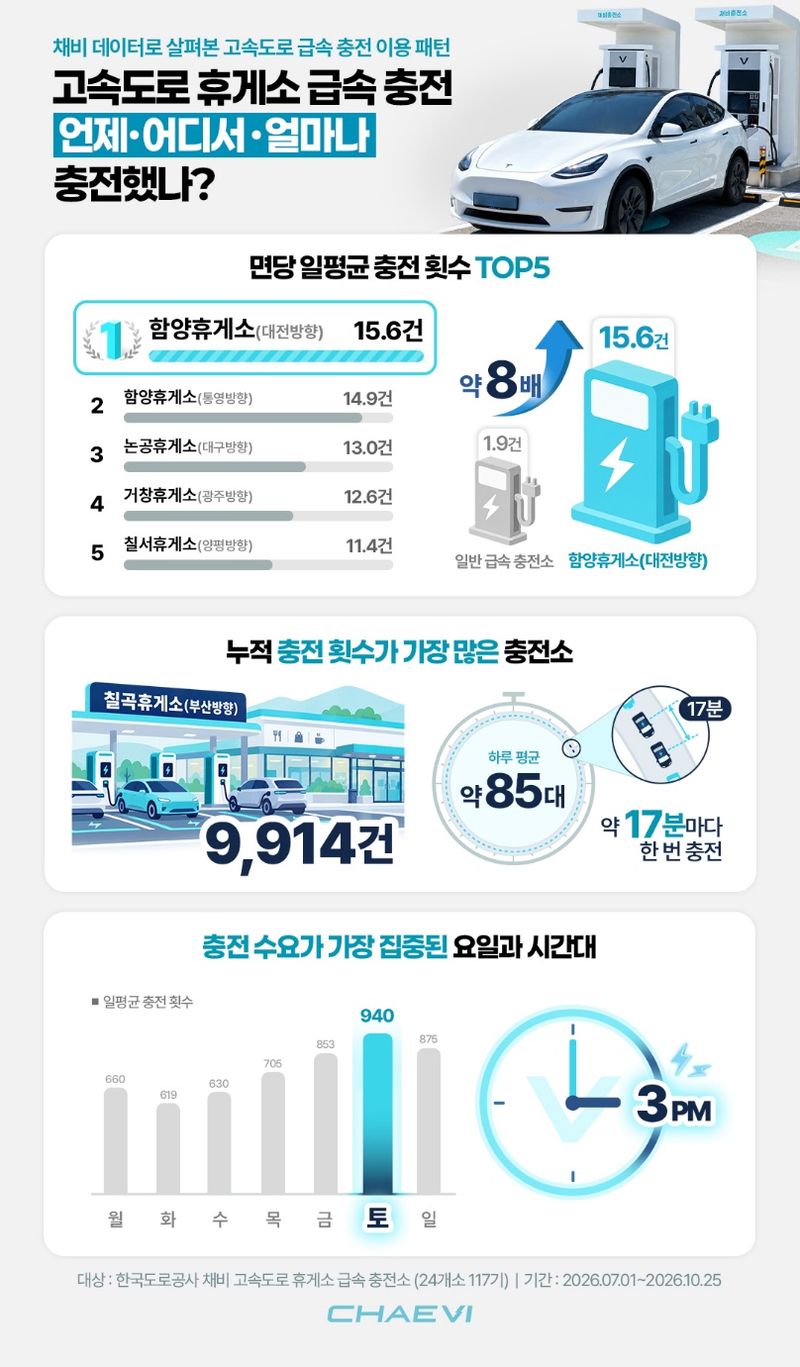
On the 3rd, electric vehicle fast-charging operator (CPO) CHAEVI analyzed and released operational data for 117 fast chargers it operates at 24 Korea Expressway Corporation highway rest areas. The analysis covered chargers that began full-scale operation on July 1.
The five rest areas with the highest average daily charging sessions per bay were Hamyang Rest Area (Daejeon-bound), with 15.6; Hamyang Rest Area (Tongyeong-bound), with 14.9; Nongong Rest Area (Daegu-bound), with 13.0; Geochang Rest Area (Gwangju-bound), with 12.6; and Chilseo Rest Area (Yangpyeong-bound), with 11.4. Compared with the average of 1.9 sessions at regular fast-charging stations, the figure was up to about eight times higher. Across all fast-charging stations at rest areas, average daily charging per bay was about 3.7 times that at regular fast-charging stations.
The two Hamyang Rest Areas, which ranked first and second, are conveniently located as the second or third of the four rest areas on the Tongyeong–Daejeon Expressway in each direction, respectively. CHAEVI said it believes demand was concentrated after operations began in July, coinciding with periods of increased travel such as the summer vacation season and the Chuseok holiday.
Chilgok Rest Area (Busan-bound) ranked first among all rest-area fast-charging stations for its highest daily charging volume, and also had the most cumulative charging sessions, at 9,914. On average, about 85 vehicles use it each day, with a charging session taking place roughly every 17 minutes.
Average daily charging volume and the number of sessions were highest on Saturdays and at 3 p.m., respectively. CHAEVI said this suggests EV drivers frequently use fast chargers at highway rest areas in the afternoon while taking long weekend trips.
CHAEVI said it typically takes a new charging station several months to about a year to become known to users and established along major travel routes, but rest-area charging stations recorded high usage from the early stages of operation. The company said it expects stable demand to improve charger utilization, operational efficiency and profitability.
Under the “2025 Highway Rest Area EV Charging Station Construction Project (Package 3),” CHAEVI currently operates 117 chargers at 24 rest areas and will build 21 more at three sites by the end of the year. Last August, it was selected as the preferred negotiating bidder for the Korea Expressway Corporation’s “2026 Highway Rest Area EV Charging Station Construction Project (Package 2),” and plans to expand to 269 chargers at 56 rest areas nationwide by 2027. The company plans to expand its highway charging network, which has been concentrated in the Yeongnam and Honam regions, to the Seoul metropolitan area, Gangwon, Chungcheong and North Jeolla, among other areas.
CHAEVI CEO Choi Young-hoon said, “As EV adoption expands and charging demand continues to grow, we expect usage frequency and charging volume per charger to increase steadily as well. CHAEVI will strengthen data analysis to build and operate reliable charging infrastructure, while proactively responding to changes in charging demand to improve charging station operating efficiency and user convenience.”
[email protected] Kim Dong-chan Reporter