Jeju Second Airport conflict mediation council to begin work on the 5th... Questions over representation as pro-airport residents’ groups stay away
- Input
- 2026-11-03 09:04:53
- Updated
- 2026-11-03 09:04:53
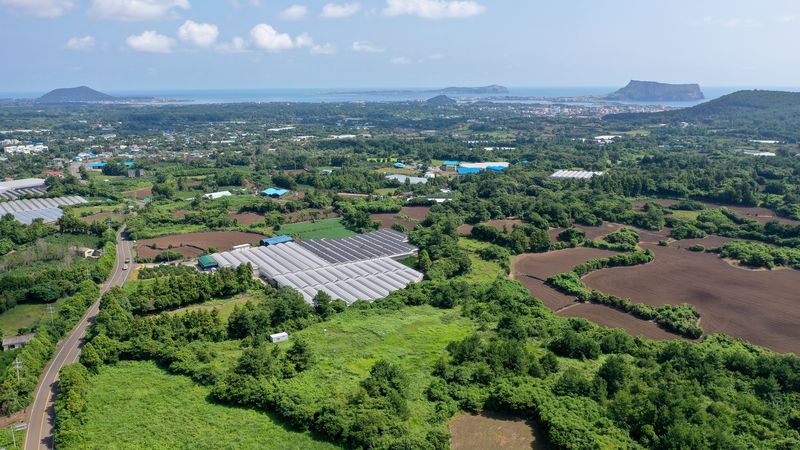
【Financial News, Jeju = Jeong Yong-bok】 The conflict mediation council, which will discuss how to gather residents’ views and the procedures for doing so regarding construction of the Jeju Second Airport, will hold its first meeting on the 5th. The council comprises 13 experts and stakeholders, but questions about its representativeness have emerged even before its launch after residents’ groups supporting construction declined to recommend members.
According to Jeju Special Self-Governing Province on the 3rd, the tentatively named Jeju Second Airport Conflict Mediation Council will hold its first meeting at 11 a.m. on the 5th at Baengnok Hall in the provincial government’s first building. It had originally been scheduled to launch on October 29, but the schedule was pushed back by a week as the province coordinated stakeholder participation.
The council consists of 13 members: seven conflict mediation experts, four stakeholders and two relevant public officials. Jeju Province selected seven mediators by random draw from a pool of 15 experts, three each recommended by five conflict-management agencies designated by the Office for Government Policy Coordination.
The mediators include Park Cheol-gon, director of Hanyang University’s Institute for Conflict Studies; Kim Hak-rin, chair of the civic panel steering committee of the Medical Innovation Committee; Jeon Hyeong-jun, head of the public division at the Korea Conflict Resolution Center; Joo Jae-bok, distinguished research fellow at the Korea Research Institute for Local Administration; Kim Mi-kyeong, head of Neoul, a Conflict & Healing platform; Park Hye-yeon, research fellow at Hanyang University’s Institute for Conflict Studies; and Cho Eun-young, research fellow at the Legislative Research Center of the Gyeonggi Research Institute.
The four stakeholders are Kim Hyeong-ju, former head of Nansan-ri, recommended by a village at the planned airport site; Yang Yu-jun, president of Jeju National University’s student council, recommended by the Jeju Regional University Student Council Association; Jin Hui-jong, former head of the Jeju Institute for Lifelong Education and Scholarship, recommended by the Emergency Provincial Citizens’ Assembly to Stop the Push for the Jeju Second Airport; and Lee Jae-seong, chair of the youth division of the Jeju Chamber of Commerce and Industry, recommended by the Jeju Tourism Association. The relevant public officials are Song Chang-yun, Jeju Province’s communications and second airport officer, and Kang Hui-gyeong, head of the Environmental Policy Division.
The key issue is the absence of residents’ groups that support the project. Jeju Province asked pro-airport groups to recommend members and sought to persuade them to participate, but the Pan-Provincial Promotion Committee for the Jeju Second Airport and others did not submit recommendations. Instead, a business-sector representative recommended by the Jeju Tourism Association will take part.
The Pan-Provincial Promotion Committee for the Jeju Second Airport issued a statement on the 2nd opposing the council, saying, “The formation of the council could lead to new conflict and delays to the project.” It argues that the remaining legally required procedures should proceed because the national project has already gone through the government’s official notification of its master plan. In contrast, groups opposed to construction welcome the formation of a consultative body to gather residents’ views and maintain that a process such as a resident referendum is needed to ascertain their wishes.
The council will not directly decide whether to support or oppose construction of the second airport. It is an advisory body that will discuss how to provide residents with key information about the airport project and how to gather their views.
At its first meeting, the council will elect a chair and discuss its operating rules and future direction. A proposal has been made to prioritize unanimous agreement among all members and, if agreement proves difficult, apply a set voting threshold. The council will decide on specific operating rules.
The council will then meet two to three times a month to discuss the scope of information disclosure, as well as the methods and procedures for gathering residents’ views. It will also hold expert briefings and issue-focused debates if needed.
The council plans to conclude its discussions by January 2027 and deliver its findings to the governor sometime in February. Jeju Province intends to complete the process of gathering residents’ views by the first half of next year, based on the procedures proposed by the council.
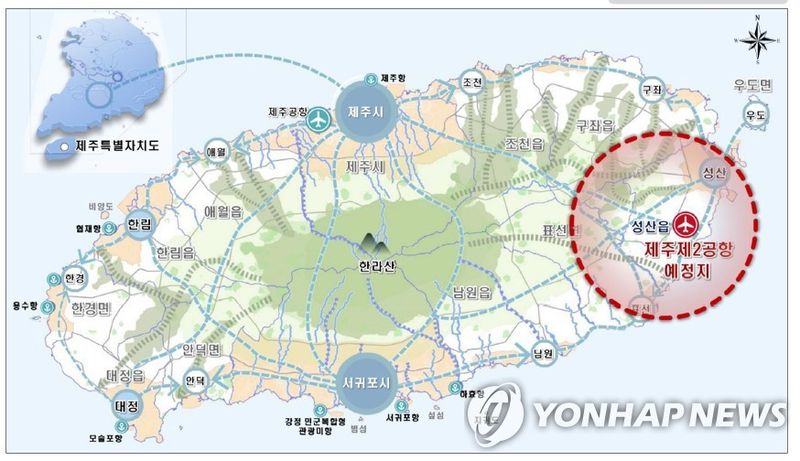
The dispute over the Jeju Second Airport has continued into its 11th year since the government announced the Seongsan-eup area of Seogwipo City as a candidate site in 2015. The Ministry of Land, Infrastructure and Transport issued a public notice of the airport’s master plan in September 2024, covering approximately 5.51 million square meters, and is now proceeding with follow-up procedures, including an environmental impact assessment.
The Ministry of Land, Infrastructure and Transport is the agency responsible for moving the project forward. Further discussions are needed on how the results of the public consultation process to be arranged by Jeju Province will be reflected in the national project’s decision-making and environmental impact assessment.
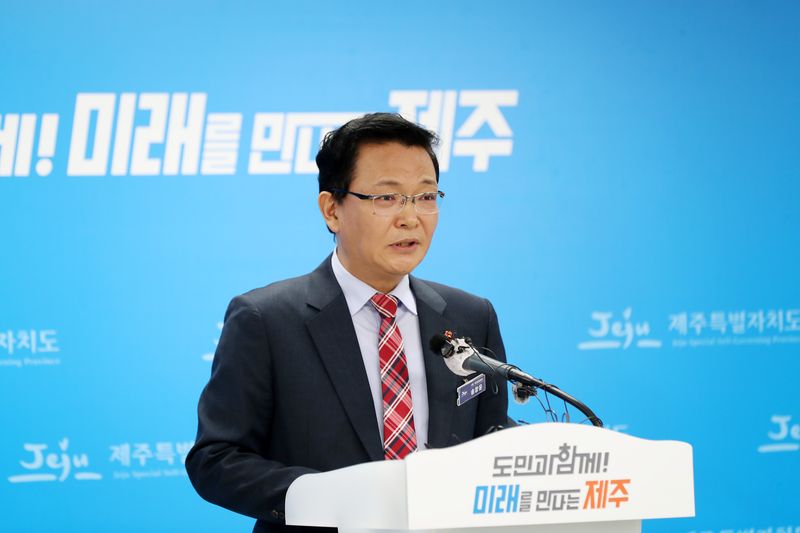
Song Chang-yun, Jeju Province’s communications and second airport officer, explained, “The council is not a body that decides whether to support or oppose the second airport project. It is an advisory body that discusses fair methods and procedures for gathering residents’ views so they can make their own decisions based on sufficient information.”
Even with the council’s launch, questions about its representativeness and whether its findings will be accepted remain because some residents’ groups that support the project are staying away. The council’s key task is to build agreement on the process for gathering residents’ views and connect the outcome to the Ministry of Land, Infrastructure and Transport’s handling of the project.
[email protected] Jeong Yong-bok Reporter