“Han River” in the name—but what about in reality? A look at apartment complexes changing their names
- Input
- 2026-11-04 07:00:00
- Updated
- 2026-11-04 07:00:00
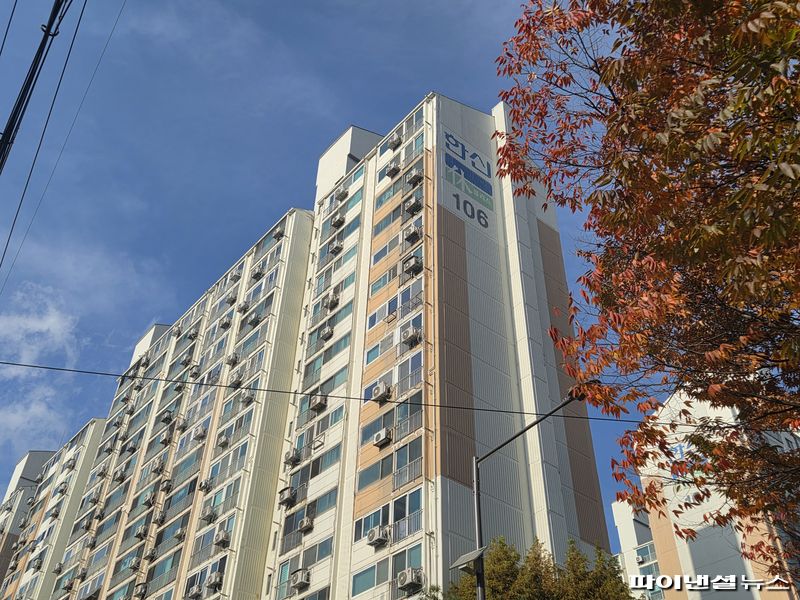
According to industry sources on the 3rd, Yangpyeong Hanshin Apartment in Seoul’s Yeongdeungpo District sought to change its name to “Seonyudo Han River Hanshin Apartment” last October and received approval from 87% of residents. The management office said the aim was to enhance the complex’s public image and asset value.
Completed in 1996, the complex has 1,215 households. Its new name drops “Yangpyeong,” the name of its legal neighborhood, and adds “Seonyudo” and “Han River.” Seonyudo Station on Seoul Subway Line 9 is a three-minute walk away, while Yanghwa Hangang Park and Seonyudo Park are a 15-minute walk away. Some upper-floor units also offer views of the Han River.
Until now, apartment renamings have mostly involved adopting the name of a nearby area with greater recognition or appeal. Yangpyeong Hanshin went a step further, incorporating its surroundings, including parks and the Han River, into its name. The change reflects growing preference for complexes near the Han River.
Efforts to replace the area names used in complex names have also continued steadily. Hillstate Hong-eun Forest, a 623-household complex in Seodaemun District completed in 2022, is seeking to rename itself Hillstate Seodaemun Forest, replacing “Hong-eun,” the name of its legal neighborhood, with “Seodaemun,” the name of the autonomous district. The aim is to raise its profile by using the name of a broader area.
Some complexes are emphasizing the area residents actually use. Geumho Daewoo in Geumho-dong, Seongdong District, is seeking to change its name to Oksu Daewoo. It is located between Geumho Station and Oksu Station on Seoul Subway Line 3, and residents’ more frequent use of Oksu Station is cited as one reason for the proposed change.
The push to change names is underpinned by the expectation that improving a complex’s image could also have a positive effect on home prices. Sinchon Forest I’Park in Sinsu-dong, Mapo District, is cited as an example: its prices rose after it changed its name to Mapo I’Park Foret.
However, no definitive cause-and-effect relationship can be established between a name change and rising home prices. That is because various factors, including market conditions, location and expectations for redevelopment, come into play. With apartment prices in Seoul having risen for 90 consecutive weeks, it is also difficult to isolate the effect of a name change alone.
Ko Jun-seok, a professor at the Sangnam Institute of Management, Yonsei University, said, “Some people believe that an area name or brand is holding back home price increases,” adding, “Regardless of its actual impact on prices, there is a trend toward choosing names that make an apartment seem like a more desirable place to live.”
[email protected] Choi Ga-young Reporter