“Seniors Want Different Products”: Harumeku’s Head of Product Planning on the Strategy Behind Its Success
- Input
- 2026-11-03 17:00:00
- Updated
- 2026-11-03 17:00:00
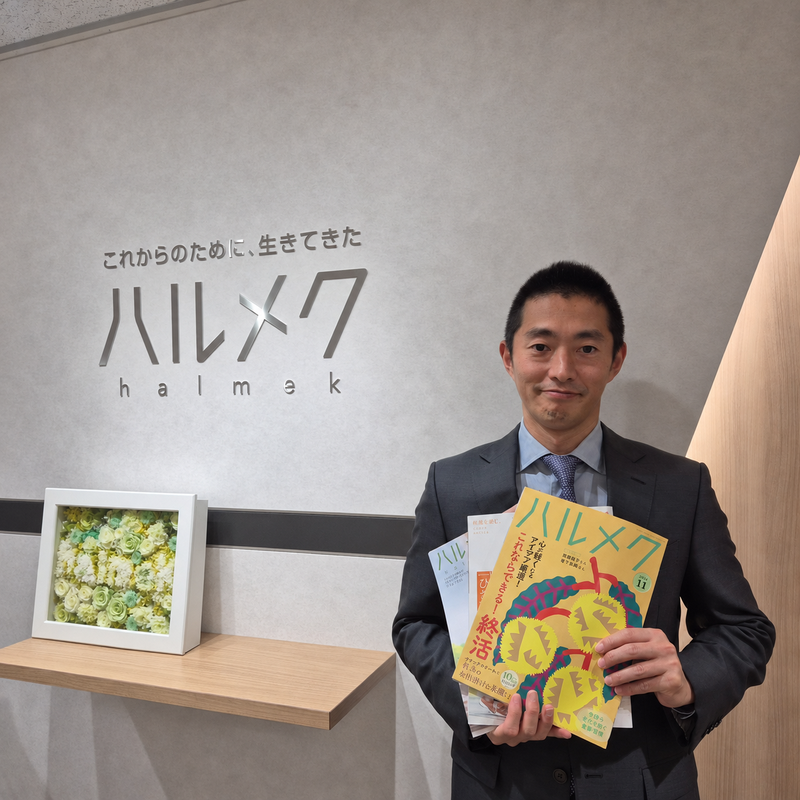
When we met him on the 28th of last month at Harumeku’s headquarters in Chiyoda City, Tokyo, Kawase Suguru, Executive Officer and Head of the Corporate Planning Office at Harumeku Holdings, was overseeing everything from product planning and development to sales. Harumeku has sold a cumulative total of 1.15 million pairs of “pelvic floor support shorts,” developed in response to women’s concerns about urine leakage, over roughly 10 years. It has also sold carrot juice for 21 years, after readers requested it, and offers it as a regularly delivered product. Asked how the company identifies customers’ unmet needs and turns them into purchases, he instead began by describing the robot vacuum, which had underperformed.
He said, “Cleaning has become part of people’s daily rhythm or routine, so surprisingly few wanted to eliminate cleaning altogether.” People also had their own preferred ways of cleaning spaces they especially wanted to keep clean, such as kitchens and bathrooms. He explained that robot vacuums, which clean throughout the home, had difficulty meeting such specific needs.
As an example of identifying customers’ lifestyles in detail and reflecting them in products, he cited osechi, traditional Japanese New Year’s dishes. As families gathered less often, demand emerged for products divided into individual portions rather than the large spreads traditionally served. The company also took note of how mothers and grandmothers preparing the food could be so busy looking after their families that they did not get enough of the shrimp and meat they themselves liked. Individual servings meant they, too, could make sure to have their share.
Kawase said the company receives about 2,000 customer postcards about osechi each year, and product staff read them one by one. Feedback that the food is too salty or the meat too tough is also taken into account when developing the next products.
The company repeatedly sought customer feedback during the development of its carrot juice as well. After the magazine highlighted the importance of eating carrots, readers said it was difficult to eat a lot of them. The company also sold blenders, but customers’ requests eventually led to ready-made juice. He said, “We recommend regular deliveries so customers can drink it every day.”
After a sale, the company also uses each customer’s purchase history. It tracks separately customers who have bought a few cans of carrot juice to try and those who buy it regularly. It also suggests additional purchases to customers who have bought underwear. Kawase said, “We send postcards or emails to people who have bought one pair, asking if they would like to make a second or third purchase.”
He cited managing printing and delivery costs as the first measure for securing profitability. The magazine is printed in quantities that match the number of subscriptions, reducing unnecessary printing. Catalogs are also sent together with the magazine to lower delivery costs.
“Continuing to send catalogs to people who don’t buy anything is wasteful,” he said. “We analyze who has purchased products and stop sending catalogs to nonbuyers, among other steps, to reduce unnecessary production and delivery.”
Customer complaints that arise after a sale are also discussed at weekly meetings attended by the company president. Kawase said, “We continue to analyze what went wrong, one issue at a time, and make improvements,” adding, “The rate of customer complaints is also declining.”
[email protected] Seo Hye-jin Reporter