Liver cancer marker drops from 56,000 to 3.1... The treatment that helped a patient in his 70s with end-stage liver cancer recover without surgery [Health Check]
- Input
- 2026-11-03 08:32:55
- Updated
- 2026-11-03 08:32:55
[Financial News] “I have to see Seo-yeon become a member of the national team, but this is serious.”
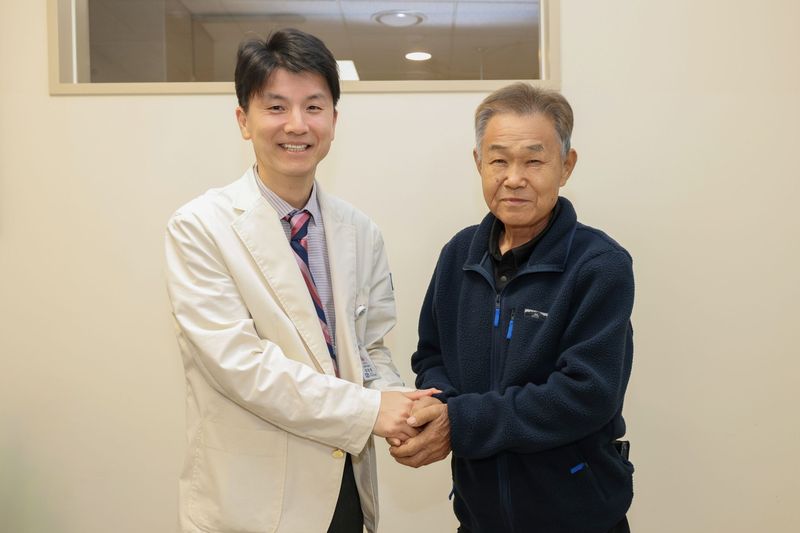
Those were the first words Mr. Jo, 77, said to his family after being diagnosed with end-stage liver cancer earlier this year. His life expectancy was difficult even to estimate, but he received hepatic arterial infusion chemotherapy at The Catholic University of Korea, Seoul St. Mary's Hospital and recovered enough to attend his granddaughter’s judo match in person just eight months later.
Mr. Jo had worked in livestock farming in Cheongju, North Chungcheong Province, and had generally enjoyed good health. Earlier this year, however, he went to a hospital with sudden abdominal pain and distension. After doctors suspected cirrhosis and recommended evaluation at a tertiary general hospital, he visited The Catholic University of Korea, Seoul St. Mary's Hospital in February.
Detailed tests showed advanced, end-stage liver cancer. The cancer had taken up most of the right lobe of his liver and spread to the left lobe, with extensive invasion of the portal veins on both sides. He had ascites, and his liver function had also deteriorated significantly. Immunotherapy and targeted anticancer drugs are now commonly used for advanced liver cancer, but Mr. Jo did not meet the criteria for them because of the extensive tumor, invasion of major blood vessels and severe decline in liver function.
When immunotherapy isn’t an option, treat the liver directly... A labor-intensive treatment was chosen
Professor Jang Jeong-won, head of the Liver Cancer Center and a gastroenterologist, chose hepatic arterial infusion chemotherapy (HAIC) after multidisciplinary discussions with the center’s medical team. The procedure involves implanting a port under the skin to deliver chemotherapy, then connecting a catheter to the hepatic artery to administer the drugs directly to the liver. Concentrating the drugs in the liver can improve their effect on the tumor while reducing exposure throughout the body and limiting side effects.
However, the treatment requires hospitalization and considerable staff and equipment—in other words, it is “labor-intensive.” As immunotherapies that can be prescribed on an outpatient basis and oral targeted therapies have become the norm, few medical institutions offer this treatment. But it is an important alternative for patients who cannot readily use conventional chemotherapy or are unlikely to benefit sufficiently from it. The Liver Cancer Center at The Catholic University of Korea, Seoul St. Mary's Hospital considers the tumor and liver function, among other factors, and offers this treatment as one of the available options.
Liver cancer marker falls from 56,000 to 3.1... Grandfather heads to his granddaughter’s judo match
Mr. Jo, who continued treatment, visited the hospital on the 23rd of last month to check the results of his fifth round of chemotherapy. His liver cancer marker—alpha-fetoprotein (AFP)—which had climbed to 56,000 at the time of his initial diagnosis, fell to 3.1, back within the normal range. His ascites and swelling disappeared, and he showed no signs of jaundice. His albumin level, which reflects the liver’s ability to synthesize protein and a person’s nutritional status, also rose from 2.7 to 3.5, indicating an overall improvement in his clinical condition. It is too early to be certain, but this is an encouraging change for a patient who had been at the brink between life and death.
Even during his hospital treatment, Mr. Jo made time to visit and cheer on his middle-school-aged granddaughter, Jo Seo-yeon, at her judo matches. She placed first at the National Junior Sports Festival, bringing her grandfather great joy.
His second son, who had been overseeing his father’s care and treatment, said, “My father had never touched a drop of alcohol in his life, yet he was suddenly diagnosed with end-stage liver cancer. I spent a difficult time blaming myself, wondering whether I had caused him so much worry that he developed a serious illness.” He added, “I sincerely thank Professor Jang Jeong-won and the medical team for giving me time to be a devoted son to my father.”
Professor Jang said, “When he first came to us, his condition was so poor that it was difficult even to discuss his life expectancy, and I was very worried. I’m pleased that after treatment his ascites and swelling disappeared and his test results improved considerably.” He added, “The patient and his family both approached treatment with a positive and proactive attitude, and achieving a meaningful result for them gives me a great sense of fulfillment as a medical professional.”
The Catholic University of Korea, Seoul St. Mary's Hospital opened its Liver Clinic in 1996 and later expanded its services into a Liver Cancer Center, building 30 years of experience in treating liver diseases and liver cancer. Its multidisciplinary care system brings together gastroenterology, hepatobiliary and pancreatic surgery, abdominal and interventional radiology, radiation oncology, pathology and medical oncology to provide treatment tailored to each patient’s liver function, overall condition and degree of tumor progression.
[email protected] Medical Correspondent Jung Myung-jin Reporter