Latest-generation 3,600-ton Seo Hui launched in Geoje... 70 types of equipment localized to boost global competitiveness
- Input
- 2026-11-03 10:42:10
- Updated
- 2026-11-03 10:42:10
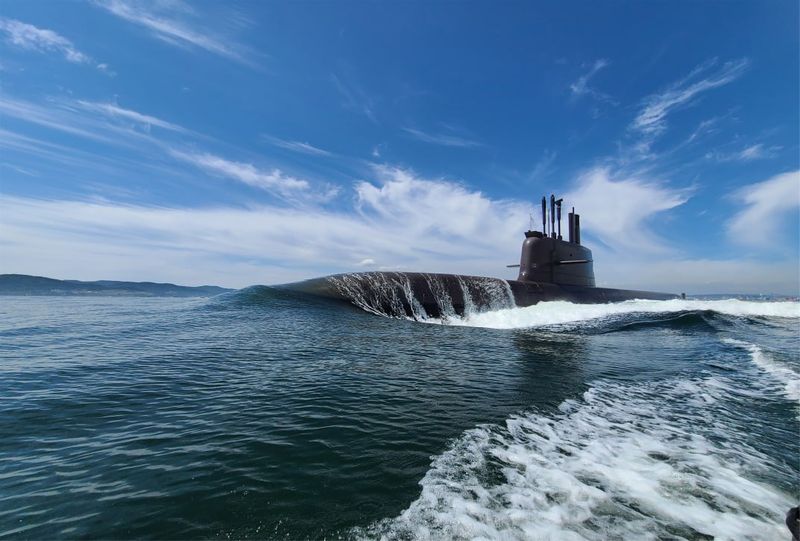
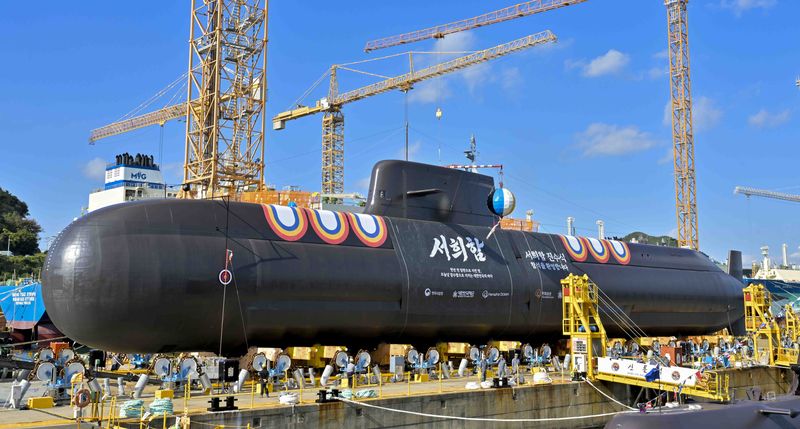
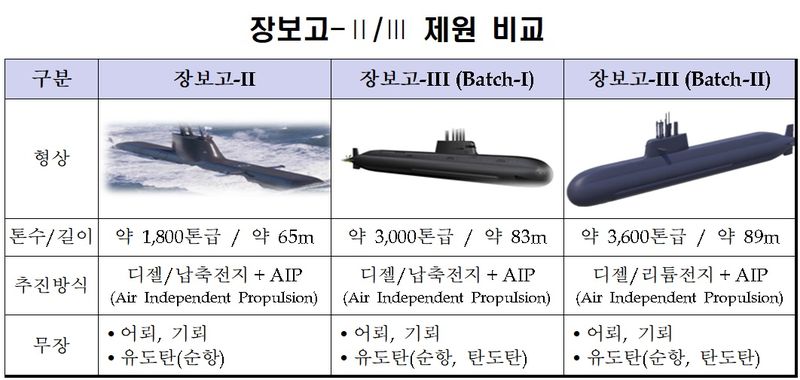
The Republic of Korea Navy and the Defense Acquisition Program Administration will hold a launch ceremony for Seo Hui (SS-088), the second boat in the Jangbogo-III Batch-II program, on the 3rd at Hanwha Ocean’s Okpo Shipyard in Geoje. National Assembly Speaker Cho Jeong-sik will be the guest of honor, with around 200 key military officials and defense industry figures in attendance. Following the lead boat, ROKS Jang Yeong-sil, this launch signals that mass production of the second 3,600-ton diesel submarine independently designed and built using Korean technology is now firmly on track.■ Upgraded “eyes and ears” and lithium batteries give the underwater sentry wingsCompared with the existing Jangbogo-III Batch-I (Dosan Ahn Chang-ho-class, 3,000 tons), Seo Hui represents a dramatic leap in size and performance. Its hull has been lengthened to about 89 meters, providing ample interior space for a range of weapons and advanced equipment. The performance of its combat and sonar (sound-detection) systems—the submarine’s brain and sensory organs—has been substantially improved, giving it the ability to identify multiple targets at long range before its adversaries and strike them precisely.
The most noteworthy innovation is in its “energy source.” Seo Hui is equipped with a domestically developed lithium battery system whose reliability has been proven. Compared with conventional lead-acid batteries, it dramatically extends submerged endurance and the time it can travel at maximum speed, taking its covert deep-sea operational capability to a new level. The submarine also incorporates extensive safety features designed to maximize survivability, including the latest noise-reduction technology and a hull-penetrating periscope.
With 12 additional types of equipment localized compared with Batch-I, including the lithium battery system, Seo Hui carries a total of 70 types of domestically made components. This is expected to reduce overseas dependence for defense components subject to strict military security requirements and ensure prompt follow-on logistical support, while laying a solid foundation for the export competitiveness of Korean submarines (K-Submarine) in the global market. After sea trials, Seo Hui will be delivered to the Navy in 2028 and deployed once it has completed the process of being brought into service.■ Building a robust security network with a “high-low mix” tailored to the waters on three sides of the peninsulaMaritime security experts said the launch of the 3,600-ton Seo Hui marked another step toward the military’s development of a balanced submarine force structure with a range of classes, optimized for the geographical characteristics of the waters around the Korean Peninsula. They noted that tailoring force operations to cover both the deep waters of the East and South Seas and the shallow continental shelf of the Yellow Sea is crucial to national security.
In fact, the waters around the Korean Peninsula, which is surrounded by sea on three sides, vary greatly from one area to another. The South Sea, with an average depth of about 100 meters, the East Sea, with an average depth of about 1,500 meters, and the vast open ocean are ideal operating grounds for the 3,600-ton Seo Hui, launched this time, and for large nuclear-powered submarines that are expected to be introduced in the future to exert overwhelming strategic deterrence. With their long submerged endurance and powerful armaments, large submarines play a pivotal role in striking key enemy bases from a distance and controlling threats on all fronts.
By contrast, in the coastal waters of the Yellow Sea, where the average depth is about 44 meters and the tidal range is large, the Navy’s 1,200-ton Jang Bogo-class and 1,800-ton Son Won-il-class medium and small diesel submarines, which it operates effectively, offer unique tactical value. The complex underwater acoustic environment and shallow waters can pose challenging conditions for large vessels, but provide a natural fortress where medium and small submarines can lie in wait undetected. These medium and small submarines are also the assets best suited to detect on the front line and tactically thwart North Korea’s asymmetric threat of surprise infiltration using small submarines and semi-submersibles under 500 tons.
Defense and security experts and relevant research institutes emphasize the importance of a “hybrid force structure” that tactically complements the diverse characteristics of the waters around the Korean Peninsula. An official at a government-funded research institute specializing in defense said, “With the launch of Seo Hui, we have secured a powerful ‘High’ force to protect the East and South Seas and the open ocean. We should also recognize anew the value of medium and small diesel submarines—the ‘Low’ force that safeguards sovereignty over the territorial waters off the Yellow Sea without leaving any gaps.” The official added, “A two-track strategy that simultaneously pursues the acquisition of large strategic submarines and the continued advancement of medium and small conventional forces will be a key milestone in completing our naval capabilities, enabling us to fully control the waters on all three sides of the peninsula.”
[email protected] Lee Jong-yoon Reporter