Will New York Stocks Turn Higher After the Midterms?
- Input
- 2026-11-03 03:51:31
- Updated
- 2026-11-03 03:51:31
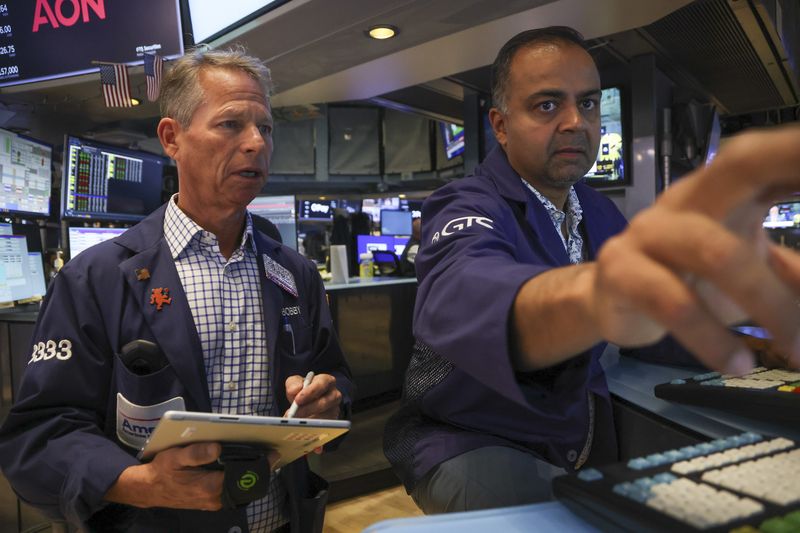
New York stocks are struggling amid concerns about the profitability of artificial intelligence (AI) investments, but forecasts suggest they could rise after the midterms, based on past experience.
Whether one party wins a landslide in the midterms, the two parties divide control of Congress, or Washington politics gets bogged down in gridlock, stocks have risen after midterm elections in the past.
Stocks rise more than 13% a year after elections
CNBC reported on the 2nd (local time) that the S&P 500 has tended to rise after midterm and presidential elections.
According to CNBC's analysis, from 1980 to 2024, the S&P 500 rose an average of 0.2% one day and one week after presidential and midterm elections, and was up 1.1% a month later.
The index jumped 13.7% one year after midterm elections and 13.8% one year after presidential elections. It rose in 91% of cases. Looking only at the 1982–2022 midterms, the S&P 500 rose after all 11 elections.
Ryan Detrick, chief market strategist (CMS) at Carson Group and a CNBC columnist, said, “There tends to be a certain amount of anxiety ahead of these elections.” But, he added, “once the election is over, the market tends to do quite well, with a great sense of relief.”
Split control of the White House and Congress is the best-case scenario
Of the various scenarios, markets have historically welcomed a split of power between the White House and Congress the most. When the party in power lost both chambers or failed to hold a majority in at least one, stocks performed best after the election.
One year after 10 midterm elections and five presidential elections in which no party controlled both the White House and Congress, the S&P 500 had risen by an average of 15%. The market fell in just one of those 15 cases in the year after the election.
By contrast, when one party controlled both the White House and Congress, the index's average gain a year later was just 11.5%.
Detrick said, “When a massive red wave (a Republican landslide) or blue wave (a Democratic landslide) occurs, the market doesn't actually welcome it,” explaining, “because too much power goes to one side, and there is more one-sided spending.”
A Democratic landslide in the midterms would be positive
A scenario in which Democrats win a landslide in this midterm election while President Donald Trump holds on to the White House would also be positive.
According to CNBC's analysis, in the 1986, 1990 and 2006 midterm elections, which unfolded in this way, the S&P 500 fell an average of 0.5% on the day the results came in, but rose 3.4% a month later and an average of 10.9% a year later.
There are exceptions.
One year after the 2000 presidential election, the S&P 500 plunged 22.1% in the wake of the dot-com bubble's collapse. It was the worst stock-market performance after an election since 1980. By contrast, one year after the 2020 presidential election, the index posted a record gain of 38.3%, boosted in part by the base effect of the COVID-19 pandemic.
AI
Société Générale (SG) said it was important to bear in mind that the Federal Reserve System's (Fed) monetary policy direction and the corporate earnings cycle matter more than elections.
For example, stocks fell after the 2018 midterm elections, during President Trump's first term. The key factor was that the Fed tightened monetary policy, raising its benchmark interest rate four times. The S&P 500 ultimately fell 6.2% that year, though it rebounded by 11.7% the following year.
The key factor now is artificial intelligence (AI). Whether technology stocks will keep falling amid concerns about the profitability of AI investments is a key variable that will determine the market's direction.
Detrick predicted that if the AI-driven rally and momentum hold up and the economy continues to grow, “this bull market will probably continue to do quite well.”
The problem is that if Democrats take control of both chambers, Congress is certain to put pressure on the buildout of AI infrastructure. This could have a negative impact on the AI theme.
Iran War
Rising oil prices due to the Iran war, surging government bond yields around the world, and France's mini-debt crisis amid widespread unrest are also weighing on markets.
The situation could worsen, particularly if Trump resumes airstrikes on Iran after the midterms, as he has warned he would.
Jim Reid, Deutsche Bank's global head of macro, struck a pessimistic note in an analysis note, saying, “The seasonal factor (of the post-election period) is not destiny (something that is bound to happen),” and adding, “Concerns about Iran, AI and France are not going to magically disappear.”
[email protected] Song Kyung-jae Reporter