Israeli Arab parties formalize outside support for ‘anti-Netanyahu camp’... hold key to change of government
- Input
- 2026-11-02 22:45:03
- Updated
- 2026-11-02 22:45:03
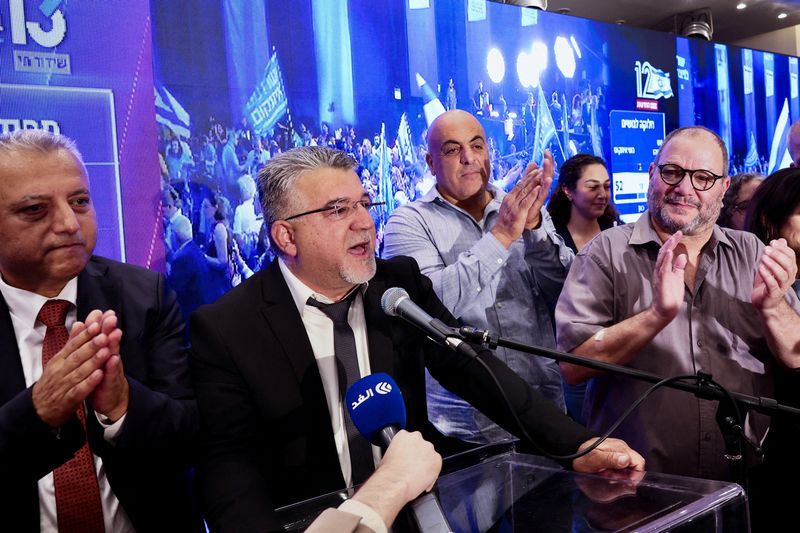
[Financial News] Arab parties holding the balance of power over the formation of Israel’s next government have formally declared their intention to support the anti-Netanyahu opposition camp from outside in order to remove Prime Minister Benjamin Netanyahu from power.
According to foreign media outlets including The Guardian and The Times of Israel on the 2nd (local time), Joint List leader Yousef Jabareen and lawmaker Ahmad Tibi, among others, said they were ready to support the opposition in light of the recent election results.
■ “We won’t join a coalition, but will work together to oust Netanyahu”
In an interview with the British newspaper The Guardian, Jabareen said, “We want to use our political strength to oust the extremist Netanyahu government,” adding, “For very clear reasons, we have no plans to join a coalition directly, but will consider the possibility of supporting the anti-Netanyahu camp from outside.” Tibi also stressed, “I’m not interested in a government or a ministerial post, but I want to help anyone seeking to bring down and replace this terrible government.”
In Israel’s general election held on the 29th of last month for the 120-seat Knesset, the right-wing bloc led by Prime Minister Netanyahu won just 53 seats, while the anti-Netanyahu bloc led by former chief of staff Gadi Eisenkot won 48. Both sides fell short of the 61 seats needed for a majority to form a coalition.
Arab parties, by contrast, won a total of 19 seats, including 11 for Joint List and eight for Ra’am, achieving their best result ever. If Joint List, which won 11 seats, backs the 48-seat anti-Netanyahu bloc from outside, the opposition would grow to 59 seats, surpassing the pro-Netanyahu bloc. Depending on the course taken by Ra’am, another Arab party with eight seats, the opposition could even secure a majority, leaving Arab parties holding the decisive key to governing the country.
■ Demands include changes to Palestinian policy and increased funding... reconciling differences within the opposition is key
Arab parties are demanding an end to structural discrimination, funding to combat violent crime in Arab communities, and a halt to home demolitions as conditions for supporting a change of government. They have also called for a political vision that includes ending the war in the Gaza Strip and pursuing a diplomatic path toward establishing a Palestinian state. However, some opposition parties led by Jewish politicians are skeptical of these demands, and analysts say this could become an obstacle in future negotiations.
Indeed, even within the anti-Netanyahu camp, right-wing figures including Avigdor Lieberman, leader of the Yisrael Beiteinu party, have voiced opposition to cooperation with Arab parties. As a result, a minority government is being widely discussed as a likely option: rather than forming a formal coalition with Arab parties, the opposition led by Eisenkot would receive their indirect support in parliamentary confidence votes and other ballots.
Joint List has indicated that it plans to recommend to President Isaac Herzog that he give a candidate from an anti-Netanyahu Zionist party the mandate to form a coalition, demonstrating its strong resolve to change the government. Having begun informal contacts with opposition parties, Joint List is now drawing attention as observers wait to see what changes its future negotiations will bring to Israeli politics.
[email protected] Park Ji-hyun Reporter