Broadcom Inc.'s 18.6 billion won fine finalized... Supreme Court: “Forced Samsung to buy components”
- Input
- 2026-11-02 19:20:27
- Updated
- 2026-11-02 19:20:27
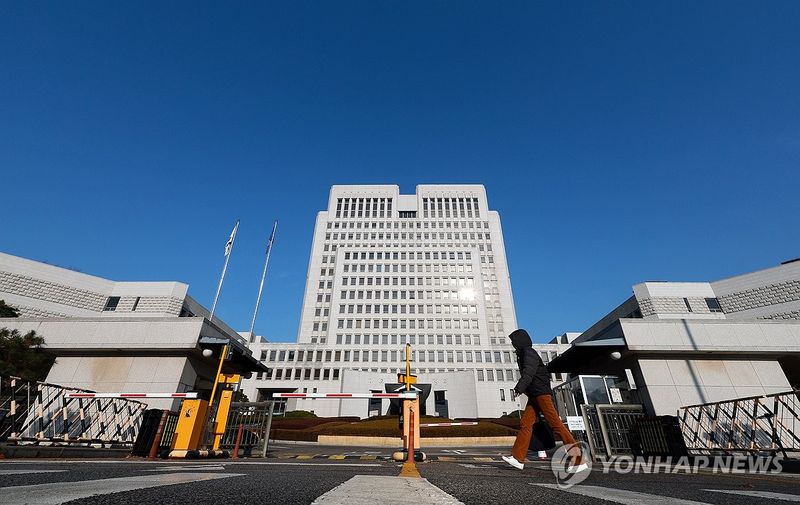
According to legal sources on the 2nd, the First Petty Bench of the Supreme Court of Korea, with Justice Cheon Dae-yeob as the presiding justice, dismissed all appeals on the 27th of last month in a lawsuit brought by four companies, including Broadcom Inc.'s U.S. headquarters and a South Korean corporation, against the Korea Fair Trade Commission seeking to overturn corrective orders and orders to pay a fine. Broadcom Inc. will also have to bear the appeal costs.
The dispute began in September 2019. When Samsung Electronics adopted antenna switch module components from a Broadcom Inc. competitor for some of its flagship smartphones, Broadcom Inc. decided to pursue exclusive-dealing arrangements for satellite positioning system and connectivity components. Starting in February 2020, it pressured Samsung Electronics by stopping approval of its purchase orders and halting shipments, technical support and even production. Samsung Electronics signed a long-term contract the following month. Under the agreement, it had to purchase at least a specified amount and pay the difference if it fell short. On October 6, 2023, the Korea Fair Trade Commission imposed corrective orders and a fine of 18.664 billion won, finding that Broadcom Inc. had caused a disadvantage by abusing its superior bargaining position.
There were four issues: whether Broadcom Inc. held a superior bargaining position in its dealings with Samsung Electronics; whether the long-term contract amounted to imposing a disadvantage; whether the conduct was improper; and whether the calculation of the relevant sales used to determine the fine was appropriate. A superior bargaining position is one in which a party is relatively dominant or can at least exert substantial influence over the other party's business activities.
The Seoul High Court ruled in favor of the Korea Fair Trade Commission on all four points, and the Supreme Court of Korea agreed. As to Broadcom Inc.'s superior bargaining position, the court cited the fact that replacing its components was virtually impossible. Samsung Electronics had designed its products, laid out production lines and obtained certifications based on Broadcom Inc.'s components, and the court inferred that switching to other components would take considerable time and incur substantial costs. Samsung Electronics typically kept only two to four weeks' worth of inventory, while ordering new components took at least 12 weeks, so a sudden supply cutoff could halt production lines. The components also required firmware supplied by Broadcom Inc. to operate, and any problems could not be resolved without its technical support.
The court found that the minimum-purchase and shortfall-payment provisions had effectively restricted Samsung Electronics' choice of components. Specific plans to adopt components from other suppliers were canceled or scaled back, and Samsung Electronics was also burdened with buying in advance components from Broadcom Inc. that it would use the following year. The court found it difficult to conclude that the agreement reflected Samsung Electronics' voluntary wishes, and that no benefit had been provided to offset the disadvantage.
The court also found the conduct improper. Its grounds included the use of the highly unusual tactic of arbitrarily cutting off supply; Broadcom Inc.'s clear awareness that the contract had been concluded against Samsung Electronics' wishes; its intent to prevent the adoption of competitors' components and secure exclusive supply over the long term; and the resulting restrictions on competing component suppliers' opportunities to do business.
The court also found no issue with the calculation of the fine. Because the minimum-purchase and shortfall-payment provisions applied to purchases of radio-frequency front-end and connectivity components, and Samsung Electronics had in fact purchased those components to fulfill the agreement, the panel said there was no error of law in the lower court's finding that “sales from those transactions could be calculated as the relevant sales for the violation at issue.”
[email protected] Kim Dong-gyu Reporter