$7.5 Billion of U.S. Nuclear Investment Advance to Go Toward AP1000 Equipment Purchases
- Input
- 2026-11-02 18:35:09
- Updated
- 2026-11-02 18:35:09
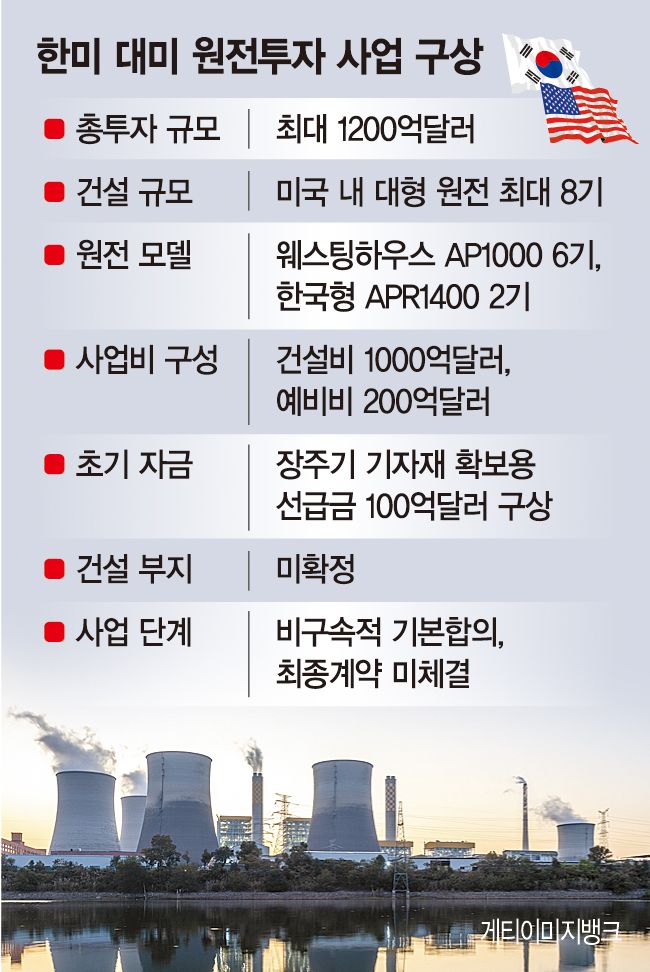
According to Cameco’s third-quarter earnings report, released on the 2nd, the $10 billion advance payment is expected to be transferred by the end of this year. Cameco, a Canadian company that owns a 49% stake in Westinghouse Electric Company, projected that about $7.5 billion of it would go toward purchasing long-lead equipment for Westinghouse Electric Company’s AP1000 reactors. The report did not specify how the remaining $2.5 billion would be used.
The large advance payment is intended to secure equipment ahead of time, reflecting the nature of nuclear plant construction. On an earnings conference call on the 30th of last month, Cameco executives cited reactor pressure vessels, steam generators and reactor coolant pumps as examples of long-lead equipment. Because these items take a long time to manufacture and deliver, whether they are ordered early can affect the overall construction schedule. In particular, if new nuclear plants are built at the same time, limited production capacity across the supply chain could delay projects.
How this advance payment is used is also an important issue for South Korea’s nuclear industry. At a briefing on investment in the United States, Minister of Trade and Industry Kim Jung-kwan said of the nuclear advance payment, “Since the money will be used to manufacture equipment in advance, I expect it to flow back to South Korea.” His point was that if South Korean companies take part in manufacturing and supplying nuclear equipment, some of the investment in the United States could translate into contracts for domestic industry.
However, the $7.5 billion Cameco cited is an estimate for purchases of equipment for AP1000 reactors; it did not disclose the actual suppliers or the size of orders by country. AP1000 reactors were developed by the U.S. company Westinghouse Electric Company, but South Korean companies can also participate in the related equipment supply chain. How much of the funding goes to companies in each country is therefore expected to depend on how future orders are structured.
Although the U.S. side is fleshing out its plans for using the funds, considerable challenges remain before these plans can lead to actual nuclear construction projects. On a conference call, Cameco President Grant Isaac said of nuclear investment cooperation with South Korea, “There is a lot of work to do to reach a final agreement.” He explained that coordination would be needed among nuclear suppliers, construction companies, equipment supply chains, power companies and long-term power purchasers.
[email protected] Ji-young Park Reporter