K-pop, food and street culture are strong—but Seoul's nighttime culture? Policy and the environment remain question marks
- Input
- 2026-11-03 14:50:03
- Updated
- 2026-11-03 14:50:03
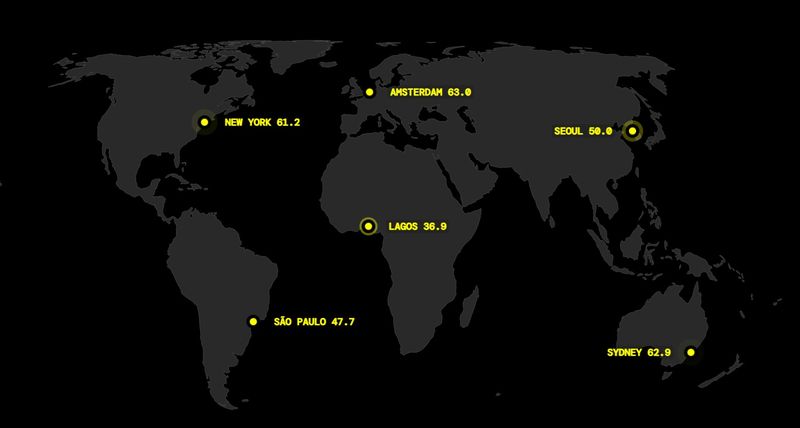
[Financial News] Seoul's nighttime culture scored 50 out of 100 in an assessment by an international private research institute, ranking fourth among the six cities surveyed. Its cultural ecosystem supporting performances and creative activity received a relatively high rating, but the environmental sustainability of nighttime cultural facilities and institutional support were found to be weak. The Seoul Metropolitan Government said that, as its nighttime culture policy is still at an early stage, it plans to identify core content that can be sustained over time.
On the 3rd, the Netherlands- and Germany-based nighttime culture research and consulting institute VibeLab jointly released the Nighttime Culture Index 2026 (NCI) with Amsterdam Dance Event (ADE). To examine nighttime culture across six continents, the index assessed six cities: Seoul in Asia, Amsterdam in Europe, New York in North America, São Paulo in South America, Lagos in Africa, and Sydney in Oceania. The NCI was developed to measure not only the economic effects of nighttime culture but also its cultural value and the conditions that support it.
Amsterdam ranked highest with 63 points, followed by Sydney (62.9) and New York (61.2). Seoul scored higher than São Paulo (47.7) and Lagos (36.9), but trailed the top three cities by at least 10 points.
The report explained, “The index focuses on the cultural value of nighttime culture and the conditions for sustaining it, rather than its economic effects or tourism competitiveness,” adding, “Rather than ranking cities against one another, it is intended to measure key factors that support a healthy nighttime culture ecosystem.”
By category, Seoul's highest score among the six assessment areas was 60 points for its creative ecosystem. It scored 57.5 for spaces and infrastructure, 54.5 for community and belonging, and 49.6 for diversity and representation. By contrast, policy and civil society vitality scored 45.8, while sustainability and the environment received 32.5, the lowest score of the six areas.
In its assessment of 30 detailed indicators, the report identified Seoul's vibrant nighttime cultural activity, rooted in K-pop, food and street culture, as a strength. In particular, the indicator for nighttime cultural events outside of music scored 74 points, while the music festivals indicator scored 68, both relatively high.
By contrast, Seoul showed weaknesses in environmentally friendly operations and the support infrastructure for them. The sustainability and environment category does not assess the city's overall environmental conditions; it measures efforts to reduce the environmental impact of performance venues, cultural facilities and festivals, as well as the support systems that underpin those efforts.
The report noted that “Seoul's nighttime culture has traditionally developed around street performances, markets and food,” and observed that “many said clubs are classified as restaurants and therefore face legal restrictions on dancing, while spaces for new initiatives and the basis for discovering and developing emerging local talent are also lacking.” The detailed indicator assessing the legal status and protection of nighttime cultural spaces scored just 40 points. Cooperation among institutions involved in nighttime culture scored 37.5, and governance scored 39.
As it moves ahead in earnest with initiatives to boost the nighttime economy this year, the Seoul Metropolitan Government has focused on piloting a range of nighttime cultural programs. It plans to expand its initiatives going forward, focusing on content that resonates with residents.
Lee Ji-hyun, a special adviser to the Seoul Metropolitan Government overseeing the nighttime economy, said, “This year was a stage in which we piloted a range of nighttime cultural content and gauged residents' response and market potential. Creating sustainable core content remains a task for the future, and we will broaden the scope of nighttime culture based on the public demand identified through a variety of nighttime programs.”
[email protected] Seong Chorong Reporter