“700 Trillion in Crypto Has Flowed Overseas” ... DPK Voices Call for Crypto Tax Deferral
- Input
- 2026-11-02 16:24:12
- Updated
- 2026-11-02 16:24:12
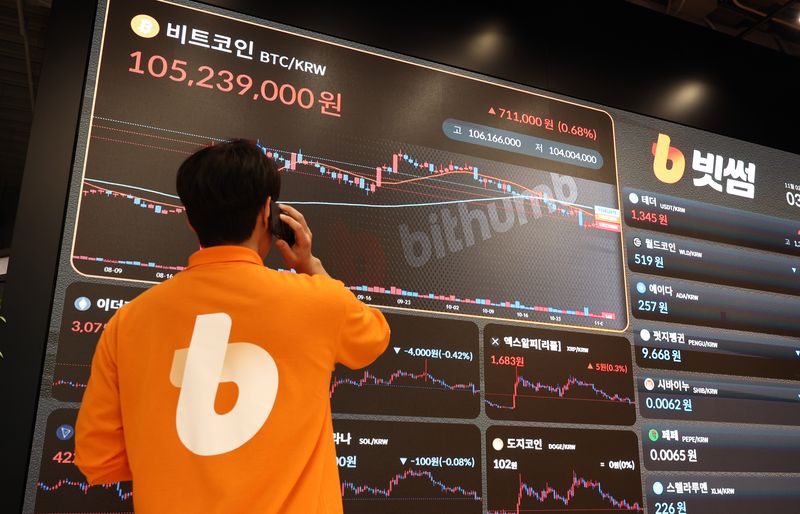
[Financial News] An analysis has found that crypto assets transferred from domestic exchanges to overseas platforms totaled 700 trillion won over the past five-plus years. Critics say investment demand unmet by domestic regulations is flowing overseas, taking about 5 trillion won in annual fee revenue with it. Within the ruling party, calls have emerged to fast-track enactment of the General Act on Digital Assets and defer the crypto tax scheduled to take effect next year.
At a forum jointly hosted on the 2nd at the National Assembly Library by DPK lawmakers Lee Kwang-jae, Min Byeong-deok, Park Min-gyu and Lee Kang-il and the Digital Asset Policy Forum, Tiger Research CEO Kim Gyu-jin said, “We estimate that about 700 trillion won in crypto assets moved from domestic exchanges to overseas platforms between 2021 and this year.”
This was based on an analysis conducted jointly by Tiger Research and Chainalysis of about 5 million addresses associated with domestic and overseas exchanges and 120,000 wallets estimated to belong to domestic investors. The amount transferred last year was about 168 trillion won, while this year’s annual forecast was 77 trillion won. However, the 700 trillion won figure represents cumulative transfers of crypto assets and differs from the net amount actually remaining overseas.
The analysis also found that a substantial amount of fee revenue was flowing to overseas exchanges. Kim estimated that domestic investors paid about 5 trillion won in trading fees to overseas exchanges last year. He explained that bringing even half of the demand for overseas trading back to the domestic market could generate about 2.5 trillion won in fee revenue.
Kim cited restrictions on domestic corporations’ participation in the crypto asset market and regulations on derivatives as major reasons for the outflow overseas. He stressed, “Even if high-risk products are restricted domestically, it is practically difficult to block trading in on-chain markets as well,” adding, “We need to create an institutional environment in which domestic businesses can safely provide related services.” He also proposed introducing a won-denominated stablecoin and allowing corporate investment.
The crypto tax regime scheduled to take effect next January also came under scrutiny. Under the current Income Tax Act, crypto asset investment gains are taxed at a rate of 22%, including local income tax, on amounts exceeding an annual deduction of 2.5 million won.
Ahn Seong-hui, a professor at the Catholic University of Korea, proposed raising the basic deduction and applying tax credits or lower rates depending on the extent to which domestic exchanges are used. With tax blind spots remaining for overseas exchanges, decentralized exchanges and peer-to-peer transactions, the point was that tax infrastructure should be put in place first.
The need to defer taxation was also raised within the ruling party. DPK lawmaker Min Byeong-deok said, “I think it is shameless to impose taxes when not even a framework act has been created,” adding, “I believe the General Act on Digital Assets should be enacted first, and taxation should be deferred to provide time to prepare by setting deadlines for what needs to be ready for taxation and by when.”
The General Act on Digital Assets is a bill intended to establish a framework for the issuance and distribution of stablecoins and the regulation of crypto asset service providers, among other things. Around 10 related bills have been introduced in the National Assembly, but legislative discussions are being delayed by disagreements over key issues.
[email protected] Kim Gyeong-min Reporter