Seoul Metropolitan Council's regular session opens; attention turns to Oh Se-hoon's cooperation with an opposition-majority council
- Input
- 2026-11-02 16:44:53
- Updated
- 2026-11-02 16:44:53
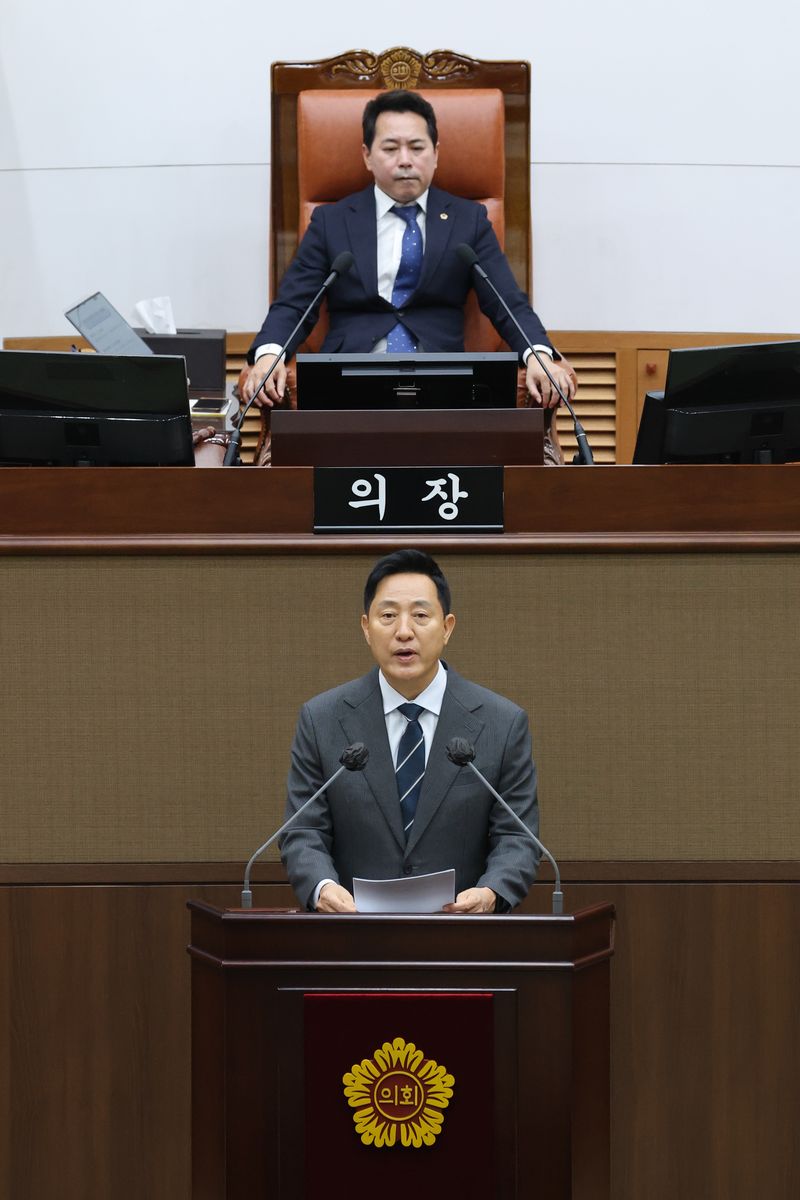
[Financial News] The Seoul Metropolitan Council opened its 340th regular session on the 2nd, beginning a 52-day legislative schedule. With the 55.7445-trillion-won draft budget for next year—drawn up by Seoul Mayor Oh Se-hoon as the first main budget of his ninth popularly elected term—up for review, attention is focused on whether he can work with the opposition-majority council. Securing funds for key policies, including AI support for young people and housing supply, will be crucial, while the Seoul Metropolitan Government and the council are expected to clash over the Hangang Bus during the administrative audit. The council said it would hold the regular session through the 23rd of next month, starting with its first plenary session that day. A total of 186 items are on the agenda, including the 2027 budget proposals for the Seoul Metropolitan Government and the Seoul Metropolitan Office of Education.
In his policy address that day, Mayor Oh said he had drawn up next year's Seoul budget at 55.7445 trillion won, an 8.3% increase from this year, and asked the council for its cooperation. “I will take the council's criticism and scrutiny seriously,” he said. “For projects on which opinions differ, I will provide a thorough rationale for moving forward, and discuss openly any areas that need improvement.” He added, “As the person responsible for Seoul's municipal administration, I will firmly make the case for the need for and direction of the policies I have promised residents.”
One of the main issues in this budget review is the Youth AI support program. The Seoul Metropolitan Government has allocated 26.6 billion won to the “Youth AI Ladder” program, which will give 500,000 young people opportunities to use AI and support them in finding jobs or starting businesses. In September, the council fully cut the related 5.625-billion-won budget during its review of a supplementary budget, citing insufficient preparation for the program. With the Seoul Metropolitan Government having included the program's funding again in next year's main budget, discussions with the council have become unavoidable.
“Differences in access to opportunities to learn technology must not determine young people's futures,” Mayor Oh said. “I ask you to give deep consideration to the purpose of this program and join me in investing in the future of young people.”
The housing supply expansion policy, for which the Seoul Metropolitan Government plans to spend 2.0594 trillion won next year, is also a major subject of review. Mayor Oh said, “The results of housing supply cannot be judged solely by the number of units announced. Construction must start on time and residents must actually be able to move in before we can deliver results.”
The Hangang Bus is expected to become a key point of contention between the Seoul Metropolitan Government and the council, particularly during the administrative audit beginning on the 3rd. With the Democratic Party holding at least two-thirds of all seats, its council members are expected to raise pointed questions about the Hangang Bus's operational performance and safety, as well as how the project was carried out.
In his opening remarks that day, Seoul Metropolitan Council Chair Im Man-gyun said, “In this administrative audit, the Seoul Metropolitan Council will clearly recognize what was done well and correct what was done wrong, so that not a single question remains about how taxpayers' money was spent.” He urged the Seoul Metropolitan Government to “clear up the questions raised about the Hangang Bus and GTX Samseong Station, and participate faithfully in the audit in a spirit of responding to residents' trust, so that it can accelerate its municipal administration in 2027.”
On the budget review, Chair Im also stressed, “What matters to residents is not the size of the budget but its ‘direction.’ We will ask careful questions and review whether it supports small business owners' futures, truly serves as a ladder for young people's growth, and keeps residents safe in their daily lives.”
The council will conduct an administrative audit from the 3rd through the 16th, followed by speeches by the heads of negotiating groups and questions on municipal administration from the 17th to the 19th. After reviews by standing committees and the Special Committee on Budget and Accounts, the regular session is scheduled to conclude on the 23rd of next month.
[email protected] Seong Chorong Reporter