Police Investigation Reform Committee Calls for More External Appointments to Head the National Office of Investigation; Recommends Stronger Personnel and Budgetary Powers
- Input
- 2026-11-02 17:12:48
- Updated
- 2026-11-02 17:12:48
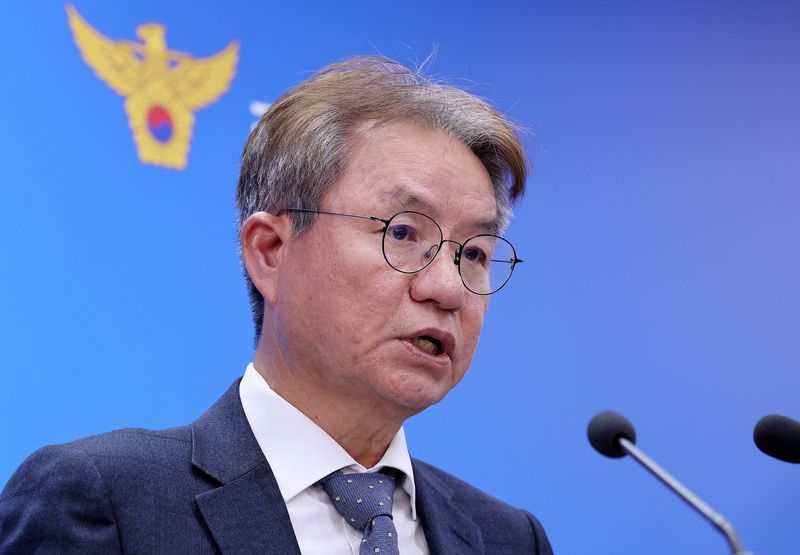
[Financial News] The Police Investigation Reform Committee recommended making greater use of external appointments for the head of the National Office of Investigation and substantially strengthening the head’s personnel and budgetary authority. With the police taking on greater responsibility for investigations following the separation of investigation and prosecution, the aim is to increase the organization’s independence and expertise by bringing in talent from outside, and to improve the system so that the head’s authority matches their responsibility.
The Police Investigation Reform Committee for Restoring Public Trust held a briefing at the National Police Agency in Seodaemun District, Seoul, on the 2nd and announced its third set of recommendations, which included these measures. Committee Chair Kim Nam-jun emphasized that the police must have systems and capabilities commensurate with their expanded responsibilities, saying, “Expanding investigative authority does not automatically improve the quality of investigations.”
The committee first recommended making active use of external recruitment for the head of the National Office of Investigation to improve the political neutrality, independence and expertise of police investigations. For internal appointments, it called for qualification criteria that take into account experience in the investigative career track and investigative experience. The current Police Act sets certain qualifications and grounds for disqualification for external recruitment, but does not stipulate separate qualifications for internal appointments. A committee official added that the committee should consider candidates with sufficient expertise, including investigative experience, saying, “We’re not targeting people from any particular background.”
The committee also proposed strengthening the head of the National Office of Investigation’s personnel and budgetary authority. It noted that although the head directs and supervises investigative police nationwide, they lack substantive authority over personnel and budgets. It therefore recommended guaranteeing the head the right to consult on personnel matters, recommend candidates for posts and set criteria for assignments, as well as securing meaningful consultation rights in the budget formulation and allocation process.
Professor Lee Yun-je explained, “If heads of police organizations hold substantive powers over personnel and budgets, the investigative independence of the head of the National Office of Investigation could be weakened,” adding, “The committee’s recommendation is not about independence as such; it is about strengthening the intent of independence under the Police Act.”
The need for checks and balances in response to the expanded powers of the head of the National Office of Investigation was also raised. Committee representatives explained that, because the head leads the National Office of Investigation, which is established within the National Police Agency under current law, introducing confirmation hearings under the current system would not be appropriate. They added that the organizational separation of the National Office of Investigation and the establishment of separate checks and balances could be discussed over the longer term.
Expanding investigative personnel and budgets was also among the key recommendations. The number of investigative police officers in service in the second half of this year stands at 40,563, while the additional staffing need estimated on the basis of a 2022 study is 13,974. However, the committee called for a new assessment of appropriate staffing levels, based on an organizational review that takes account of workloads following the reform of the criminal justice system, and for staffing to be expanded in stages.
The annual per-person totals for specific duty expenses and special activity expenses were listed as 4.49 million won for the police, 5.74 million won for the former Prosecution Service and 13.76 million won for the Serious Crimes Investigation Agency. The figures for the police and the Serious Crimes Investigation Agency are based on the government’s 2027 budget proposal, while the figure for the former Prosecution Service is based on its 2026 budget. The committee emphasized the need to establish reasonable budget allocation criteria that take into account the nature and difficulty of cases, and to correct any imbalances that are identified.
As part of its proposed organizational changes, the committee recommended reinstating the Cyber Investigation Bureau under the National Office of Investigation and dedicated cyber investigation units at frontline police stations. In the field of forensic science, it called for reinstating a Director for Forensic Science Planning directly under the head of the National Office of Investigation and forensic science divisions at city and provincial police agencies, and for considering, over the longer term, expanding these into independent dedicated organizations such as a Forensic Science Bureau.
Referring to the downsizing of cyber and forensic investigation units in 2023, Chair Kim said, “I don’t think it’s right for important investigative departments to be placed under the Criminal Affairs Bureau or the Investigation Bureau in the first place.”
The recommendations also included strengthening criminal law training and practical assessments for new police officers, and shortening the retraining cycle for investigative police, which is currently about six years.
[email protected] Kim Ye-ji Reporter