Amid concerns over proctors’ expertise in detecting ‘AI glasses’ at the College Scholastic Ability Test (CSAT), Education Ministry says staff have sufficient identification skills
- Input
- 2026-11-02 15:54:08
- Updated
- 2026-11-02 15:54:08
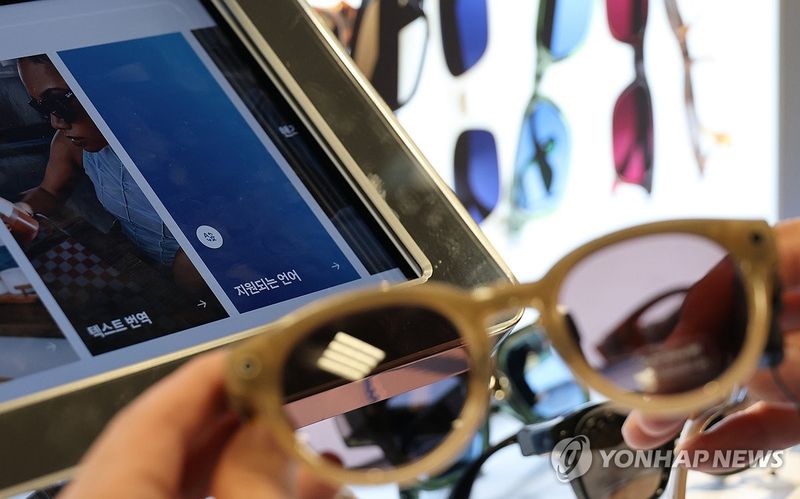
[Financial News] In response to concerns that dedicated staff tasked with identifying artificial intelligence (AI) smart glasses at the College Scholastic Ability Test (CSAT) on the 19th might not be able to develop sufficient expertise through only brief pre-exam training, the Ministry of Education said they would be able to acquire the necessary identification skills.
A Ministry of Education official said on the 2nd, “We plan to train the dedicated staff in various ways, including using actual smart glasses,” adding, “We believe they can develop sufficient capabilities through this training.” The ministry also produced and distributed video materials explaining how to identify the devices. However, the length of training will depend on conditions in each city and province, and the ministry did not specify which models would be used for practice or any common standard for assessing identification skills.
Starting with this year’s CSAT, the Ministry of Education will assign one staff member responsible for identifying smart glasses to each of the 1,312 test sites nationwide. They will circulate through exam rooms to assist proctors when suspected devices need to be checked.
On-site staff are concerned about complaints and accountability issues that could arise if ordinary glasses are mistakenly suspected or cheating goes undetected. The Korean Teachers and Education Workers Union said, “If ordinary glasses are mistaken for smart glasses, there could be complaints that an examinee’s test was disrupted. Conversely, if smart glasses go undetected, it could lead to demands that proctors be held accountable for inadequate supervision.”
The Ministry of Education plans to establish a response system linked with the Korea Institute for Curriculum and Evaluation (KICE) and situation rooms at city and provincial offices of education, in case it is difficult to make a judgment on site. A ministry official said, “Dedicated staff capable of identifying smart glasses will also be assigned to the situation rooms,” adding, “They will check using photos, videos and other materials.” Regarding the possibility of examinees being affected if ordinary glasses are mistakenly suspected, the official said, “We have a manual in place, including checking after the relevant exam session ends.”
The process of securing a staff member for each test site is underway. A Ministry of Education official said, “They are being designated and assigned according to conditions in each city and province, and we plan to have them ready to work after completing pre-exam training before the CSAT.”
In a response plan announced on the 29th of last month, the Ministry of Education said it would take a firm stance on cheating using AI glasses, including by filing criminal complaints or requesting investigations. It also said it would pursue a legal amendment to extend the period of suspension from taking the CSAT from the current one year to three years.
Meanwhile, the results of a comprehensive survey on cheating using smart glasses in school-administered internal exams will be released next week. The Ministry of Education plans to compile and organize the data by the end of this week before announcing the results.
[email protected] Lee Bomi Reporter