Jeju National University Hospital marks 25 years, aims to complete critical and emergency care on Jeju
- Input
- 2026-11-02 15:34:33
- Updated
- 2026-11-02 15:34:33
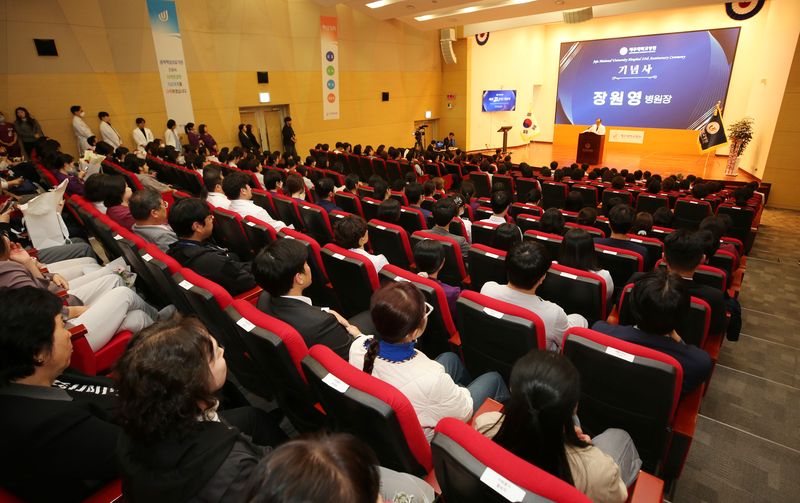
【Financial News, Jeju = Jeong Yong-bok, Reporter】 Jeju National University Hospital, marking its 25th anniversary, will focus its efforts on building a healthcare system that enables critically ill and emergency patients to complete their treatment in Jeju. Following this year’s designation as a Regional Emergency Medical Center and the opening of a same-day chemotherapy center, the hospital is also preparing to begin operating as a quasi-veterans hospital in December.
Jeju National University Hospital said on the 2nd that it held a ceremony marking its 25th anniversary on October 30 in the main auditorium on the hospital’s second floor, identifying the establishment of a locally self-contained healthcare system as a key priority. Attendees included Yang Yeong-su, a member of the Jeju Special Self-Governing Provincial Council, and hospital faculty and staff. Awards were also presented to long-serving employees and exemplary staff members.
Locally self-contained healthcare is a system that enables patients to receive the care they need—including diagnosis, surgery, hospitalization and recovery—in the area where they live. In Jeju, where people must travel by air or sea to reach other regions, ensuring critically ill and emergency patients do not miss the window for treatment is a major challenge.
Jeju National University Hospital, which opened on November 1, 2001, is the only national university hospital in the province. It has been responsible for education, research, and clinical care, as well as essential regional healthcare, including operating the Jeju Regional Cancer Center.
This year saw changes in efforts to expand the hospital’s capacity to treat serious illnesses. In February, it opened a same-day chemotherapy center and established a system that provides separate care for patients requiring lengthy chemotherapy and those receiving short-term injections. In July, it was selected as a Regional Emergency Medical Center with the capacity to provide definitive treatment for critically ill and emergency patients.
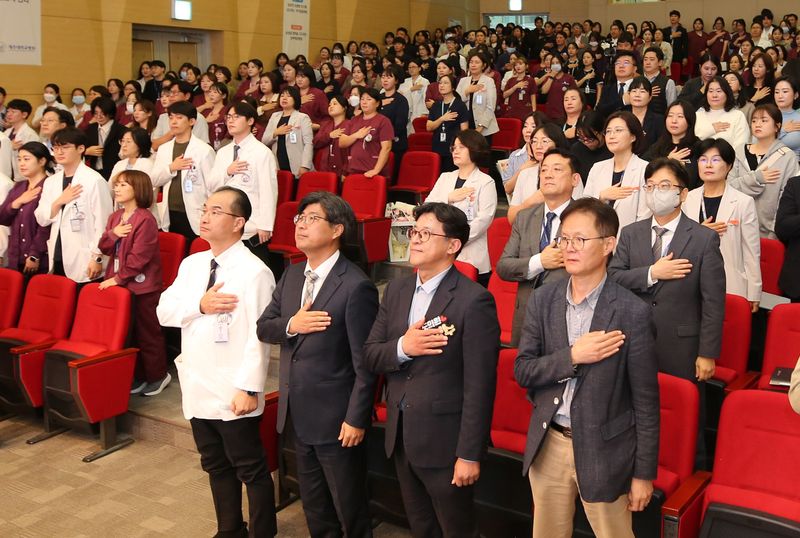
The hospital’s role in veterans’ healthcare is also set to expand. After the Ministry of Patriots and Veterans Affairs designated Jeju National University Hospital a quasi-veterans hospital in July, it is scheduled to begin operating in that capacity on December 1. Jeju has no separate veterans hospital, and improving access to specialized care for people eligible for veterans’ benefits has long been identified as a challenge.
In October, the Jeju Regional Psychological Counseling Center for Infertility and Pregnant Women also opened. It provides psychological assessments, professional counseling, and connections to medical and welfare services for residents experiencing difficulties with infertility treatment and pregnancy and childbirth.
In his commemorative remarks, Jeju National University Hospital Director Won Young Jang also emphasized the role of hospice care and hospital schools. His point was that patients would have to travel to other regions if these medical and educational services could not be provided in Jeju, even if their value is difficult to capture in revenue or evaluation metrics.
The locally self-contained healthcare system proposed by Jeju National University Hospital aims both to strengthen its capacity for critical and emergency care and to maintain essential services within the region, including those serving small numbers of patients or generating little revenue. How much the Regional Emergency Medical Center designation and facility expansion can actually reduce the burden of seeking care outside the province will depend on the recruitment of specialized staff and the results of operating the healthcare system.
“A Jeju where people do not have to cross the sea—that is what we will work to create by bringing together all the capabilities of Jeju National University Hospital,” Director Won Young Jang said.
[email protected] Jeong Yong-bok Reporter