Court Awards 65 Million Won in Damages for New Military Junta’s ‘Secret-Room Torture’ ... ‘Unfair to Shift Burden of Proof,’ Court Says
- Input
- 2026-11-02 15:37:50
- Updated
- 2026-11-02 15:37:50
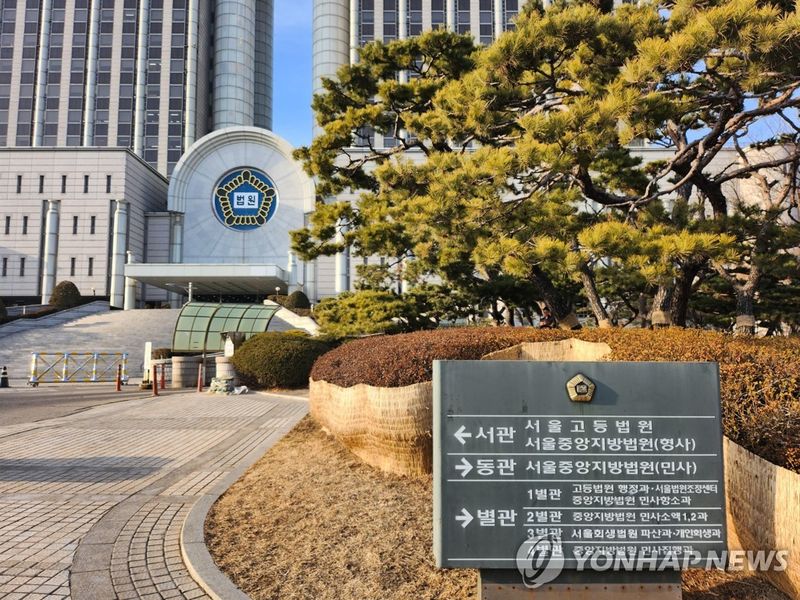
[Financial News] An appeals court substantially increased damages for a victim who was illegally arrested without a warrant under a martial law proclamation during the new military junta’s emergency martial law in 1980 and detained for dozens of days. The court held that, given the nature of human rights abuses committed by state agencies in secret, the burden of difficulty in proving the case should not be shifted wholesale to the victim even if direct physical evidence is somewhat lacking.
The Seoul Central District Court’s Civil Division 1-3, presided over by Chief Judge Maeng Jun-young, overturned the lower court’s ruling in an appeal by victim A, who had sued the Republic of Korea for damages, and ruled partly in A’s favor, ordering the state to pay 65 million won. This was an increase of 22.5 million won from the 42.5 million won in total damages for emotional distress awarded by the lower court.
A, who was a university student at the time, was illegally arrested under Martial Law Proclamation No. 10 in April and May 1980 after calling for the lifting of martial law and the resignation of Chun Doo-hwan’s new military regime, among other demands. A was then taken to places including the anti-communist investigation center in Ogin-dong and illegally detained in solitary confinement for 93 days. After release, A was expelled from university and forcibly conscripted into the military.
On August 21, 2024, the May 18 Democratic Uprising Related Persons Compensation Deliberation Committee recognized A as a person connected to the uprising and paid 64,679,200 won in compensation. A then filed a damages lawsuit against the state, seeking a total of 80 million won for emotional distress.
In December last year, the lower court recognized the state’s liability to pay damages but awarded only 42.5 million won, combining 40 million won in damages for A’s emotional distress with 5 million won for each parent (with A’s one-quarter inheritance share applied). It rejected A’s claims of beatings and other harsh treatment during detention, citing a lack of objective evidence.
The appeals court reached a different conclusion. It noted that “the martial law proclamation in this case did not meet the requirements set out in the Constitution and the law, and directly violated the constitutional requirement for warrants and fundamental rights, making it invalid from the moment it was issued.” It added that “officials of state agencies, including Chun Doo-hwan, violated their duty to protect fundamental rights and committed serious human rights abuses, making the illegality extremely grave.”
In particular, the court ruled that “it is extremely difficult to obtain clear physical evidence of harsh treatment carried out in secret, beyond the statements of the people involved.” It further held that “given that the plaintiff’s personal liberty was completely taken away, even if objective evidence to establish all the harsh treatment is somewhat lacking, applying the difficulty of proof to the victim’s detriment and rejecting the claims across the board would in effect force the plaintiff to provide proof that is impossible to obtain.”
The court also took into account, in calculating damages, the long delay of about 46 years from the date of the unlawful acts, as well as changes in prices, national income levels and the value of money in the intervening period. It increased damages for A’s emotional distress to 60 million won and the amount for each parent to 10 million won. After adding the parents’ inheritance shares (2.5 million won each), the final amount the state must pay was set at 65 million won.
[email protected] Lee Chang-hoon Reporter