Even a month after its “launch before it was ready,” SCIA remains unfinished... When will it investigate “serious crimes”? [One Month Since the Public Prosecution Office and SCIA Launched]
- Input
- 2026-11-02 15:28:17
- Updated
- 2026-11-02 15:28:17
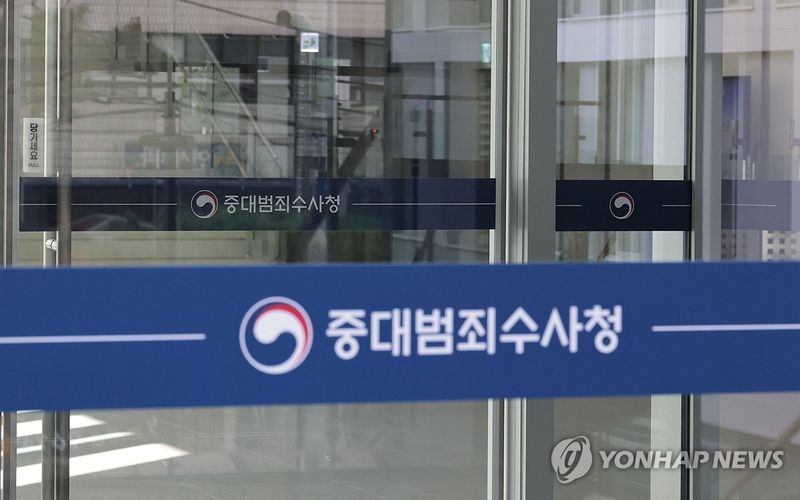
[Financial News] The Serious Crimes Investigation Agency (SCIA), launched under the banner of a “Korean-style FBI,” has reached its one-month mark but remains focused on building its investigative foundations. It has made progress in drug and voice phishing cases, securing arrests and referring cases to the Public Prosecution Office, but investigations into serious crimes requiring specialist expertise—including corporate collusion, financial crimes and technology leaks—have yet to get fully underway. Expanding its IT systems, securing investigative funds and overhauling its chain of command are among the urgent tasks.
According to legal circles, as of the 2nd, SCIA had referred three cases to the Public Prosecution Office and arrested six suspects. The results came in drug cases (five suspects) and voice phishing cases (one suspect). A SCIA official explained, “Drug investigations are an area where we brought over the know-how used by the former prosecution service, so there is an element of continuity in how we carry out the work.”
But there are considerable practical constraints even in drug investigations, where SCIA has made progress. An investigator in SCIA’s Drug Investigation Division said, “The systems needed for investigations, such as checking residents’ information, are not yet in place, so we have to send official requests to the relevant agencies one by one to verify it,” describing the difficulties. The investigator also noted that special activity funds available for drug investigations were insufficient, saying, “We also face difficulties with undercover purchases and surveillance.”
No clear results have yet emerged from investigations into corporate and economic crimes. Cases involving alleged violations of the Fair Trade Act by Myeongnyundang and its chairman, Lee Jong-geun, as well as embezzlement and breach of trust related to private equity funds, have been assigned to the Seoul SCIA. It has also received major complaints, including allegations of general treason related to President Lee Jae Myung and others’ response to the planting of landmines, and allegations of inadequate investigations into Lime and Optimus under former President Yoon Suk Yeol. But most of these cases are based on complainants’ claims, and whether to formally launch investigations appears to remain under review.
The chain of command in specialist investigation units also needs to be overhauled. As of the 8th of last month, the chief of the Anti-Corruption Investigation Bureau at the Seoul SCIA was also serving as acting chief of the Anti-Monopoly Investigation Bureau, while two of its four subordinate divisions were being run by acting division chiefs. The Economic Crimes Investigation Bureau was also operating with acting chiefs in three of its five divisions.
A lawyer who previously worked as a prosecutor said, “Around 80 people have been assigned to the Anti-Monopoly Investigation Bureau alone, so the agency is not short of personnel. However, with two division chief positions vacant, it is important to establish a decision-making system and decide which cases to investigate first.” The lawyer added, “The budget has only just been allocated, and the agency is still setting up its internal procedures,” explaining that “corporate and economic crime cases require a process for selecting cases and setting investigative priorities.”
SCIA is working to establish its investigative foundations by operating an Early Stabilization Task Force (TF) led by Deputy Chief Jeon Jong-min. The agency says it has completed setting up video-recorded interview rooms at its regional offices and has also established most of its digital forensics facilities.
Institutional challenges also remain. One key issue is coordination with the Public Prosecution Office over the operation of a leniency program that reduces penalties for those who voluntarily report collusion. Other points of contention include the limited role of SCIA investigators in pretrial detention hearings and the exclusion of public officials’ abuse of authority from the scope of direct investigations. A legal-sector official pointed out, “Since abuse of authority is a charge broadly applied in cases involving public officials, excluding it from the scope of investigations could make it difficult in some cases to determine whether an investigation should be opened.”
[email protected] Choi Eun-sol Reporter