KAGI and OCI to Create Native Plant Conservation Garden on Unused Corporate Land
- Input
- 2026-11-02 15:00:50
- Updated
- 2026-11-02 15:00:50
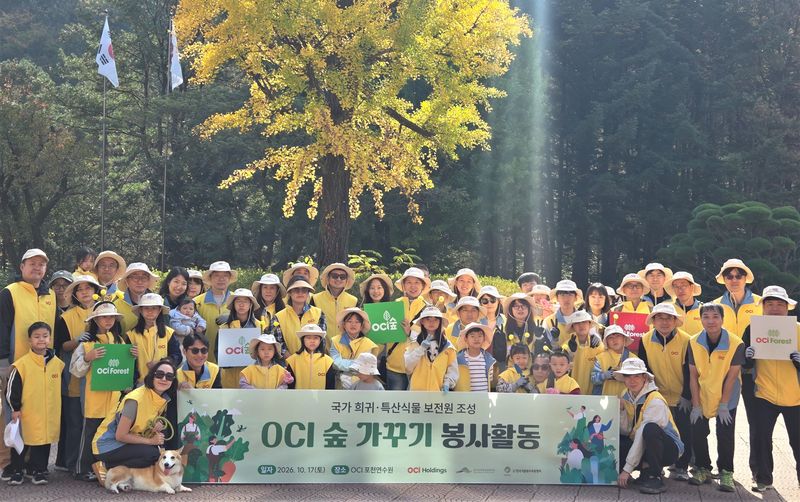
The Korea Arboreta and Gardens Institute (KAGI), under the Korea Forest Service (KFS), said on the 2nd that it would expand efforts to conserve rare and endemic plants and restore ecosystems in partnership with OCI Holdings and the Korea Association of Botanical Gardens and Arboreta.
On the 17th of last month, KAGI held a biodiversity conservation campaign with employees at OCI’s Pocheon Training Center in Pocheon, Gyeonggi Province, taking the first step toward establishing a conservation garden for rare and endemic plants on unused land at the center. The garden will be developed in stages from this year through next year. KAGI plans to plant 15 native species, including Korean fir, round-fruit abeliophyllum and Hieori, which are endangered or of high conservation value, and monitor their growth and fruiting while collecting seeds. Seeds that meet the criteria will be deposited in national seed conservation facilities such as the Baekdudaegan Global Seed Vault for permanent, long-term preservation. Then, on the 31st of last month, KAGI held the “Island and Coastal Native Plant Conservation and Spread Campaign” at Kunsan National University and the National Saemangeum Arboretum, with around 70 people attending, including OCI employees. The campaign featured expert talks and activities to sow and plant native species suited to coastal environments.
On the 8th, KAGI plans to hold a native plant-sharing event for visitors to the National Sejong Arboretum, raising public awareness of the ecological value of native plants and the importance of conserving them.
This partnership is more than a one-off corporate social responsibility (CSR) activity; it is an example of a private company incorporating the “biodiversity conservation (TNFD)” criteria, a key pillar of ESG management that has emerged as a global priority. In particular, establishing native-plant-based green spaces on coastal and reclaimed land, where soil salinity is high and wind damage is severe, is considered significant not only for improving the resilience of coastal ecosystems but also for securing carbon sinks.
KAGI President Sim Sang-taek said, “We are carrying out native plant conservation activities in various settings by combining companies’ spaces and resources with arboretums’ expertise in plant conservation,” adding, “We will continue working with OCI to expand our efforts to conserve rare and endemic plants and restore ecosystems.”
[email protected] Kim Won-jun Reporter