At the first trial of Yeo In-hyung, charged with ‘pre-planning martial law,’ the defense says: “Duplicative or unjustified prosecution ... the indictment should be dismissed”
- Input
- 2026-11-02 15:26:56
- Updated
- 2026-11-02 15:26:56
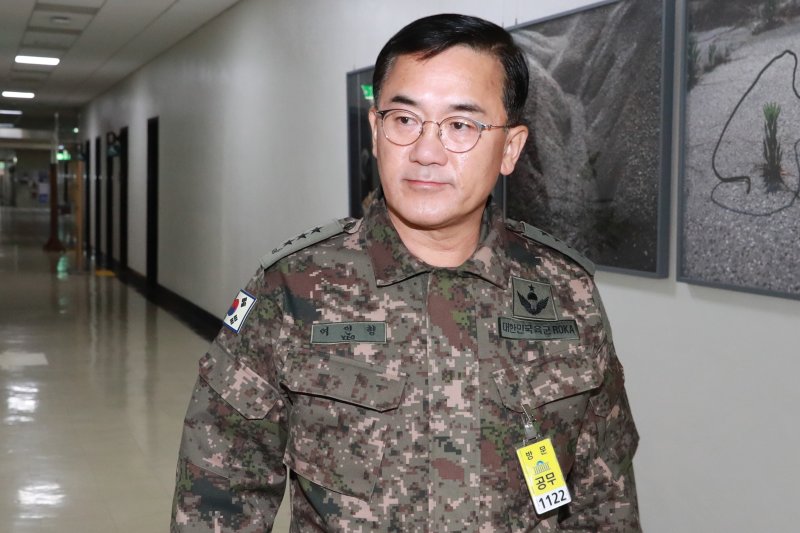
[Financial News] Yeo In-hyung, former commander of the Defense Counterintelligence Command, who was additionally indicted on charges of having the Joint Investigation Headquarters’ operational plan illegally amended in preparation for the declaration of emergency martial law, for the purpose of arresting lawmakers and other objectives, denied all charges at his first trial. His side called for the indictment to be dismissed, saying, “If this is connected to martial law, it is a duplicative prosecution; if it is not, it is outside the special counsel’s investigative mandate.”
On the 2nd, Seoul Central District Court’s Criminal Division 37-3 (Presiding Judge Ryu Chang-seong, Jang Seong-hun and Oh Chang-seop) held the first hearing in the case against Yeo, who was indicted on charges of obstruction of the exercise of rights by abuse of authority.
According to the statement of charges presented by the special counsel team, Yeo is accused of ordering members of the Planning and Management Office, under the pretext of “security work,” to revise the wartime Joint Investigation Headquarters’ operational plan so that police and military police personnel would be combined under the command of the Defense Counterintelligence Command, from December 2023 through May 2024. The special counsel team said the aim was to address in advance the limitations of relying solely on Defense Counterintelligence Command investigators to arrest multiple lawmakers for violating a proclamation in the event of an emergency martial law declaration, as well as the fact that personnel seconded from related agencies were merely liaison officers.
The special counsel argued, “Working-level staff objected on the grounds of differences in investigative authority and violations of the organizational structure,” and “the plan was forcibly revised by abusing authority for the unlawful purpose of facilitating the arrest of those who violated the proclamation during emergency martial law.”
Yeo’s side, by contrast, denied all the charges and sought dismissal of the indictment and an acquittal. It argued that a trial on the same matter is already underway and that, if the indictment concerns a different matter, it is an unjustified prosecution outside the special counsel’s investigative mandate.
The lawyer countered, “The defendant has already been indicted on charges of playing a key role in an insurrection and abuse of authority in connection with the formation and operation of the Joint Investigation Headquarters’ arrest squad on the day emergency martial law was declared on Dec. 3, and is standing trial on appeal,” adding, “If, as the special counsel claims, this case is connected to the Dec. 3 martial law, it constitutes a duplicative prosecution based on the same authority and purpose, and the indictment should be dismissed.” The lawyer continued, “Conversely, if it is unrelated to the Dec. 3 martial law, the indictment falls outside the scope of investigations established by the Special Counsel Act, so it should be dismissed either way.”
The defense also countered that the actions underlying the charges were legitimate routine work. The lawyer stressed, “Updating the operational plan was part of the Defense Counterintelligence Command’s regular annual duties, and December 2023 was four months before the time when emergency martial law was first mentioned, so the alleged unlawful purpose itself has not been proven.” The lawyer added, “There was no instance of staff being forced to make the revisions, and the copies of documents obtained by the special counsel are also unlawfully collected evidence, having been voluntarily submitted without a warrant under the name of another case.”
That day, the court sought a detailed explanation of the structure of the special counsel’s abuse-of-authority charge. It ordered, “Submit a detailed written opinion on whether the act of staff members assisting the Defense Counterintelligence commander in drawing up a proposal constitutes an ‘act they had no duty to perform’ under the offense of abuse of authority, and on whether the inherent authority of subordinate public officials was infringed.”
There was also a heated exchange over whether the revised operational plan amounted to preparation for martial law. When the court asked, “The Joint Investigation Headquarters and the Defense Counterintelligence Command are separate bodies. Who would direct the police and others—the Defense Counterintelligence Command or members of the Joint Investigation Headquarters?”, the special counsel replied, “Under the existing system, no direct investigative authority would arise. The key to the revised plan was to draw personnel from each agency, bring them together, and direct them.”
The court pointedly asked, “If someone is appointed to a position such as first team leader at the Joint Investigation Headquarters, wouldn’t they direct operations under that authority, rather than in their capacity as a member of the Defense Counterintelligence Command? Aren’t these concepts that should be distinguished?”
Yeo’s lawyer countered, “Before the revision, the agencies cooperated as a network. The revised plan merely had them come together physically and work together; nothing changed legally, including the chain of command or investigative direction under the law.”
Yeo himself also took the opportunity to speak in court, saying, “The Defense Counterintelligence Command’s main mission is to form the Joint Investigation Headquarters, so this was an operational plan drawn up to that end,” and countering, “You’ve served in the military, so you shouldn’t keep deflecting by making it sound like the issue is classified.”
[email protected] Lee Chang-hoon Reporter