President Lee delivers budget address on 821 trillion won plan: “A major shift to growth for all, not the few”
- Input
- 2026-11-02 16:07:57
- Updated
- 2026-11-02 16:07:57
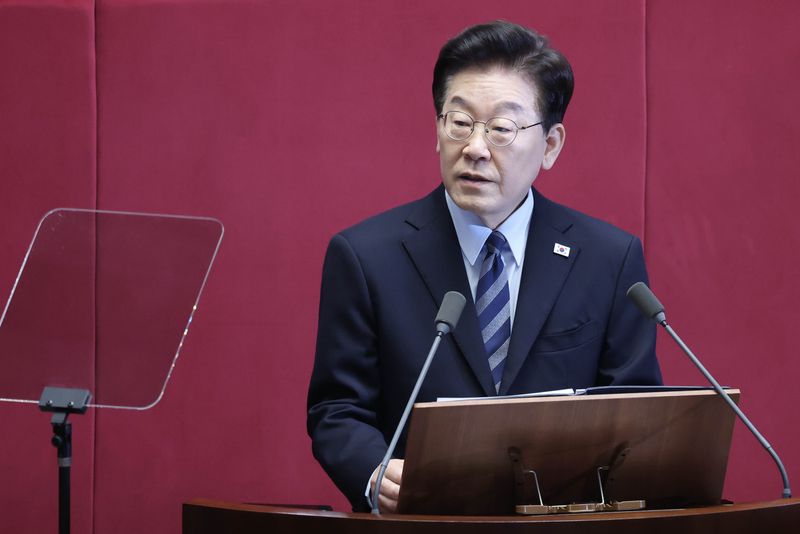
In his address, Lee described next year’s budget as “a future-focused budget to make Korea an irreplaceable nation and a leading country, and a growth-spreading budget that will turn national growth into growth for the people.” The plan is to concentrate public spending on securing future growth engines and narrowing gaps, so that the opportunities and gains from growth are shared more evenly.
A Cheong Wa Dae official said, “The growth-spreading budget means investing in future growth engines to strengthen our economy’s capacity to keep growing and, above all, ensuring that the benefits of growth translate into higher incomes and more jobs that improve people’s lives, while opening up more opportunities for young people and local areas.”
Lee said, “Our economy is continuing a clear V-shaped recovery,” but added, “People are desperately saying, ‘They say the national economy has improved, but my household finances are still strained.’ It is time for us to answer this difficult question: ‘What good is growth if my life does not improve?’”
As a first step, he presented “three major livelihood projects” focused on jobs, finance for ordinary people and housing stability. Lee said, “We will go beyond the social safety net and aim to build a robust social safety mat with no blind spots, while firmly strengthening the foundations for sustainable growth.” He added, “The Three Mega-Projects and the Seven SEEDs will have a greater impact when built on the foundation of the three major livelihood projects.”
He cited the budget principles as bold investment and the elimination of inefficiency and waste; prioritizing fiscal spending over tax expenditures; and giving preference to local areas to promote balanced national development. The government set next year’s budget at 820.9 trillion won, up 12.8% from this year. It is the largest on record.
The newly established Future Fund, worth 162.3 trillion won, was described as “a strategic investment platform supporting a rebound in potential growth and an innovative fiscal stabilization mechanism for responding to greater volatility in tax revenues.” The plan is to invest additional tax revenue secured through the public’s efforts in four areas: young people, future growth engines, local areas, and education and talent, while using surplus funds to prepare for tax revenue shortfalls.
Lee called for the National Assembly’s active cooperation, saying, “This is a time for the government and the National Assembly, and the ruling and opposition parties, to join forces for the nation’s future and the lives of its people.” He added, “What matters is implementation and speed,” and asked lawmakers to finalize next year’s budget and accompanying bills by the statutory deadline of December 2.
[email protected] Choi Jong-geun Reporter