Supreme Court: “Protection for technical achievements cannot be capped at 10 years”
- Input
- 2026-11-02 14:06:41
- Updated
- 2026-11-02 14:06:41
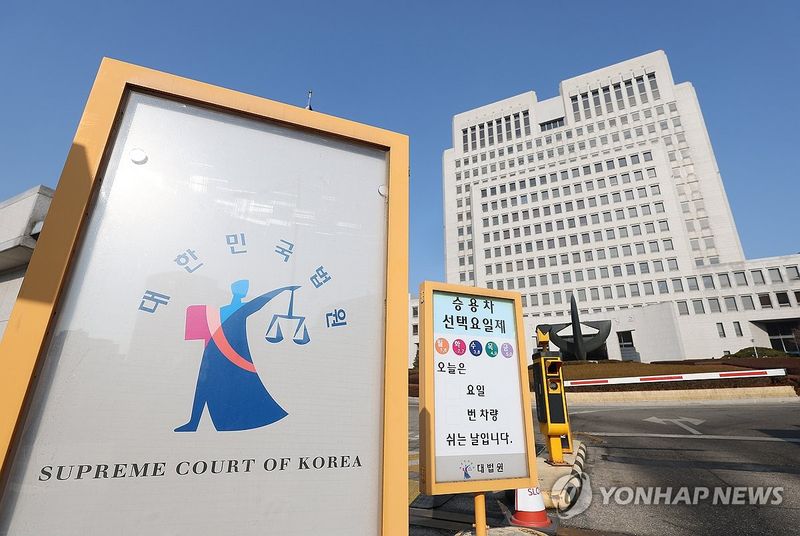
According to legal sources on the 2nd, the Supreme Court’s Third Division, with Justice Eom Sang-pil serving as the reporting justice, on the 8th vacated the lower court’s ruling on claims for an injunction and destruction, as well as damages, relating to the fourth delivery in an appeal over a suit brought by a French transformer manufacturer against a domestic transformer company for, among other things, an injunction against unfair competition. It remanded the case to the Daejeon High Court. The domestic company’s appeal was dismissed. The French company sought an order barring the manufacture and sale of the copied transformers, their destruction, and 3,016,547,738 won in damages.
The case arose after a domestic company won a contract to supply transformers for distributed-power railcars commissioned by the Korea Railroad Corporation and then hired a French company to manufacture them. The two companies signed a manufacturing and supply contract in April 2010, and from early 2011 to early 2013, the French company provided drawings showing the shape, dimensions and assembly configuration of 63 transformers and their parts. The drawings stated, “Contains confidential information” and “Use without the plaintiff’s approval is prohibited.”
The domestic company used the transformers and drawings to make and deliver transformers that were almost exact copies. It secured orders for one unit in March 2013, two in December 2017, 70 in October 2019 and 89 in May 2021, delivering them by August last year.
There were two issues: whether the deliveries constituted misappropriation of achievements prohibited by the Unfair Competition Prevention Act, and whether the protection period for technical achievements could be limited to 10 years, thereby excluding the fourth delivery from liability. Misappropriation of achievements refers to the unauthorized use, in a manner contrary to fair commercial practices, of achievements created by another through substantial investment or effort, in a way that infringes on that party’s economic interests. It is a supplementary general provision introduced in July 2013.
The trial court ordered an injunction against the manufacture and sale of the copied transformers, their destruction, and 250 million won in damages. The appellate court found that all four deliveries met the requirements for misappropriation of achievements, but held that achievements related to technology are protected only for a certain period and set that period at 10 years from early 2011, when the first delivery was made. As a result, it found no liability for the fourth delivery under the May 2021 contract because the period had expired, and increased damages for the other three deliveries to 806,811,264 won. It treated the first delivery as a tort under the Civil Act because it predated the provision’s entry into force.
The Supreme Court upheld the rulings on the first three deliveries. It found, however, that the lower court had erred in law by placing a time limit on the protection period. The court said, “It is difficult to conclude either that the protection period for the transformer at issue, which embodies the plaintiff’s achievement, can be uniformly limited, or that the protection period had already expired at the time of the fourth delivery.”
The court cited the short interval between the third and fourth deliveries. The difference between when the two deliveries were completed was only about two months, the delivery items were the same, and there had been no significant changes in the technical features or the domestic company’s technical capabilities in the meantime. The fourth delivery, too, involved transformers that were almost exact copies of those received in early 2011, and there was no evidence that they had entered the public domain. The court said there was therefore a strong basis to regard them as achievements still worthy of protection even well over 10 years later.
[email protected] Kim Dong-gyu Reporter