Jeonnam-Gwangju Integrated City Council marshals legislative resources for first administrative audit since integration
- Input
- 2026-11-02 14:13:57
- Updated
- 2026-11-02 14:13:57
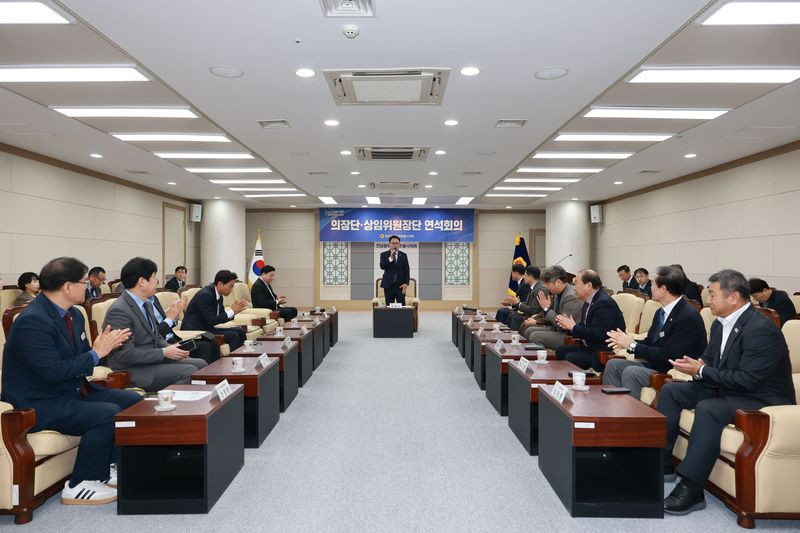
【Financial News, Jeonnam-Gwangju = Reporter Hwang Tae-jong】“We will set things right in public administration and safeguard budgets for people’s livelihoods.”
The Jeonnam-Gwangju Integrated City Council (Gwangju Special City Council) has decided to marshal its legislative resources ahead of the first administrative audit and budget deliberations since the integration of Jeonnam-Gwangju.
According to the Gwangju Special City Council on the 2nd, council leaders and standing committee chairs held a joint meeting that day to discuss the direction of council activities ahead of the 2026 administrative audit and deliberations on next year’s budget proposal, and shared key oversight priorities and principles for deliberation at the council level.
In particular, the council decided to focus this administrative audit on the reorganization of administrative structures and functions following the integration, the progress of major policies, balanced development among regions, and livelihood issues such as education and welfare.
It also decided that, in deliberating next year’s budget proposal, it would closely review nonessential projects and customary spending in light of the difficult fiscal conditions, and carefully check whether adequate funding had been allocated to livelihood-related projects directly affecting residents’ daily lives in the Special City.
At the meeting, Chair Song Hyeong-gon emphasized, “This administrative audit and budget deliberation are important processes that will determine the direction the Integrated Special City should take,” adding, “The results of integration should be judged not by the size of the administrative organization, but by the changes residents of the Special City actually experience.”
He also urged the council “to go beyond simply pointing out problems, closely examine policy effectiveness and the appropriateness of budget execution, and demonstrate what a policy-focused council can do by presenting practical policy alternatives.”
Chair Song said in particular, “We will clearly correct improper administration and thoroughly weed out unnecessary spending,” adding, “Even amid difficult fiscal conditions, we will be a responsible council that safeguards, above all, livelihood budgets directly tied to the lives of residents of the Special City.”
Meanwhile, the Gwangju Special City Council will hold its 5th Session, 2nd Regular Session for 45 days, from today through December 16, and conduct the first administrative audit since the launch of the Integrated Special City.
It will also consider approval motions for the settlement of accounts and reserve-fund expenditures by Jeonnam Province and Gwangju Metropolitan City for the first half of fiscal 2026, the 2026 supplementary budget proposal, and the 2027 main budget proposal, while handling around 350 ordinances that need to be revised following the integration.
Among the key dates, each standing committee will first conduct an administrative audit of city administration and education administration from the 3rd to the 15th. At the second plenary session on the 16th, members will hear presentations of the 2026 supplementary budget proposal and the 2027 main budget proposal, as well as addresses on city administration and education policy outlining next year’s operational direction and budget-setting principles.
From the 17th, the standing committees and the Special Committee on Budget and Accounts will review budget proposals and motions to approve settlements of accounts, among other items. The council plans to vote on the supplementary budget proposal and the motions to approve the settlement of accounts and reserve-fund expenditures at the fourth plenary session on December 9.
On the final day, December 16, the council plans to hold its fifth plenary session, adopt the administrative audit results report, vote on the 2027 budget proposal and other agenda items, and conclude the regular session.
[email protected] Hwang Tae-jong Reporter