445 requests for supplementary investigations a day ... Prosecution efforts falter over “unusable evidence” [One month after the launch of the Public Prosecution Office and Serious Crimes Investigation Agency]
- Input
- 2026-11-02 15:28:48
- Updated
- 2026-11-02 15:28:48
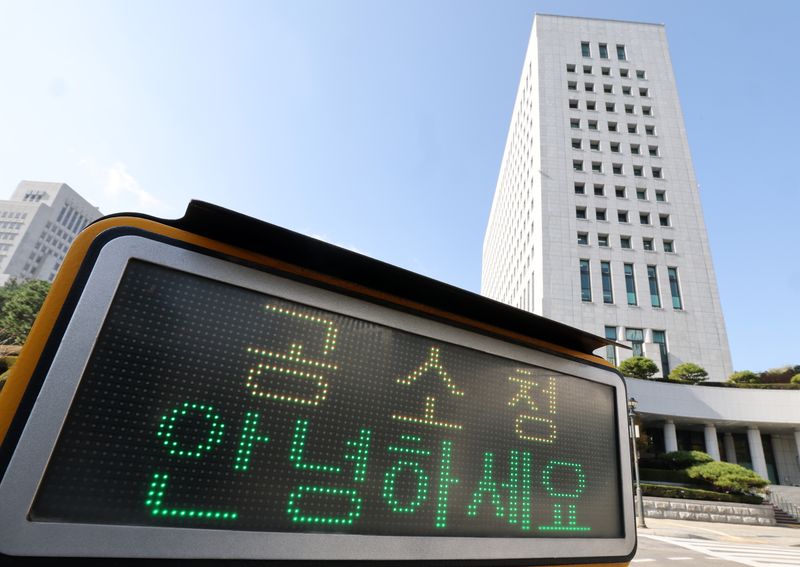
Legal sources said on the 2nd that the Public Prosecution Office asked police to conduct supplementary investigations in 12,465 cases from the 2nd to the 29th of last month. The figures came from data obtained from the National Police Agency by Kim Ye-ji, a People Power Party lawmaker on the National Assembly’s Security and Public Administration Committee. Hong Seok-gi, chief of the National Office of Investigation at the National Police Agency, said requests for supplementary investigations totaled 8,995 from the 2nd to the 26th of last month, up 60.2% from 5,615 during the same period last year. The rate at which arrest warrants requested by police were rejected at the Public Prosecution Office also climbed sharply: it was 36.2% (701 out of 1,936) from the 2nd to the 24th of last month, compared with 17.9% last year and 22.2% from January to September before the Public Prosecution Office launched.
The increase is rooted in the system. Previously, prosecutors could conduct supplementary investigations themselves into cases referred to them, but now they have no choice but to request them from investigative agencies such as the police. Police have complained that they are receiving requests for supplementary investigations even for corrections of typos in paperwork or the preparation of a list of offenses that could be completed over the phone. The time allowed to carry out a request has been cut from three months to one, prompting concerns that, in cases requiring expert analysis, a procedural formality may be repeated in which requests and processing go back and forth without any substantive supplementary investigation.■ They have the authority to receive materials but cannot use them as evidenceThe more fundamental issue is the admissibility of evidence. Article 245-13, Paragraph 1 of the Criminal Procedure Act grants prosecutors the authority to “verify facts,” allowing them, when necessary to maintain a prosecution, to hear the views of a victim or suspect and receive materials. But Paragraph 3 of the same article bars prosecutors from using materials they receive as evidence. In other words, prosecutors are given the authority to receive materials while being barred from using them as evidence. The problem is that it remains unsettled whether this provision applies at the trial stage. Some argue that it cannot be extended to trials because it appears at the end of the chapter on “investigation”; others contend that, based on the wording “when necessary to maintain a prosecution,” it also applies after indictment. This is why courts are likely to handle the issue differently.
Confusion has already emerged in court. In one case, a prosecutor tried to obtain through the National Tax Service (NTS) a summary statement of tax invoices requested by the court, but was stopped. The court said the prosecutor should apply for a fact-finding inquiry or an order to produce documents. There are also differing views on whether victims may submit additional sentencing materials or evidence to the trial prosecutor, and at times even the presiding judge has been unable to provide a clear standard.
A judge at a district court in the Seoul metropolitan area told Financial News by phone that there was no consensus within the court on the issue. Views differ on whether a prosecutor’s receipt of materials constitutes the start of an investigation or is an activity aimed at maintaining a prosecution. The victim is ultimately caught in the middle. The Public Prosecution Office directs victims to go to the police, while the police sometimes refuse to accept their materials, saying the case has already been referred.■ A workaround through judges ... fears of backlash over “involvement in investigations”Prosecutors have begun using a route through the trial court. During proceedings, they ask the court to issue search-and-seizure warrants, conduct fact-finding inquiries, or order the submission of materials in order to secure evidence. Prosecutors can execute search-and-seizure warrants once issued. This is done by directing Public Prosecution Office employees, who have the status of judicial police officers, under Articles 494 and 115 of the Criminal Procedure Act. Whether to issue a warrant, however, is up to the court, so its actual use depends on the court’s judgment.
There are concerns that this approach itself creates new risks. If the court directly takes steps to secure evidence during a trial, it could appear to be involved in an investigation. The defense may view this as prejudgment of guilt and raise concerns about the presumption of innocence or the fairness of the trial. Many judges also maintain that because the burden of proof rests with prosecutors, defendants must be acquitted when the evidence is insufficient.
The confusion is expected to deepen. Under transitional provisions, investigations into cases already being handled by the prosecution service are continuing on a limited basis for up to 90 days. Cases including the slush fund of former President Roh Tae-woo and one involving MBK Partners Chairman Michael ByungJu Kim are also at the stage where prosecutors are considering what action to take. Once the grace period ends, direct investigations will come to a complete halt, potentially intensifying confusion over fact-finding and the maintenance of prosecutions. Prosecutors on the front lines are calling for legislative changes to Paragraph 3 of Article 245-13 so that prosecutors can receive submitted evidence after an indictment.
[email protected] Kim Dong-gyu Reporter