Half-price postpartum care and top priority for childcare admission... Will preferential treatment for multicultural families be overhauled?
- Input
- 2026-11-02 15:47:28
- Updated
- 2026-11-02 15:47:28
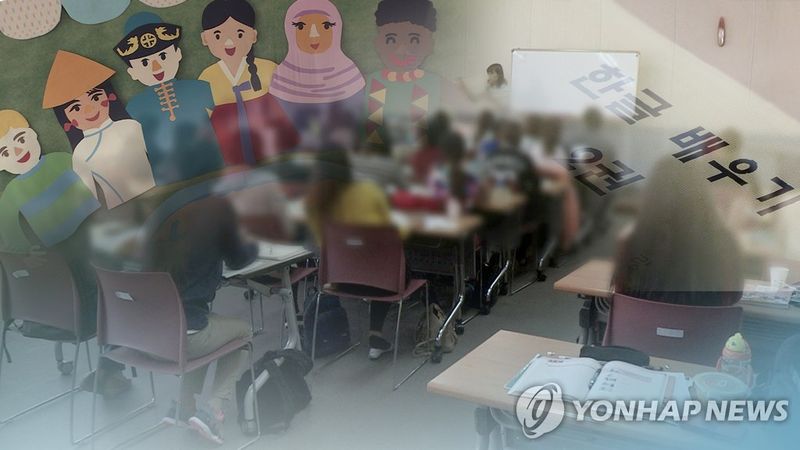
[Financial News] After President Lee Jae-myung raised the need to review preferential policies for multicultural families, the Ministry of Justice asked local governments nationwide to report on their related policies, prompting cities and provinces to begin reviews one after another. Some areas, including Seoul, were found to offer preferential benefits regardless of income, while Daejeon, Gangwon and Jeju said they have few preferential measures of their own, as most of their role is to implement national programs. The Ministry of Education plans to conduct a fact-finding survey on the priority admission system for children from multicultural families at childcare centers.
According to cities and provinces on the 2nd, the Seoul Metropolitan Government is conducting a comprehensive review of the eligibility criteria for 26 programs offering preferential treatment to multicultural families. It found that 20 of them provide benefits without income restrictions. Children from multicultural families qualify for first-priority admission to childcare centers regardless of their parents’ income. Seoul Learn also sets an income limit of 80% of the median income for general households, but imposes no income restriction on children from multicultural families. The Seoul-type Ansim Postpartum Care Center includes mothers from multicultural families among those with second priority for admission and charges only 1.25 million won for a two-week stay, about half the fee paid by other users. The review also covers support for brokerage fees and moving expenses for young people, as well as financial support programs for small businesses.
The review reportedly gathered momentum after Mayor Oh Se-hoon called for the system to be reconsidered following a controversy over reverse discrimination. At a press briefing on the 29th of last month, Oh said, “If we give multicultural families preferential treatment even for support awarded through competition, our citizens may feel a sense of relative deprivation.” The city believes that it can change the criteria for 22 of the 26 programs through ordinances or its own guidelines, while the other four would require amendments to laws or central government guidelines. It plans to decide on the scope and timing of any changes after seeing how the government proceeds with revisions to enforcement decrees.
After receiving an official letter from the Ministry of Justice on the 30th of last month, Ulsan City is reviewing the policies and ordinances of the city, its five districts and counties, and various institutions. As of that morning, it had identified 25 programs funded by the national and city governments. They include discounts of up to 50% on sports facility fees, a 50% discount on fees at the public postpartum care center in Buk-gu, and a 60% discount on public parking fees in Dong-gu for multicultural families with multiple children.
The Jeonnam-Gwangju Integrated Special City also sent the Ministry of Justice’s letter to 27 cities, counties and districts. Jeong Gwang-hye, team leader of the Foreign Residents and Multicultural Family Support Team at Gwangju Special City, said, “We plan to report the compiled information to the Ministry of Justice,” adding, “It will take considerable time before local governments make changes to their policies.”
Jeonbuk Province has begun reviewing the “13 programs for marriage migrants and their children” that it is carrying out with 20.7 billion won this year. Gyeongbuk Province has launched a program-by-program review covering 22 cities and counties.
Daejeon City plans to compile the information by the 3rd, but says it has no independent preferential policies of its own, since many programs—including language development education and interpretation services—are jointly funded with national government money. Gangwon Province likewise said it has no separate preferential measures of its own, and that most programs are funded through matching contributions from the national, provincial, and city or county governments to programs run by the Ministry of Gender Equality and Family. The details of independent programs run by the 18 cities and counties are expected to emerge only after the information has been compiled. Jeju Province also reportedly has no clearly identified preferential programs that it introduced independently. A provincial official said that services provided under national policies should be distinguished from the province’s own preferential system.
Although separate from the issue of multicultural families, fairness concerns over support for foreign residents also appear poised to surface in Gyeonggi Province. Since October last year, the province has raised monthly childcare subsidies for registered foreign children from 100,000 won to 150,000 won. Starting this year, it is also paying 100,000 won per month directly to childcare centers for unregistered foreign children attending centers in Hwaseong, Anseong and Icheon. At the same time, the province has drawn opposition from migrant-support groups by including the abolition of its Immigration and Society Bureau, which handles foreign resident policies, in an organizational restructuring plan announced on the 20th of last month.
The Ministry of Education said on the same day, “We plan to conduct a fact-finding survey on the impact that points awarded to multicultural families for childcare center admission have on actual admissions, among other things,” adding, “Based on the results, we will consider possible improvements to the system if it does not align with the policy’s intent.”
[email protected] Seong Cho-rong, Lee Bomi, Choi Soo-sang, Hwang Tae-jong, Kang In, Kim Jang-wook, Kim Won-jun, Kim Gi-seop, Jeong Yong-bok, Kim Kyung-soo Reporter