Rare Migratory Birds’ Key Corridor: Even Tropical and Subtropical Seabirds Covet Waters off Ulsan
- Input
- 2026-11-02 14:32:48
- Updated
- 2026-11-02 14:32:48
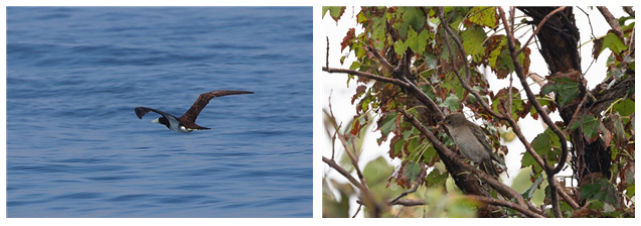
【Financial News, Ulsan = Reporter Choi Soo-sang】 Waters off Ulsan are emerging as a key corridor for rare migratory birds and a northern habitat for tropical seabirds amid climate change.
Ulsan City said on the 2nd that 128 members of the birdwatching group ‘Jjaekjjaek Rest Stop’ and birdwatchers from across the country conducted eight birdwatching outings in August and September, within 20 km of Daewangam Park and its surrounding waters, and observed 10,824 birds of 12 species.
Among them, seumsae were the most numerous, at 9,626. Jineureomibal-doyo, terns, allyusyan-jebigalmaegi, badajebi, and three species of skuas, including bukgeuk-dodukgalmaegi, were also recorded, as were the ppulsoe-ori, a natural monument and Class II endangered wildlife species, and the hanguk-dongbaksae, a resident bird.
During the Chuseok holiday, a lost juvenile bunhong-jjireuregi was observed in Ulsan for the first time. The migratory bird breeds from eastern Europe to northwestern China and winters in India and Sri Lanka. It was first recorded in Korea in 2000, at Yangsu-ri in Gyeonggi Province.
Seabirds that live in subtropical and tropical regions are also visiting waters off Ulsan.
This survey also confirmed one galsaek-eolgani-sae, which lives in tropical and subtropical regions. The species was first recorded in Korea in 1986 on Hongdo Island, Tongyeong, South Gyeongsang Province. Earlier, a frigatebird was also photographed in April in the waters off Daewangam Park in Ulsan. Like the galsaek-eolgani-sae, it is a seabird that inhabits tropical waters such as the Pacific and Indian oceans.
Tropical seabirds are known to sometimes lose their way because of typhoons and other factors and fly as far as the coast of the Korean Peninsula, but rising sea temperatures due to climate change is also being analyzed as a contributing factor.
Meanwhile, waters off Ulsan have been in the spotlight as a stopover for East Asian migratory birds since endangered rare migratory birds, including the neoljeokburi-doyo, began to be observed in Seosaeng-myeon, Ulju County, several years ago. The waters off Daewangam Park are also regarded as one of Ulsan’s leading stopover sites for migratory birds.
A city official said, “We confirmed that the area around Daewangam Park is also an important stopover for rare seabirds,” adding, “We will continue to keep records of observations.”
[email protected] Choi Soo-sang Reporter