Global reactor construction hits 40-year high as AI power demand surges
- Input
- 2026-11-02 13:52:09
- Updated
- 2026-11-02 13:52:09
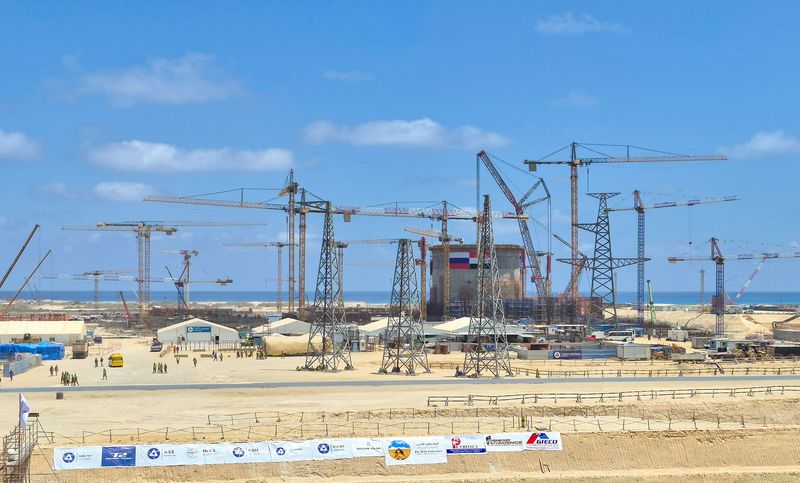
[Financial News] A total of 79 power-generating reactors are currently under construction worldwide, the highest number in 40 years. The increase is believed to be driven by surging electricity demand from the artificial intelligence (AI) industry.
Japan's newspaper The Nikkei reported on the 1st, citing data from the World Nuclear Association (WNA), a nonprofit industry group based in the UK. According to the WNA, 79 reactors were under construction worldwide as of mid-last month, including 11 nuclear power plants whose construction began this year. This is the highest number since 1986, when the Chernobyl nuclear power plant accident occurred in the former Soviet Union, with 91 reactors under construction.
A total of 443 reactors are currently operating, and at least 600 reactors are projected to be in operation worldwide in the 2040s.
Of the 79 reactors, the largest number—38—are currently under construction in China. India (8) and Russia (7) follow. European countries that opposed building new nuclear plants after the Chernobyl accident are also changing course. Italy passed a law last September to build next-generation nuclear power plants, while Sweden and Belgium also abandoned their nuclear phaseout policies in 2025. European Union (EU) Commission President Ursula von der Leyen said in a statement in March that reducing nuclear power generation had been a “strategic mistake.”
According to the WNA's report last month, nuclear power's share of global electricity generation rose from 1.59% in 1970 to 17.44% in 1996, before falling to 8.84% last year. By country, the United States had the largest net generating capacity among existing reactors, at 96,952 MWe (megawatts), followed by China (65,085 MWe), France, Japan, Russia and South Korea.
The Nikkei attributed the recent increase in reactor demand to AI's electricity needs and energy security. In 2024, data centers used to train and provide services with AI accounted for 4.5% of electricity consumption in the United States. That figure is projected to reach 10.9% in 2030. In a 2024 report, US investment bank Goldman Sachs said that a large AI data center could consume around 1 GW (gigawatt) of electricity, comparable to the generating capacity of a large reactor.
The Nikkei explained that AI-related companies are considering adopting small modular reactors (SMRs) to meet their electricity needs. It also said demand for nuclear power had risen as the wars in Ukraine and Iran made fossil-fuel supply chains less secure. The US government is pursuing a nuclear power expansion worth $80 billion (about 10.686 trillion won) to supply electricity to AI data centers, while Japan plans to replace and build up to 14 reactors by 2050. As nuclear power expands, the price of uranium under long-term contracts—the fuel for nuclear power plants—hit $97 per pound (0.45 kg) last July, a record high in 18 years, and remained at that level through the end of last month.
[email protected] Park Jong-won Reporter