“My Baby’s Back of the Head Is Flat—Would a Helmet Help?”... How to Tell the Difference Between Head Shape Deformities in Babies [Health Talk]
- Input
- 2026-11-02 10:54:11
- Updated
- 2026-11-02 10:54:11
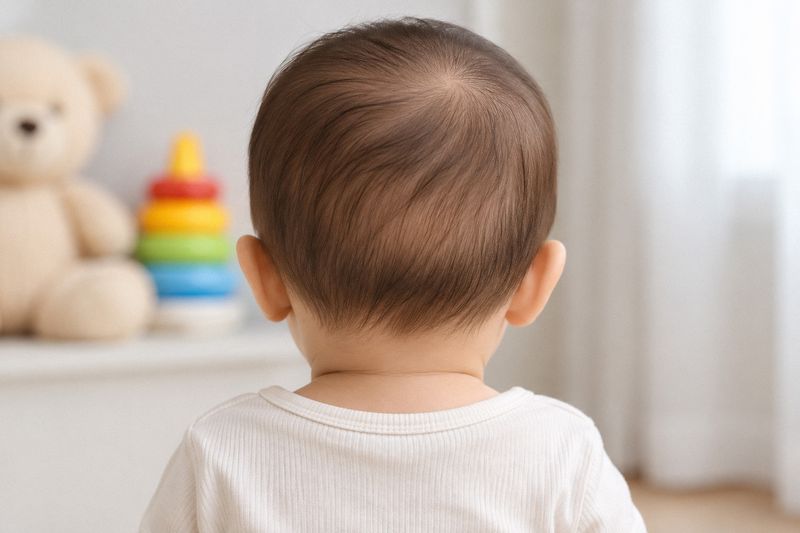
[Financial News] In parenting communities, “head-shaping helmets” are a frequent topic. When a baby’s head is unusually flat at the back or asymmetrical in shape, parents look for information and consider helmet therapy. But some head shape deformities are congenital conditions that cannot be corrected with a helmet, so caution is needed.
Head shape deformities in infants and young children are relatively common, and most are positional plagiocephaly caused by factors such as lying on one side. But the situation is different with craniosynostosis, in which the sutures between the skull bones fuse earlier than normal. The condition can affect not only the shape of the head but also the growth of the skull and brain, and often requires surgery rather than a helmet, making an accurate differential diagnosis important.
Professor Kim Sang-dae of the Department of Neurosurgery at Korea University Ansan Hospital explained, “The head may become longer and narrower from front to back, the forehead may become asymmetrical on one side, and the shape of the back of the head or the entire head may change. In some cases, facial asymmetry, increased intracranial pressure, reduced vision, or developmental delays may also occur.”
Sutures That Close Too Early Cannot Be Fixed With a Helmet... Differential Diagnosis Comes First
A newborn’s skull is made up of several bones, not one solid bone. Sutures, the junctions between the bones, allow the skull to grow naturally as the brain grows.
Craniosynostosis occurs when one or more of these sutures close abnormally early. The skull cannot grow in the direction of the fused suture, so the head grows in other directions where growth is still possible, resulting in a characteristic head shape deformity.
Positional plagiocephaly may improve as a baby grows and changes position, and physical therapy or a head-shaping helmet may be considered if needed. Craniosynostosis, however, is a structural problem in which the sutures have already fused, so a helmet alone cannot resolve it.
The problem is that parents may mistake a head shape deformity for simple positional plagiocephaly, delaying diagnosis. If a baby’s head is unusually asymmetrical, or does not improve over time and instead becomes more noticeably deformed, it is best to seek specialist care.
Professor Yoo Hee-jin of the Department of Plastic Surgery at Korea University Ansan Hospital said, “Craniosynostosis should be assessed by looking at the shape of the forehead and back of the head, the position of the ears, facial asymmetry, and other factors together. If the condition is suspected, imaging tests should be used to accurately assess whether the sutures have fused and the extent of the skull deformity.”
Choosing the Right Surgery for Each Child... Development Must Be Monitored After Surgery
Craniosynostosis is usually treated with surgery. The main approaches are endoscopic surgery, which uses an endoscope to cut the fused suture, and cranioplasty, which directly repositions the skull to correct its shape.
Endoscopic surgery involves a smaller incision, which can reduce blood loss and the burden of recovery, but it is mainly used for young infants in the early months of life and requires helmet therapy for a period after surgery. Cranioplasty may be more appropriate when diagnosis is delayed, the deformity is severe, or depending on which suture has fused. The surgical approach should ultimately be chosen by considering together the location and number of fused sutures, the extent of the deformity, and the baby’s age in months.
Professor Kim explained, “Cranioplasty creates sufficient space for the brain to grow while correcting the shape of the deformed skull. Because the procedure requires the expertise of both neurosurgeons, who assess the safety of the brain and surrounding tissues, and plastic surgeons, who correct structural skull deformities, close collaboration between the two departments is essential.”
Long-term care is also needed after surgery. Because an infant’s skull continues to change shape as it grows, regular follow-up is needed to check for head shape deformities or increased intracranial pressure.
Professor Yoo explained, “In most cases, treatment is completed with a single operation, but when several sutures have fused, deformities may emerge as the child grows. The skull’s growth pattern and symmetry should be monitored closely to determine whether further correction is needed.”
It is also important to check for developmental delays. In particular, syndromic craniosynostosis associated with genetic craniofacial disorders such as Crouzon syndrome, Apert syndrome, and Pfeiffer syndrome can lead to various neurodevelopmental problems depending on the characteristics of each condition.
Professor Shim Young-gyu of the Neurology Division of the Department of Pediatrics and Adolescent Medicine at Korea University Ansan Hospital said, “Because pediatric patients are still developing, follow-up care is needed to monitor for developmental delays. In cases of syndromic craniosynostosis accompanied by other physical characteristics or abnormal findings, it is important to conduct the necessary genetic tests early and make a differential diagnosis.” The professor added, emphasizing, “An integrated care system is essential to assess development across areas such as motor, language, and cognitive skills as children grow, and to promptly connect them with early intervention and rehabilitation therapy.”
[email protected] Jeong Myeong-jin, Medical Correspondent Reporter