NHRCK urges improvements to human rights in schools; Education Ministry accepts half of 16 items
- Input
- 2026-11-02 12:00:00
- Updated
- 2026-11-02 12:00:00
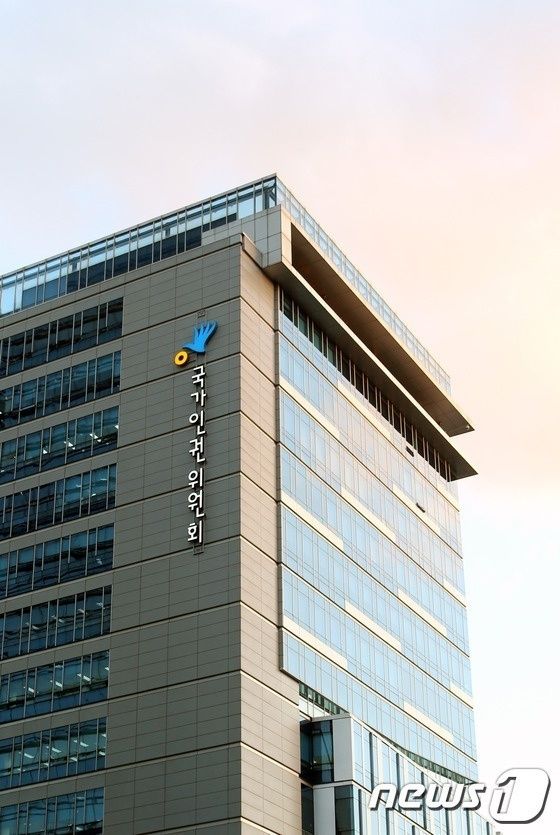
The National Human Rights Commission of Korea said on the 2nd that it had determined the Ministry of Education accepted 2 of the 16 items related to creating schools that respect human rights, partially accepted 6 and rejected 8.
On February 12, the commission presented 21 tasks in three areas to the education minister and the heads of education offices in all 17 cities and provinces, and recommended that they develop related policies to create schools that respect human rights. Three of the 17 metropolitan and provincial education offices—those in Seoul, Gyeonggi and Gyeongnam—accepted all the recommendations, while the other 14 partially accepted them.
The recommendations rejected by the Ministry of Education included codifying human rights education in law; establishing alternative dispute resolution bodies within metropolitan and provincial education offices; explicitly recognizing the protection of students’ human rights as a standard for student guidance; and codifying students’ rights and procedures for seeking remedies. A survey of teachers’ human rights and the establishment of a system to address workplace harassment were also classified as rejected items.
Regarding the proposal to codify human rights education in law, the Ministry of Education said that it would be difficult to enshrine it in education-related legislation because the concept and scope of human rights education are not defined by law. It also replied that students’ rights were already codified in law. The commission pointed out that, although the current Elementary and Secondary Education Act contains provisions guaranteeing students’ human rights, the specific rights, standards for their implementation and procedures for seeking remedies are not sufficiently established.
In response to the recommendation to establish alternative dispute resolution bodies at the metropolitan and provincial education-office level, the Ministry of Education proposed procedures for establishing and operating education conflict committees under a “Model Draft Ordinance on the Rights and Responsibilities of School Members.” The commission stressed that conflicts and human rights violations arising in schools are increasingly being handled through judicial proceedings to an excessive degree, and that separate dispute resolution procedures are needed to resolve cases educationally and support recovery for victims and in relationships. It has also been pointed out that existing procedures for mediating school-violence disputes presuppose agreement between the parties and lack adequate means to ensure that the outcomes are implemented.
Establishing a system to address workplace harassment targeting teachers also emerged as an issue. The Ministry of Education said that specifying related provisions in the Act on the Status of Teachers could duplicate existing systems and make the available remedies unclear. The commission, however, criticized the fact that the workplace harassment ban under the Labor Standards Act does not effectively apply to teachers at national and public schools, and that separate protective provisions for private-school teachers are also inadequate. It said the Act on the Status of Teachers focuses on protecting teachers’ educational activities from students, guardians and others, limiting effective protection and remedies for harassment among school staff.
The commission said, “We are making this information public because we believe it is necessary to raise public awareness of creating schools that respect human rights and for relevant institutions, including the Ministry of Education, to reconsider the commission’s recommendations.”
[email protected] Seo Ji-yoon Reporter