POSCO Future M posts Q3 operating profit of 82.1 billion won, up 23.2% year on year
- Input
- 2026-11-02 13:17:07
- Updated
- 2026-11-02 13:17:07
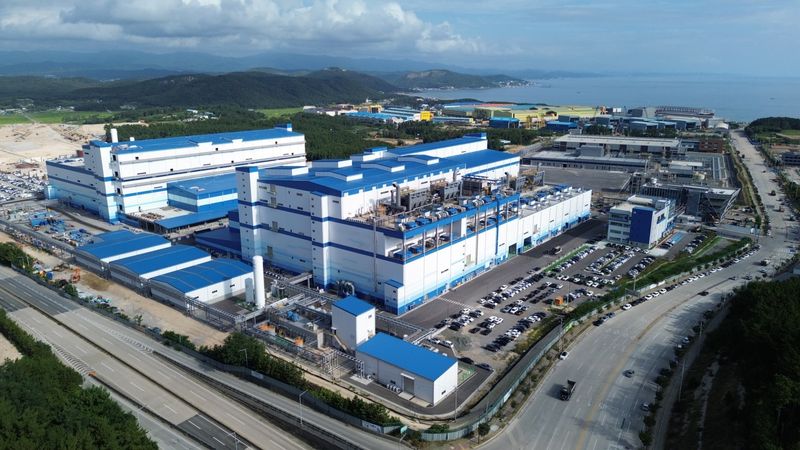
On the 2nd, POSCO Future M announced that preliminary figures showed consolidated revenue of 834.8 billion won and operating profit of 82.1 billion won for the third quarter of this year. Net profit was 46.4 billion won.
Operating profit rose 23.2% year on year and 207.8% quarter on quarter. Revenue fell 4.6% year on year but increased 22.9% from the previous quarter. The operating margin was 9.8%, up 2.2 percentage points from 7.6% a year earlier.
Cumulative revenue through September this year fell 4.6% to 2.2717 trillion won, while cumulative operating profit rose 49.6% to 126.5 billion won. The latest operating profit far exceeded the FnGuide consensus of 19.4 billion won.
In the battery materials segment, revenue reached 459.6 billion won and operating profit totaled 51.8 billion won, increases of 40.2% and 1,972%, respectively, from the previous quarter.
Cathode materials performance improved on a recovery in sales volumes to existing customers, higher selling prices and the recognition of compensation from customers. Anode materials sales volumes to overseas customers increased despite the recognition of inventory valuation losses.
The basic materials business posted revenue of 375.2 billion won, up 6.7% quarter on quarter, and operating profit of 30.3 billion won, up 25.2%. Higher selling prices for chemical products linked to oil prices and increased lime (quicklime) sales volumes boosted operating profit.
Building on these results, POSCO Future M is accelerating efforts to improve profitability by expanding its production capacity for LFP (lithium iron phosphate) cathode materials.
To meet demand from energy storage systems (ESS) and entry-level electric vehicles, the company converted part of the production lines at its Pohang cathode materials plant to LFP lines. It plans further conversions in line with growing orders, with the aim of increasing annual production capacity to 105,000 tons. It has also secured a separate supply of LFP from its joint venture, C&P Advanced Materials, starting in the fourth quarter of 2027.
The company will also improve cost competitiveness by developing next-generation high-density LFP cathode materials and commercializing a process that does not use precursors. It is also preparing for mass production of cathode materials for all-solid-state batteries and developing materials for sodium-ion batteries (SIBs).
For anode materials, the company plans to increase investment in its Vietnam-based synthetic graphite anode subsidiary and target demand that can be served in compliance with U.S. prohibited foreign entity (PFE) regulations.
[email protected] Kim Dong-chan Reporter