Stock Sale Proceeds to Be Paid the Next Day Starting in 2028... T+1 Roadmap Unveiled
- Input
- 2026-11-02 10:39:50
- Updated
- 2026-11-02 10:39:50
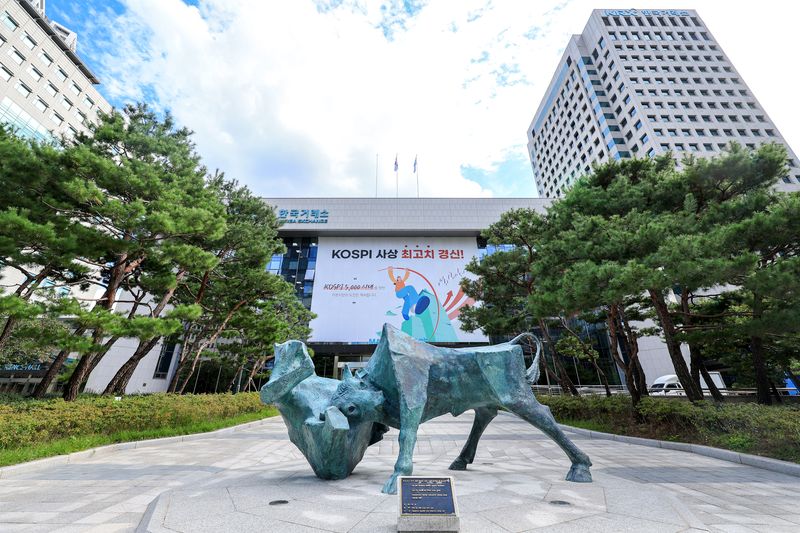
[Financial News] A roadmap has been unveiled to introduce a “T+1” settlement system, under which investors can receive proceeds from stock sales on the next business day, as early as 2028. Ahead of the transition, interest rates on loans secured by stock sale proceeds—which have been criticized as high despite their short terms and low risk—will also be lowered.
The Korea Exchange, Korea Securities Depository (KSD), The Korea Securities Finance Corporation, and the Korea Financial Investment Association announced on the 2nd a draft roadmap for shortening the securities market settlement cycle. It sets out detailed tasks and a phased preparation schedule for the settlement-cycle reduction already under way.
Currently, in South Korea’s stock market, investors receive proceeds two business days after the trade date when they sell stocks. Shortening the settlement cycle to T+1 would allow them to receive and withdraw the proceeds on the next business day. The transition will apply across the board not only to stocks but also to exchange-traded funds (ETFs) and exchange-traded notes (ETNs).
The schedule allows more preparation time than the approach proposed at the Meeting for Capital Market Stability and Normalization this past March, which called for keeping pace with Europe and other regions’ timelines for shortening settlement cycles. Europe is targeting a transition next October, but the schedule reflects views that financial companies and foreign investors in South Korea need sufficient time to overhaul their systems and work processes.
The schedule reflects views that sufficient preparation time is needed, taking into account system overhauls at domestic and foreign financial companies and the burden of nighttime work for foreign investors due to time differences. Securing enough foreign-exchange market liquidity to meet demand for converting settlement funds in the early morning hours was also identified as a task.
According to the roadmap, related institutions, including the Korea Exchange and KSD, plan to complete overhauls of clearing and settlement infrastructure by October next year. Financial companies and foreign investors aim to complete IT development and changes to their work processes by the first quarter of 2028. Integrated testing is then scheduled for the second through fourth quarters of 2028. The plan is to make the transition after at least six months of testing system connectivity and the ability to respond to disruptions, from trade execution through final settlement. The related institutions expect the transition to be feasible during 2028, but will decide on the final implementation timing after taking into account industry readiness and developments in major Asian countries.
One measure to benefit investors before the transition will be the launch of moderate- to low-interest loans secured by securities sold. The product allows investors who have sold stocks to borrow funds against those securities before the settlement date. As of the end of June, interest rates stood at 7.5–10% per year.
These loans have long been criticized for carrying high interest rates despite their short terms of one to two days and low risk, as the exchange’s guarantee of settlement performance effectively secures the source of repayment. The same concern was raised at a public forum on shortening the settlement cycle attended by individual investors.
In response, The Korea Securities Finance Corporation will provide funding to securities firms at rates in line with the rate earned on customer deposits, and the firms will use that funding to offer investors lower-interest loans. Mirae Asset Securities is launching the product first today, while Kiwoom Securities plans to launch it on the 20th. The offering will then be expanded in stages to other securities firms that wish to participate. Each firm will announce its specific interest rate when it launches the product.
The related institutions estimate that, if rates are lowered to the mid-to-high 5% range per year and the number of securities firms offering the loans is expanded to 12, investors’ total annual interest costs would fall by about 15 billion won. The aim is to let investors access stock sale proceeds sooner at lower cost even before the settlement cycle is shortened.
Automation of settlement operations is also planned. KSD aims to streamline foreign investors’ settlement process from 12 steps to five by developing its own system and linking it with the trade information-matching system of the U.S. securities depository DTCC. Measures to ease institutional investors’ liquidity burden will also be pursued, including recalculating trading margins during the settlement day and allowing settlement payments to be made in installments.
There are also changes investors should note. The payment deadline for investors trading on credit will move forward from T+2 to T+1. The timing of forced sales when investors fail to repay outstanding balances will also move forward from T+3 to T+2.
The related institutions will provide sector-specific operating standards and implementation checklists this December, and launch a task force (TF) comprising relevant organizations and a professional project management office (PMO) in the first quarter of next year. They will solicit market participants’ feedback on the draft roadmap through December 18.
[email protected] Lee Jeong-hwa Reporter