Beyond weapons systems and cyber, into space: Republic of Korea Air Force to take part for the first time in US Space Force-led international wargame
- Input
- 2026-11-02 10:55:39
- Updated
- 2026-11-02 10:55:39
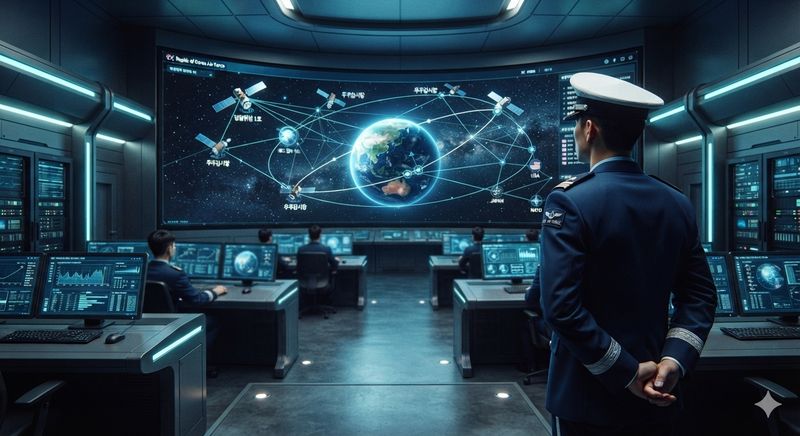
Partner to Win is said to be a multilateral international space exercise established separately this year, building on and developing the multinational cooperation framework of the Schriever Wargame, a top-tier future security simulation that the US Space Force has conducted behind closed doors since the early 2000s. It was launched to put into practice a ‘coalition-led’ space security strategy, in which allies participate jointly from the initial scenario-design stage, moving away from a space security approach that had operated under a US-centered, single-command structure. The US Space Force officially invited the ROK Air Force in view of the strategic partnership between the two countries. With this event leading the way, a six-country framework of key space security nations—South Korea, the United States, the Netherlands, Sweden, Poland and Brazil—will become operational.
The participation is also the result of high-level military diplomacy. In February, ROK Air Force Chief of Staff Son Seok-rak held a coordination call with General Bradley Chance Saltzman, Chief of Space Operations of the US Space Force, and discussed in depth the establishment of a multilateral wargame in response to changes in the global space domain and ways for the ROK Air Force to participate. The dispatch of officials from the Ministry of National Defense and the Air Force’s space division is a direct follow-up to that high-level agreement.■Space warfare is no distant future: real-world cases of ‘satellite paralysis and disruption’The wargame will take the form of a ‘tabletop exercise’ (TTX), in which participants assume a hypothetical space crisis and engage in intensive discussion. The crisis in the space domain identified by military authorities and security experts is not science fiction from the distant future, but a highly effective form of provocation that can cripple the eyes and ears of modern military operations in the field.
On the previous October 22, global media outlets including the British daily Telegraph reported that Starshield, a next-generation military satellite communications network operating on Ukraine’s front lines, had become embroiled in controversy over being blocked in real time by jamming and tactics that restrict high-speed movement used by hostile forces. The US Space Force also stated in its ‘Space Domain Environment 2040 Report’ that adversary space-based laser interception weapons, efforts to disable military GPS signals, and attempts to knock military reconnaissance satellites out of orbit were among the most urgent security concerns of the modern era.
The six national delegations plan to test real-time information-sharing systems and crisis-control processes between countries using extreme stress scenarios in which their satellite assets are disabled or their space surveillance systems are physically attacked in a contingency.■What is a ‘multinational combined space operations framework’? Globalizing each country’s systemsThe ‘multinational combined space operations framework’ that the Air Force aims to lay the groundwork for through this wargame is a straightforward defense concept. If ROK military satellites are knocked offline by an enemy attack around the Korean Peninsula or in airspace around the world, reconnaissance satellites and space-surveillance radar assets held by allies such as the United States and the Netherlands would be linked in a single virtual network to detect the source of enemy provocations in real time and defend jointly—a kind of ‘joint space shield network.’
The South Korean delegation is reportedly planning to review ways to improve and further develop the ‘Korean Space Situation Response Wargame Program,’ which the Air Force Space Center has developed in-house and is already operating, drawing on its experience in the wargame with the US Space Force. The reported plan is to broaden the inclusion of policy and strategic elements—such as decision-making during a space crisis in a hypothetical scenario and cooperation among countries—in the South Korean military’s own program, thereby expanding the autonomy and reach of its system.
Colonel Kim Si-mon, director of the Space Center at ROK Air Force Headquarters, stressed, “This wargame is an opportunity to elevate security cooperation with allied countries to the highest level amid a rapidly changing space operations environment. We will further develop the Korean Space Situation Response Program into a global standard and build independent capabilities that can make a practical contribution to a multinational combined space operations framework.”
[email protected] Lee Jong-yoon Reporter