EUGENE Corporation Returns to Bond Market After 14 Months; Rate Hits 5.8% Despite Woori Financial Group Stake Sale [fn Market Watch]
- Input
- 2026-11-02 16:00:27
- Updated
- 2026-11-02 16:00:27
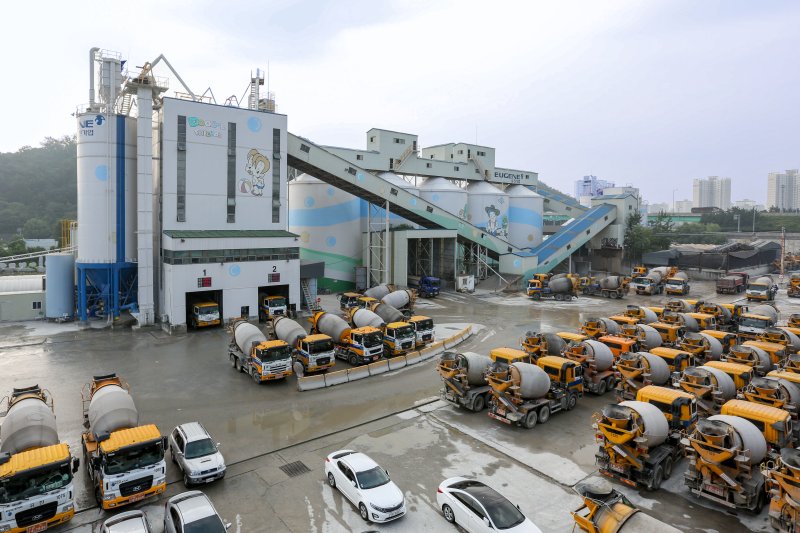
In September, EUGENE Corporation sold part of its Woori Financial Group stake, held through a subsidiary, for KRW 462.2 billion as it moved to ease its financial burden. Yet the rate on the two-year private placement bonds it has now issued is 0.6 percentage points higher than that on bonds of the same maturity last year. With corporate bonds worth KRW 54 billion coming due next year and KRW 29 billion in electronic short-term bonds outstanding in the short-term funding market, the financing costs involved in future refinancing are drawing attention.
According to investment banking (IB) industry sources on the 2nd, EUGENE Corporation issued KRW 13 billion in privately placed corporate bonds on October 30. They mature on October 30, 2028, and carry an annual coupon rate of 5.8%. The proceeds will be used to refinance existing borrowings.
EUGENE Corporation’s previous corporate bond issuance was about 14 months ago, on August 21 last year. At the time, it issued two tranches of three-year private placement bonds worth KRW 10 billion each, for a total of KRW 20 billion. Their annual coupon rates ranged from 2.962% to 3.490%.
The rise in borrowing costs is also clear compared with bonds of the same maturity. On February 12 last year, EUGENE Corporation issued KRW 14 billion in two-year private placement bonds at an annual rate of 5.2%. The rate on the latest issue is 0.6 percentage points higher.
Borrowing costs have also increased compared with the private placement bonds issued in 2024. In February and May 2024, EUGENE Corporation issued KRW 20 billion in private placement bonds each time through inclusion in primary collateralized bond obligations (P-CBOs). Their annual coupon rates were 4.573% and 4.319%, respectively. The rate on the latest issue is higher by 1.227 and 1.481 percentage points, respectively. EUGENE Corporation has also recently moved to ease its financial burden by converting assets into cash.
On September 7, subsidiary Eugene W sold 14 million shares in Woori Financial Group for approximately KRW 462.2 billion through an after-hours block trade. As a result, its stake in Woori Financial Group fell from 3.97% to 2.06%. Then, on September 10, Eugene W and Eugene W Private Equity Partnership, which owns it, decided to dissolve.
NICE Investors Service assessed that the sale of the Woori Financial Group stake would improve EUGENE Corporation’s financial stability indicators, but have a limited impact on its creditworthiness. Continued weakness in its core ready-mixed concrete manufacturing and sales business is also a burden. EUGENE Corporation recorded an operating loss last year on a separate financial statement basis and remained in the red in the first half of this year. As of the end of June, total borrowings on a consolidated basis stood at KRW 1.4794 trillion.
The market is watching EUGENE Corporation’s refinancing rates going forward. This is because financing costs could also rise as the company extends the maturities of existing debt while raising new funds at higher rates than those on bonds it issued in the past.
In February 2027, EUGENE Corporation will face maturities totaling KRW 34 billion, including KRW 14 billion in private placement bonds and KRW 20 billion in private placement bonds included in a P-CBO. Another KRW 20 billion in P-CBO private placement bonds is due in May of the same year. Based on current outstanding issuance, corporate bonds totaling KRW 54 billion will mature next year.
However, the P-CBO private placement bonds carry call options, so the actual repayment dates may differ. There is also a burden from short-term borrowings. EUGENE Corporation has about KRW 29 billion in electronic short-term bonds maturing within one year. Combined with the corporate bonds maturing next year, the balance of short-term electronic bonds brings the debt requiring refinancing or repayment management to KRW 83 billion.
Meanwhile, EUGENE Corporation’s short-term credit rating is A3, at the lowest end of investment-grade ratings.
[email protected] Kim Hyun-jung Reporter