Warship to Be Operated by Two ... Hanwha Systems Co., Ltd. Develops Cockpit-Style IBS
- Input
- 2026-11-02 09:51:20
- Updated
- 2026-11-02 09:51:20
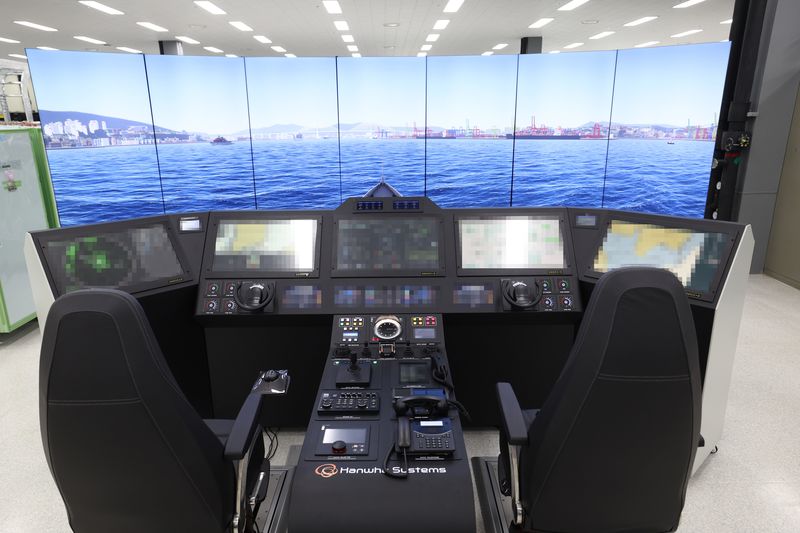
[Financial News] Hanwha Systems Co., Ltd. is developing an integrated cockpit that will allow at least two people to handle navigation, combat operations and machinery control on a large warship. The system brings together control functions scattered throughout the vessel, much like an aircraft cockpit. It will help address the shrinking manpower pool while also securing the integrated operations technology needed for future unmanned vessels.
Hanwha Systems Co., Ltd. said on the 2nd that it had won a contract for a development project overseen by the Korea Research Institute for Defense Technology Planning and Advancement (KRIT), titled “Smart Bridge Operation Technology Using a Cockpit System.” The project runs through 2030. The company will handle everything from building consoles, the control equipment, to developing integrated operations software.
The core is the cockpit-style integrated bridge system (IBS). Until now, navigation was controlled from the bridge, sensors and weapons from the combat information center, and propulsion and power equipment from the engine control room. The system is designed to bring these functions together in one space so a small crew can operate them collectively.
To do this, the IBS will be connected to the combat management system (CMS), the warship’s brain; the integrated engine control system (ECS), which manages propulsion and power equipment; and the unmanned system (UMS), which handles autonomous navigation and collision avoidance. All four systems will use technologies developed in-house by Hanwha Systems Co., Ltd.
The system will also use artificial intelligence (AI) and virtual and augmented reality (VR·AR). It will provide an intuitive display of surrounding maritime conditions and calculate collision risks to help select an avoidance route.
The integrated cockpit offers more than just personnel savings: it can also help crews make decisions quickly in combat situations. The “Naval Cockpit” on Italy’s multipurpose combat ship (PPA), which has adopted a similar system, is reportedly well suited to responding quickly, on the captain’s orders, to sudden threats such as fast boats or unmanned aircraft.
Yoo Mun-gi, head of Hanwha Systems Co., Ltd.’s Marine Business Division, said, “We are now able to provide direct, on-site support for the Navy’s pressing challenges of a shrinking manpower pool and crew shortages. By localizing not only the warship’s brain and heart but also the advanced cockpit that integrates them, we will work to complete a lineup of core technologies to lead the era of future unmanned vessels under the ‘Smart Navy’ strategy, which aims to make the Navy a powerful force built on advanced technology.”
[email protected] Kim Yun-ho Reporter