Gyeongbuk Province Goes All Out to Build a Model for Employment at Local Companies and Settlement in the Region
- Input
- 2026-11-02 09:07:50
- Updated
- 2026-11-02 09:07:50
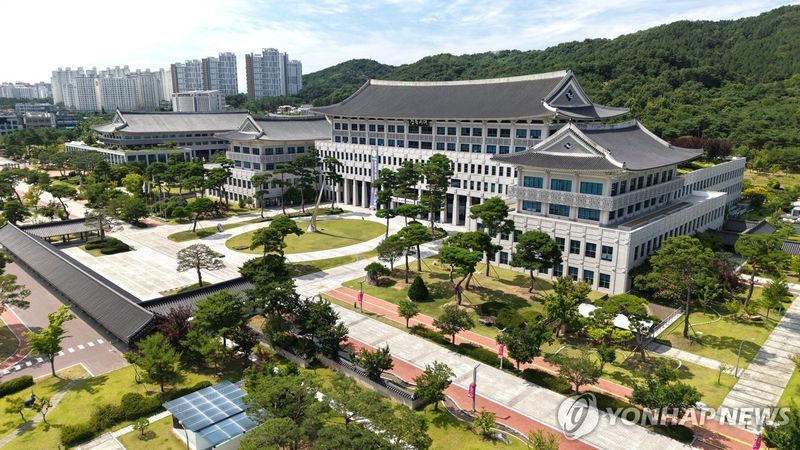
【Financial News, Andong = Kim Jang-wook, Reporter】Gyeongbuk Province is stepping up efforts to build a model for employment at local companies and settlement in the region.
According to Gyeongbuk Province, contract departments at nine universities in the region recorded a 64% fill rate, 4 percentage points above the national average of 60% and close to the capital region’s average of 65%.
Accordingly, the province is moving to build a Gyeongbuk-style contract department model to broaden the foundations for local talent to settle in the region.
An analysis of data published by the University Information Disclosure System found that in 2026, the fill rate for contract departments was 65% at six general universities in Gyeongbuk, 60% at two junior colleges and 85% at one technical college.
The nationwide average fill rates for contract departments are 62% at general universities, 55% at junior colleges and 81% at technical colleges. In the capital region, the rates are 68%, 59% and 76%, respectively. Gyeongbuk surpassed the national and capital-region averages at junior colleges and technical colleges.
“The province will work with universities, focusing on advanced industries and strong local ties, to create a model in which talent from local universities find jobs at local companies and settle in the region,” said Lee Sang-su, director of the Local Government Strategy Bureau. He emphasized that “central government funding is essential for the success of outstanding university-based local settlement models.”
Alongside operating contract departments, the province will expand the design of joint university-company curricula, joint research, internships and field studies to ease the burden on companies and students. It is also considering projects to expand specialized contract departments and joint research institutes with companies, with a focus on advanced industries.
In addition, the average fill rate for incoming students for the 2026 academic year at the 27 universities implementing anchor projects was 97.8%, up 2.0 percentage points from the previous year. Fill rates rose at 15 universities.
The fill rate was 99.9% at 15 general universities, up 1.0 percentage point, and 95.3% at 12 junior colleges, up 3.4 percentage points. The province analyzed the gains as the result of the combined effects of region-university partnership projects, including the universities’ own innovation efforts and anchor projects, despite a declining school-age population and the concentration in the capital region.
“We plan to continue actively pursuing government funding needed to build university-based models for settlement in the region,” said Park Sun-young, head of the University and Youth Division.
[email protected] Kim Jang-wook Reporter