“Why Is Running in Winter More Dangerous for the Heart?” ... Why Even Healthy People Collapse While Running [Health Talk]
- Input
- 2026-11-02 09:00:05
- Updated
- 2026-11-02 09:00:05

[Financial News] Even at dawn, as cold winds blow, runners continue to pound the paths through parks and along rivers. But as incidents involving cardiac arrest or death during runs and marathons have occurred one after another recently, concern about safety during exercise has also grown. Running unprepared in a sudden cold snap can strain even a healthy person’s heart.
Professor Noh Seung-young of the Department of Cardiology at Korea University Guro Hospital explained, “In cold weather, blood vessels constrict and blood pressure rises as the body tries to maintain its temperature, increasing the strain on the heart.” He added, “If sudden, high-intensity exercise is added to the mix, the risk of cardiovascular conditions such as heart attacks and arrhythmias may increase.” In other words, running to improve your health can instead put it at risk.
Why blood vessels constrict in the cold and strain the heart
When exposed to cold, our bodies constrict the skin’s blood vessels and peripheral blood vessels to preserve body heat. This increases vascular resistance and raises blood pressure, placing greater strain on the heart than usual. These changes can be more pronounced when temperatures drop sharply, potentially increasing the risk of cardiovascular disease. If running also speeds up the heart rate, the heart needs more oxygen, adding to the strain.
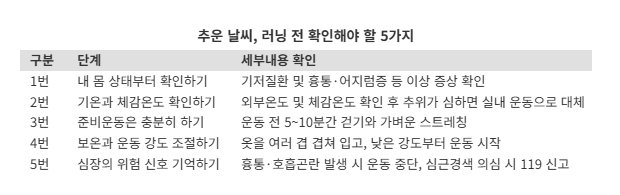
This is especially dangerous for people whose coronary arteries, which supply blood to the heart, have narrowed. If the heart does not receive enough blood during exercise, angina may develop or worsen, and in severe cases it can lead to a heart attack. People with cardiovascular conditions such as angina or heart attacks, or underlying conditions such as high blood pressure, diabetes or dyslipidemia, should take extra care when running in cold weather.
Even people who are usually healthy can be at risk if they run beyond their physical capacity. If someone who has not been exercising much suddenly takes on a long-distance run or high-intensity workout without adequate preparation, it can place excessive strain on the heart. This is because the heart and lungs have not yet adapted to the high exercise intensity. Trying too hard to match someone else’s pace or focusing only on improving one’s time can also lead to exercising beyond one’s capacity.
Another point to bear in mind is that people may have an undiagnosed heart condition even if they usually have no noticeable symptoms. Some heart conditions progress without clear symptoms and are first discovered during strenuous exercise. Even if you feel confident about your health, you should adjust your exercise volume to your fitness level rather than pushing yourself to achieve a certain time or distance. If you have taken a long break from exercise, it is best to start with light activity and gradually increase the duration and intensity.
Warm up thoroughly and don’t miss your body’s warning signs
A warm-up before exercise is important for running safely in cold weather. Loosen up indoors by walking lightly for about 5–10 minutes or doing dynamic stretches, then start running slowly outdoors and gradually increase the intensity. Wear several layers of insulating clothing to maintain your body temperature, and consider exercising indoors instead on days when winds are strong or the perceived temperature drops sharply. After exercising, don’t stop abruptly; walking lightly to bring your heart rate down gradually can help.
You should also pay attention to warning signs from your body during exercise. If you experience chest tightness or pressure, unusual and severe shortness of breath, dizziness or cold sweats, stop exercising immediately. If you have symptoms that could indicate a heart attack, don’t dismiss them as ordinary exercise fatigue; call 119 immediately.
Professor Noh stressed, “In cold weather, blood vessels constrict and blood pressure rises, increasing the strain on the heart, so you should avoid strenuous exercise.” He added, “Running benefits cardiovascular health, but it can be dangerous if you don’t take your health and fitness into account. It is important to exercise safely by warming up thoroughly and adjusting the intensity gradually.”
[email protected] Medical Reporter Jung Myung-jin Reporter