Operating profit up 114%, yet six brokerages cut Hyundai Engineering and Construction’s price target—why?
- Input
- 2026-11-02 08:41:14
- Updated
- 2026-11-02 08:41:14
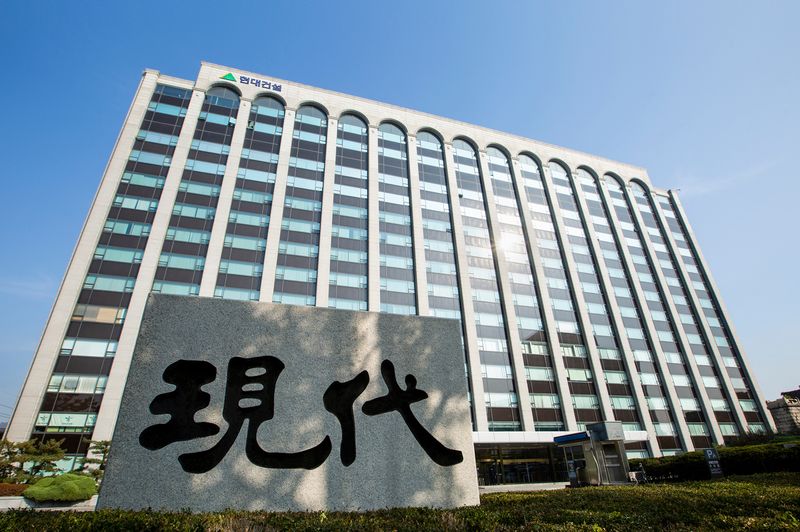
According to financial data provider FnGuide on the 2nd, all six securities firms—Shinhan Investment & Securities, Kiwoom Securities, Samsung Securities, LS Securities, Daishin Securities and Hana Securities—lowered their price targets for Hyundai Engineering and Construction that day. Samsung Securities set the lowest target, cutting it 12.6% to 90,000 won from 103,000 won. By contrast, Daishin Securities set the highest target among the six, at 152,000 won, a 9.5% cut from its previous target.
Uncertainty over winning nuclear power contracts lies behind the successive price-target cuts. The expected contract dates for major projects—including the Kozloduy Nuclear Power Plant in Bulgaria, the Palisades small modular reactor (SMR) in the United States, and Fermi America—have been pushed back. The assessment is that while the nuclear power market has growth potential, time will be needed for contracts to be signed and for the results to be reflected in earnings.
Heo Jae-jun, a researcher at Samsung Securities, said, “There is no disagreement about the long-term growth potential of the global nuclear construction business or Hyundai Engineering and Construction’s market dominance.” However, he added, “It is difficult to fully factor in those expectations until the timing of contracts for major projects and their profitability become clearer.” Samsung Securities maintained its Neutral rating, saying there was insufficient grounds to assign the company a higher valuation.
The company’s performance itself improved. Hyundai Engineering and Construction’s consolidated third-quarter revenue fell 20.3% year over year to 6.2406 trillion won, while operating profit rose 114.2% to 221.7 billion won. Operating profit met market expectations as the number of low-profitability sites in the housing division declined and projects with healthy margins made up a larger share of revenue.
However, additional costs at overseas sites remained a burden. Costs of about 80 billion won were booked for the North-South Road project in Singapore, and about 43 billion won for Hyundai Engineering’s hydropower project in the Solomon Islands. Costs are also being incurred on the Shaheen Project, which is scheduled for completion by year-end, and analysts say earnings volatility could persist.
Researcher Heo said, “With construction still underway, it is difficult to completely rule out the possibility of additional costs.” He added, “The company needs to secure earnings stability as low-profitability projects wrap up, see revenue ramp up from new non-housing projects, and achieve tangible results from nuclear power contracts in the United States and Europe.”
By contrast, Daishin Securities placed greater emphasis on improved profitability in existing businesses and growth in new orders. Operating profit for the first three quarters of this year totaled 664.5 billion won, reaching 83.1% of the annual target of 800 billion won. Orders for urban redevelopment projects also stood at 12.7 trillion won as of the end of October, while further orders are expected in non-housing areas such as data centers and offshore wind power.
Lee Hye-jin, a researcher at Daishin Securities, said, “Taking into account recent uncertainty surrounding nuclear power projects and delays in winning contracts, we applied a 20% discount to our target price-to-book ratio (PBR).” She added, “Improved profitability in existing businesses and the medium- to long-term growth potential of nuclear power remain valid.”
She went on to explain, “Because there is a time lag before contracts are actually signed and reflected in earnings, it is necessary to take a medium- to long-term view.”
[email protected] Bae Han-geul Reporter