National Supercomputer No. 6 'Hangang' Begins Full Operations... Supports Large-Scale AI and Offers 6.5-Fold Performance, 'Driving Research Breakthroughs'
- Input
- 2026-11-02 10:00:00
- Updated
- 2026-11-02 10:00:00
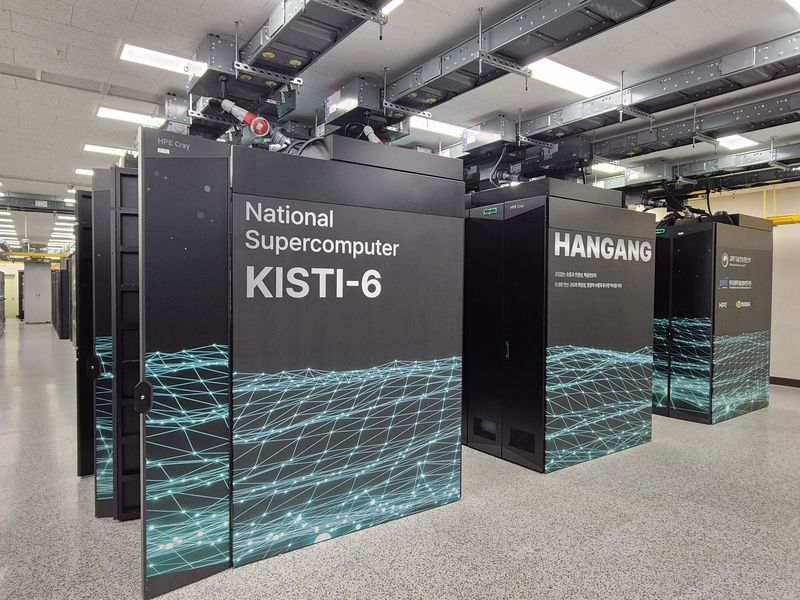
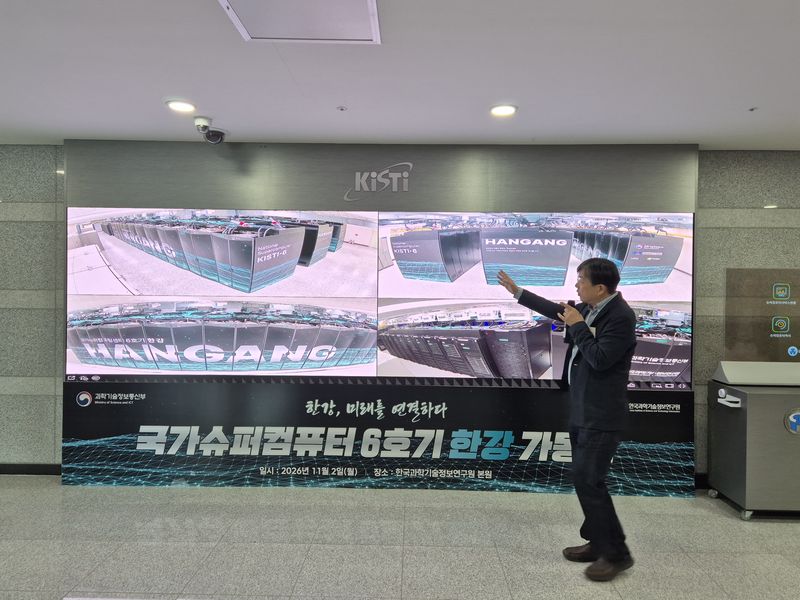
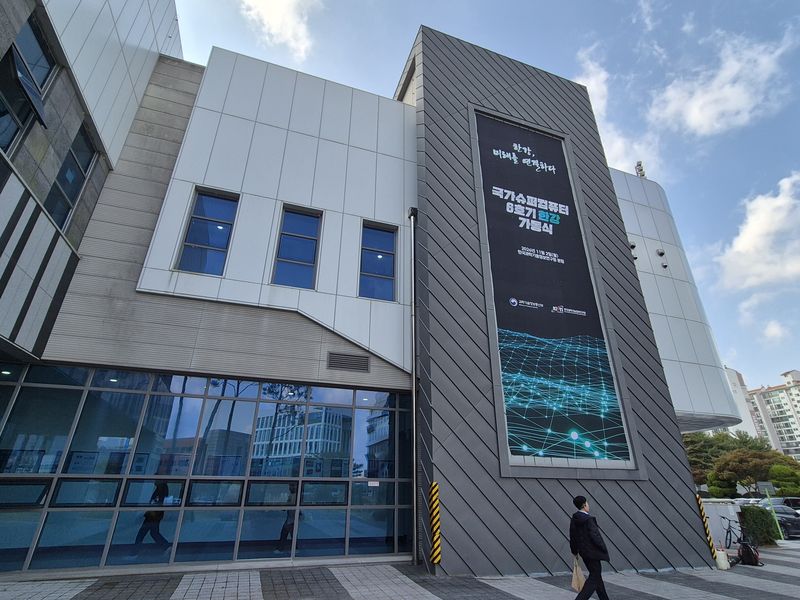
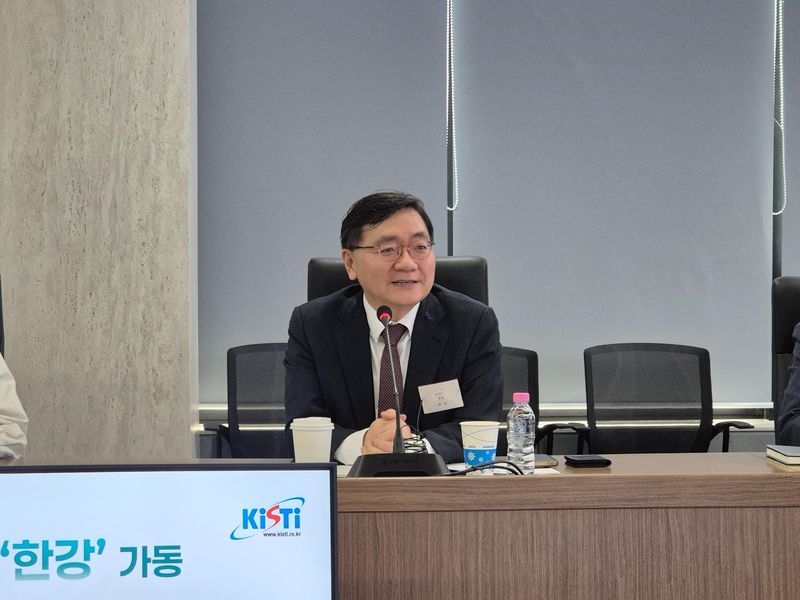
This was the scene at a press tour of 'Hangang' held at the Korea Institute of Science and Technology Information (KISTI) in Daejeon on the 30th of last month, ahead of the launch of National Supercomputer No. 6, 'Hangang,' on the 2nd. 'Hangang' will officially begin service in mid-December.
KISTI President Lee Sik said, "Supercomputer No. 6, 'Hangang,' is a high-performance supercomputer that will support a major leap forward for the institute." He added, "With the idea of flowing smoothly like the Han River, we hope to support outstanding research achievements like the 'Miracle on the Han River' of the past."
A supercomputer is a system capable of analyzing and processing large volumes of data at extremely high speed. South Korea has operated five generations of supercomputers since introducing its first in 1988, with the fifth in operation until last month. President Lee stressed, "We have reached an era in which research cannot be done without computers. Computers are essential to research, including computer simulations and data analysis."
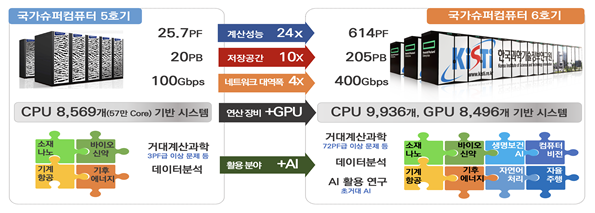
Supercomputer No. 6 has therefore been significantly upgraded so that it can not only continue supporting large-scale computational science and simulation research based on graphics processing units (CPUs), as No. 5 did, but also support AI-based scientific research using the latest GPUs. In particular, No. 6 is equipped with 8,496 of the latest GPUs, including NVIDIA's 'GH200' CPU-GPU integrated accelerator chips, and 9,936 CPUs. Compared with No. 5, it offers 24 times the theoretical computing performance, 10 times the storage capacity, and four times the network performance.
Hong Tae-young, director of KISTI's Supercomputing Infrastructure Center, explained, "We expect Supercomputer No. 6, which began pilot service in late October, to deliver 6.5 times the performance of No. 5 on a CPU basis." He added, "Other differences from No. 5 include directly cooling the supercomputer to reduce costs, providing space for long-term data storage, and significantly increasing the number of staff supporting AI."
No. 5, 'Nurion,' which has been in operation since 2018, was listed as the world's 11th-ranked supercomputer when introduced. It supported large-scale computing and data analysis that domestic researchers would have struggled to carry out on their own. Among its achievements, it helped reveal the effects of heavy-metal exposure on gene expression and liver function, and supported research into the growth mechanisms of cathode materials for next-generation batteries, producing research results recognized around the world. It is said to have supported about 3,500 research projects over the past seven years, with an operating rate of 99%.
Following No. 5, No. 6 is expected to serve as key research infrastructure, focusing on national strategic research and development (R&D), including K-Moonshot, and supporting a broad range of work, from ambitious research at universities and government-funded research institutes to corporate technology development.
Director Hong said, "We plan to allocate 55% of Supercomputer No. 6's capacity to R&D innovation, 30% to national strategic projects, and the remaining 15% to industrial innovation." He added, "We are currently accepting applications to use it, and, particularly in industry, many AI-related small and medium-sized enterprises want access, so we plan to support 30% of demand for large-scale AI."
In addition to its launch, Supercomputer No. 6 will be linked with a quantum computer next year and used in a hybrid configuration.
President Lee outlined the plan, saying, "Supercomputer No. 6 has the advantage of performing calculations quickly, while quantum computers are good at optimization. We plan to link their strengths and operate them in a way that produces strong research results."
The Ministry of Science and ICT is also continuing efforts to support the sector by localizing supercomputer component technologies and reducing costs. Kim Seong-su, head of the Ministry's R&D Policy Office, said, "National Supercomputer No. 6, 'Hangang,' is a key foundation that will support the convergence of AI and science and technology and lead to new scientific discoveries." He added, "We will actively support efforts to solve national challenges, including K-Moonshot, and innovative research across industry, academia and research institutes, thereby strengthening South Korea's competitiveness in science and technology."
[email protected] Yeon Ji-an Reporter