“Let today pass, and 2 billion won becomes worthless paper” ... First-prize Lotto winnings unclaimed for a year, deadline day
- Input
- 2026-11-02 08:37:53
- Updated
- 2026-11-02 08:37:53
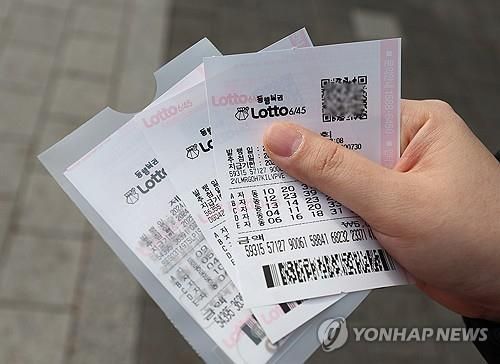
[Financial News] The winner of the first prize in a Lotto 6/45 draw held last year has gone nearly a year without claiming the prize money. If the winner does not come forward by the 2nd, the final day of the claim period, the prize of more than 2 billion won will go to the lottery fund.
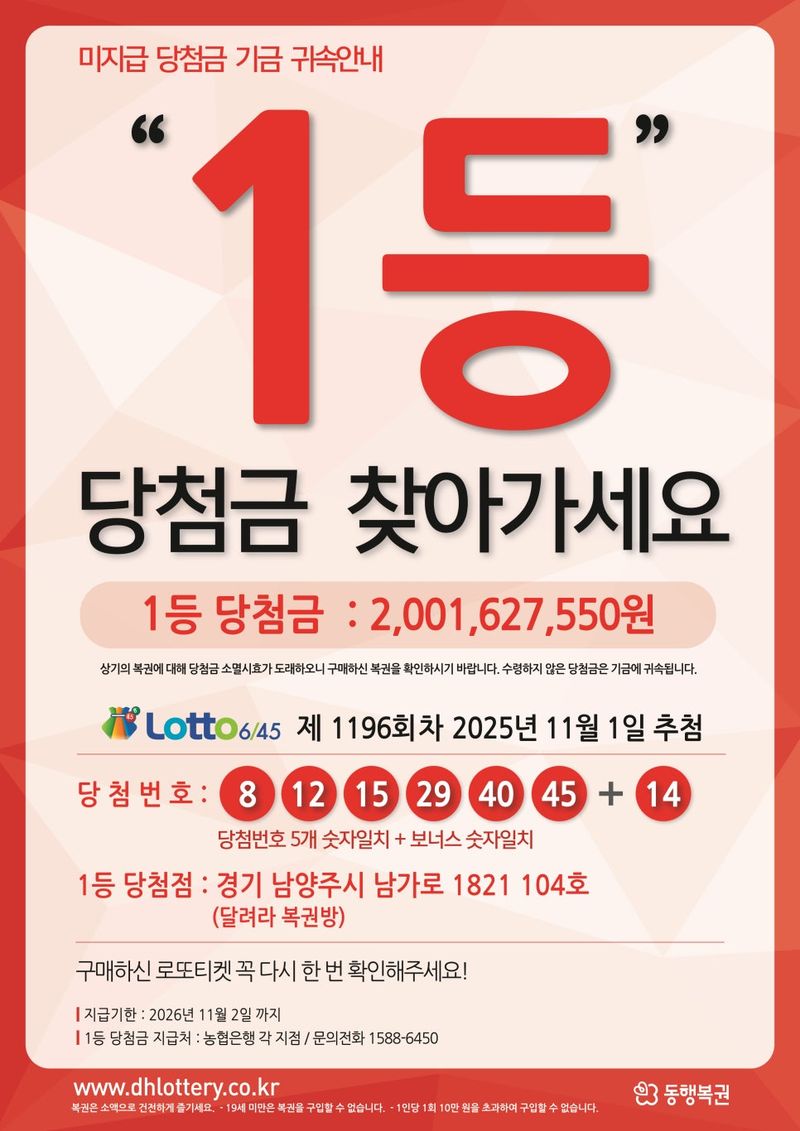
According to lottery operator Donghaeng Lottery, the first-prize amount of 2,001,627,550 won for draw No. 1196 of Lotto 6/45, held on November 1 last year, has yet to be paid. The winning numbers were “8, 12, 15, 29, 40, 45,” and the ticket was sold at a lottery retailer in Namyangju, Gyeonggi Province.
The claim deadline for the prize in draw No. 1196 is November 2. Lotto 6/45 prizes must be claimed within one year of the start of the claim period. If the deadline passes, the full prize amount will be transferred to the lottery fund in accordance with relevant laws.
Kim Jeong-eun, head of Donghaeng Lottery’s Service Division, stressed, “Please check once again whether you have any tickets you bought but have not checked for a win, and be sure to claim any prize before the deadline.”
Kim also said, “When buying Lotto 6/45 tickets at a retailer in the future, using ‘Lottery Wallet,’ an electronic lottery registration system, will let you use services such as notifications of winning results and automatic payment of unclaimed prizes, which can help prevent you from missing out on prize money.”
Lottery Wallet is an electronic lottery registration service provided through Payco. Registering a paper Lotto 6/45 ticket lets users receive notifications of the results, and prizes not claimed by the day before the deadline are automatically paid on the deadline day.
However, since payment using the physical ticket takes priority, care should be taken not to lose or damage the ticket before the deadline.
Meanwhile, money transferred to the lottery fund is used for public-interest purposes, including housing stability programs, scholarship programs and welfare programs for vulnerable groups.
[email protected] Kim Hee-sun Reporter